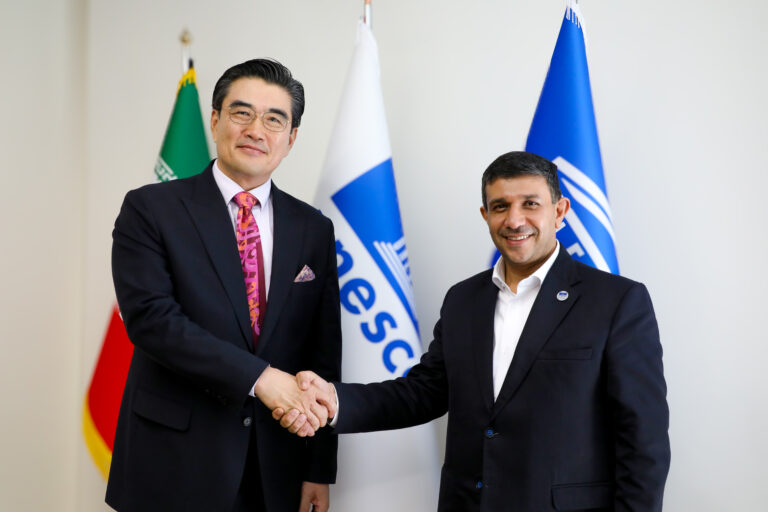


The First Summit of the Assembly of Historic Cities of Iran Was Held in Isfahan
The first summit of the Assembly of Historic Cities of Iran was held in Isfahan on 31 October 2024, with the participation of Dr. Mehdi Jamali-Nejad, Governor-General of Isfahan; Dr. Ali Qasemzadeh, Mayor of Isfahan; Akbar Yousefi, Deputy of the National Commission for UNESCO in Iran; and a number of national and provincial officials, mayors of the country’s historic cities, and urban managers. The summit aimed to establish an intercity network for sharing experiences and effective approaches to addressing the challenges facing historic urban areas. It was held at the Conference Hall of the House of Constitutionalism in Isfahan.
At the summit, mayors from 30 historic cities across the country gathered to create a platform for exchanging experiences and strengthening cooperation in the preservation of historic urban areas and the enhancement of the cultural and economic capacities of these cities. A message from Dr. Hassan Fartousi, Secretary-General of the National Commission for UNESCO in Iran, was delivered by Akbar Yousefi, Executive Deputy of the Commission.
In his message, Dr. Fartousi stated: “The National Commission for UNESCO in Iran has always stood alongside you and makes use of all its capacities to support the preservation of historic buildings and urban areas, because this endeavour can only succeed through cooperation, collective commitment and the synergy of all relevant institutions and bodies, including municipalities and rural municipalities, as well as the support of experts and the public. Only in this way can constructive international attention be secured.”
Full Text of the Speech by the Secretary-General of the National Commission for UNESCO in Iran:
In the Name of God, the Most Compassionate, the Most Merciful,
Distinguished mayors, respected officials, and esteemed guests,
This gathering has been convened to honor and preserve the historic urban areas of our country’s cities; precious heritage that serves as a cultural and civilizational identity card of this land and can introduce our beloved Iran to the international community in the best possible way.
Historic urban areas are not merely reflections of the architectural and urban-planning achievements of our past; they also embody the lifestyles, values, beliefs, authenticity, and civilization of the people who have lived in this land for centuries. Every house and every alley, every mosque and every bazaar, forms part of an identity that has come to us through history, and today we bear a great responsibility to preserve and revitalize it. This heritage is evidence of a culture and civilization that has remained vibrant and enduring despite historical challenges and adversities.
The historic houses of our cities are treasures of art and creativity. Each house, with its brick façades, windows adorned with beautiful geometric patterns, central courtyards, and clear pools, portrays an expression of the Persian conception of paradise. Wooden doors, five-door and seven-door rooms with colorful stained glass, are not only manifestations of Iranian creativity, but also reflect the profound connection between life, nature, and Iranian culture in architecture, as well as the harmonious integration of open and enclosed spaces to provide comfort and tranquility. They also embody the artistic creativity and civilizational beauty of our people; a magnificent civilization that embraces the peaceful coexistence of diverse cultures and represents an exemplary model of interaction and tolerance in today’s world.
In recent years, with the development of the tourism industry, some of these historic houses have been revitalized and converted into hotels and traditional accommodation facilities. Such revitalization demonstrates that this heritage is not merely a static identity, but also an opportunity for economic prosperity and sustainable development.
Distinguished mayors, ladies and gentlemen,
As pioneers in urban decision-making, you have a key role to play in this process. Your decisions and actions can contribute to the revitalization of historic buildings and restore life to these spaces or, God forbid, create conditions for the destruction of these national assets.
The National Commission for UNESCO in Iran has always stood alongside you and makes use of all its capacities to support the preservation of historic buildings and urban areas. This endeavour can only succeed through cooperation and collective commitment. Safeguarding this valuable heritage is possible only through the cooperation and synergy of all relevant institutions and bodies, including municipalities and rural municipalities, as well as the support of experts and the public, in a process that can attract constructive international attention.
Finally, I would like to express my appreciation to the respected Mayor of Isfahan for his gracious hospitality and for organizing this valuable event. Isfahan itself is a brilliant jewel in the history and culture of this land, and hosting this assembly is a testament to the city authorities’ serious commitment to Iran’s historical heritage.
I hope that this gathering will mark the beginning of effective measures and broad coordination aimed at preserving and revitalizing the historic cities of our country. Such efforts are essential to transmitting these unique treasures of humanity to future generations in Iran and around the world. In this way, we can demonstrate to the world that Iran is not only the inheritor of a magnificent civilization, but is also committed to safeguarding its historical and cultural identity, which shines prominently in the history of world civilization.
I look forward to seeing you all again soon and wish each and every one of you success and prosperity.
It was also announced that, during the specialized meeting of the Assembly of Historic Cities of Iran, and given that Isfahan had previously been selected as the permanent secretariat of the Assembly, the other principal members of the Executive Board were elected for a two-year term: Isfahan, Yazd, Kerman, Hamadan, and Qazvin, with Rasht elected as the alternate member. Yazd was also designated as the host city for the Assembly’s meeting next year.
Four working groups were also established for the Assembly of Historic Cities of Iran: Inter-institutional Facilitation and Engagement, coordinated by Marvdasht, Education and Promotion, coordinated by Zavareh, Conservation and Revitalization, coordinated by Na’in, Investment and Participation, coordinated by Kashan.