


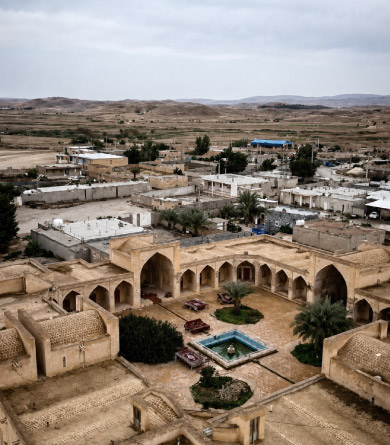
Behbahan


Frequently Asked Questions (FAQs)
In the section below, you can find answers to your questions.
Learning Cities develop policies and practices that, through education, promote progress and sustainable development in urban management, particularly when local governments empower communities to participate in the implementation of lifelong learning strategies and programmes.
A Learning City promotes lifelong learning for all. UNESCO defines a Learning City as a city that:
- effectively mobilizes its resources in every sector to promote inclusive learning, from basic education to higher education;
- revitalizes learning in families and other communities;
- facilitates learning for and in the workplace;
- extends the use of modern learning technologies;
- enhances the quality of learning; and
- fosters a culture of learning throughout life.
Through this approach, a city can enhance individual and social empowerment, economic development, cultural well-being and sustainable development.
The UNESCO Global Network of Learning Cities (GNLC) is an international network that provides inspiration, knowledge and best practices. The programme is coordinated by the UNESCO Institute for Lifelong Learning (UIL). The Network supports its member cities in the following areas:
- Promoting a culture of dialogue and peer learning;
- Documenting effective strategies, best practices and approaches;
- Strengthening civic participation;
- Enhancing development capacity;
- Developing tools for designing, implementing and monitoring learning city strategies.
Lifelong learning provides a sound foundation for sustainable social, economic and environmental development. The idea of learning throughout life is deeply rooted in all cultures. However, it has become increasingly important in a rapidly changing world where social, economic and political norms are constantly being redefined.
Studies have shown that lifelong learners, citizens who acquire a broad range of new knowledge, skills and attitudes, are better equipped to adapt to changes in their environment and perform more effectively. Therefore, lifelong learning and the learning society play an important role in empowering citizens and facilitating the transition towards sustainable societies.
While governments are largely responsible for developing strategies to build learning societies, sustainable change requires commitment at the local level. A learning society must be built province by province, city by city, and community by community. This is consistent with the principle in religious culture that education and learning are encouraged from birth to death.
Today, more than half of the world’s population, 3.5 billion people, live in cities. Over the next decade, this figure is expected to increase to 5 billion. Cities around the world face numerous challenges in managing urbanization, which has a significant impact on ensuring quality education for all.
A Learning City enables people of all ages to benefit from inclusive and equitable quality education and lifelong learning opportunities across various social, economic and cultural contexts.
Supporting Equity and Participation in Learning Cities:
- Expanding educational and learning opportunities for all, particularly for vulnerable groups who are out of school or outside formal education. These opportunities enable them to acquire literacy and other basic vocational skills and participate in continuing education;
- Providing online training courses that enable people to attend and participate in free forums on a range of topics relevant to their local communities;
- Establishing migrant schools that enable migrant workers to obtain vocational qualifications, thereby helping them integrate into society;
- Promoting intergenerational learning initiatives that encourage children and their caregivers to learn together;
- Providing career guidance, particularly for women, to encourage them to pursue higher qualifications that can enable them to obtain better employment opportunities;
- Establishing mobile libraries, providing reading opportunities for all, particularly persons with disabilities, older persons and pre-school children;
- Making use of cultural centres as learning sites that can bring together culture, the arts and learning, and using projects jointly implemented by local educational and cultural institutions as a means of enabling people to access and celebrate their cultural identity;
- Developing initiatives that mobilize trained volunteers to encourage residents at risk of social isolation, such as older persons and persons with disabilities, to participate in cultural activities, workshops, physical activities and other activities;
- Establishing “civic participation networks” that encourage citizens to participate in city decision-making processes through social media and modern technologies.
Building a Learning City is a collective and ongoing process that requires a clear action plan developed with the participation of all stakeholders, a range of events, strong political leadership, and sustained commitment. Easy access and enjoyable learning experiences for all citizens, appropriate monitoring and evaluation of progress, sustainable and reliable funding, and other detailed guidance on these practical aspects can be found in our Guidelines for Building Learning Cities.
These Guidelines for Building Learning Cities, developed in consultation with international experts from all five UNESCO regions, draw on insights gathered from case studies presented in the publication Unlocking the Potential of Urban Communities: Case Studies of Twelve Learning Cities. The Guidelines aim to provide cities with strategic approaches for building dynamic and sustainable Learning Cities. They include a set of actionable recommendations that can be referred to at every stage of the process of becoming a Learning City.
The Guidelines are divided into the following six key areas. An action plan for becoming a Learning City should be adapted to the specific context and unique characteristics of each city:
- Developing a coordinated structure with the participation of all stakeholders;
- Initiating and sustaining the process through celebratory events;
- Ensuring accessible learning opportunities for all citizens;
- Establishing a monitoring and evaluation process; and
- Ensuring sustainable funding.
In addition to the Guidelines for Building Learning Cities, the video tutorials How to Build a Learning City explain the actions involved in this process. They encourage Learning Cities to develop vibrant learning communities and provide cities with practical approaches for better implementation of policies and guidance documents.
The video tutorials were developed to support policymakers, stakeholders, urban planners and lifelong learning practitioners in building Learning Cities. They consist of an introductory video and six engaging and concise animated clips based on the following themes:
- Planning
- Engaging stakeholders
- Festivals
- Accessibility for all
- Monitoring and evaluation
- Resources
Each section begins with an animated conceptual video and is further enriched with clips based on the experiences of members of the UNESCO Global Network of Learning Cities. Sharing ideas among cities is one of the objectives of the Network and is one of the features that makes this initiative particularly valuable.
What Awaits Your City?
The tutorials aim to guide cities in their efforts to build dynamic and sustainable Learning Cities, advance education and lifelong learning opportunities for all, and set them on the right path.
The UNESCO Global Network of Learning Cities currently comprises 229 active cities from 55 countries around the world. Although all member cities have developed outstanding lifelong learning policies and practices, UNESCO has also established the Learning Cities Award. The Award was established to recognize and strengthen effective and good practices undertaken at the local level to promote educational equity and lifelong learning. It is implemented across UNESCO’s five geographical regions.
For 2019, the Secretariat of the Learning Cities Award at the UNESCO Institute for Lifelong Learning (UIL) announced the winners of the Award:
- Aswan (Egypt)
- Chengdu (China)
- Heraklion (Greece)
- Ibadan (Nigeria)
- Medellín (Colombia)
- Melitopol (Ukraine)
- Petaling Jaya (Malaysia)
- Santiago (Mexico)
- Seodaemun-gu (Republic of Korea)
- Sønderborg (Denmark)
Examples of initiatives implemented in some of these cities include:
- Aswan, Egypt, developed a strategy that integrates various projects, including agricultural and water-conservation programmes in schools, as well as diverse entrepreneurial learning opportunities for all groups of society.
- Chengdu, China, combined innovative learning with walking tours around the city. Each route focuses on different themes, such as regional characteristics, traditional cultures and modern industries, demonstrating the intelligent use of public and non-public resources.
- Heraklion, Greece, implemented the “Fit for All” programme to bring together citizens and refugees living in the city by promoting equity and participation through sports and educational activities based on themes such as local culture and traditions.
- Ibadan, Nigeria, in addition to continuously implementing its Learning City plan, recently organized a learning festival offering diverse and interactive activities and workshops for different target audiences. As a result, the concept of lifelong learning has been strengthened within the community.
- Medellín, Colombia, implemented a programme that contributed to the successful reintegration of more than 4,650 students who had dropped out of school.
- Melitopol, Ukraine, provided retraining for internally displaced persons who had previously worked in the mining industry, thereby contributing to greater educational equity across the city.
- Petaling Jaya, Malaysia, achieved significant improvements by providing free bus services on four routes across the city, thereby improving access to public learning spaces.
- Santiago, Mexico, provides citizens with access to a wide range of free classes, including robotics courses for children and anti-bullying education.
- Seodaemun-gu, Republic of Korea, has established small learning communities within its high-rise apartment complexes, offering 50 courses to citizens each year within the apartment communities.
- Sønderborg, Denmark, developed its “4–17–42” strategy, which encompasses four strategic commitments of the city—environmental, economic, social and cultural—which are incorporated into the key features of the UNESCO Global Network of Learning Cities.
Following successive calls for membership in the UNESCO Global Network of Learning Cities since 2015, issued by the UNESCO Institute for Lifelong Learning (UIL) in Germany, and through the efforts of the National Commission for UNESCO in Iran to disseminate information and prepare and submit the application dossiers of cities seeking membership, dossiers for 10 cities in Iran have so far been submitted to the Institute.
Following its review of the dossiers, the Institute approved their membership in the UNESCO Global Network of Learning Cities. Membership certificates for the cities in the Network, bearing the signature of the Director of the UNESCO Institute for Lifelong Learning, were subsequently issued by UNESCO.
- August 2016: Membership of Behbahan and Kashan in the UNESCO Global Network of Learning Cities.
- January 2017: Membership of Shiraz and Arak in the UNESCO Global Network of Learning Cities.
- September 2019: Membership of Mashhad, Yazd, and Hashtgerd New Town in the UNESCO Global Network of Learning Cities.
- September 2020: Membership of Tehran, Isfahan, and Bandar Khamir in the UNESCO Global Network of Learning Cities.