

Yazd Province covers an area of 131,000 square kilometres. It is bordered by Isfahan Province to the north and west, South Khorasan Province to the northeast, and Kerman and Fars provinces to the south, and is approximately 700 kilometres from Tehran.
The province lies within the dry and semi-arid belt of the Northern Hemisphere and comprises 51 rural districts, 23 cities, 20 districts and 9 counties, with a population of approximately one million.
Yazd has a hot and dry climate, and deserts cover most of the province. Summer temperatures can reach 46°C, while the province receives an average annual rainfall of approximately 110 millimetres.
The counties of Yazd Province include Abarkuh, Ardakan, Ashkezar, Bafq, Behabad, Taft, Khatam, Meybod and Mehriz. The province’s districts include Zarach, Aqda, Marvast and Nir.
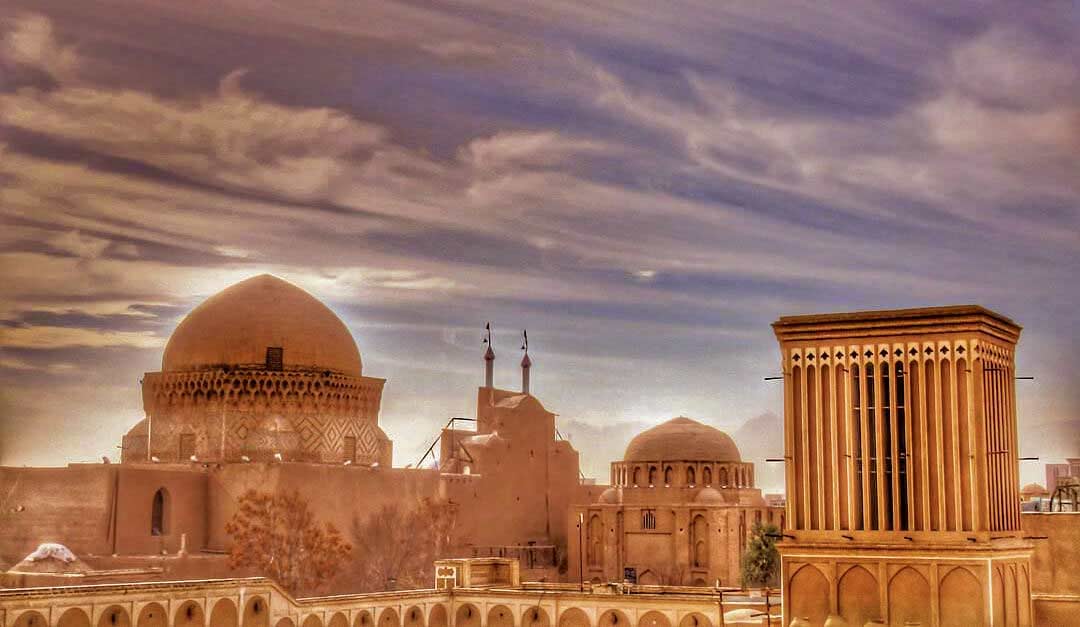
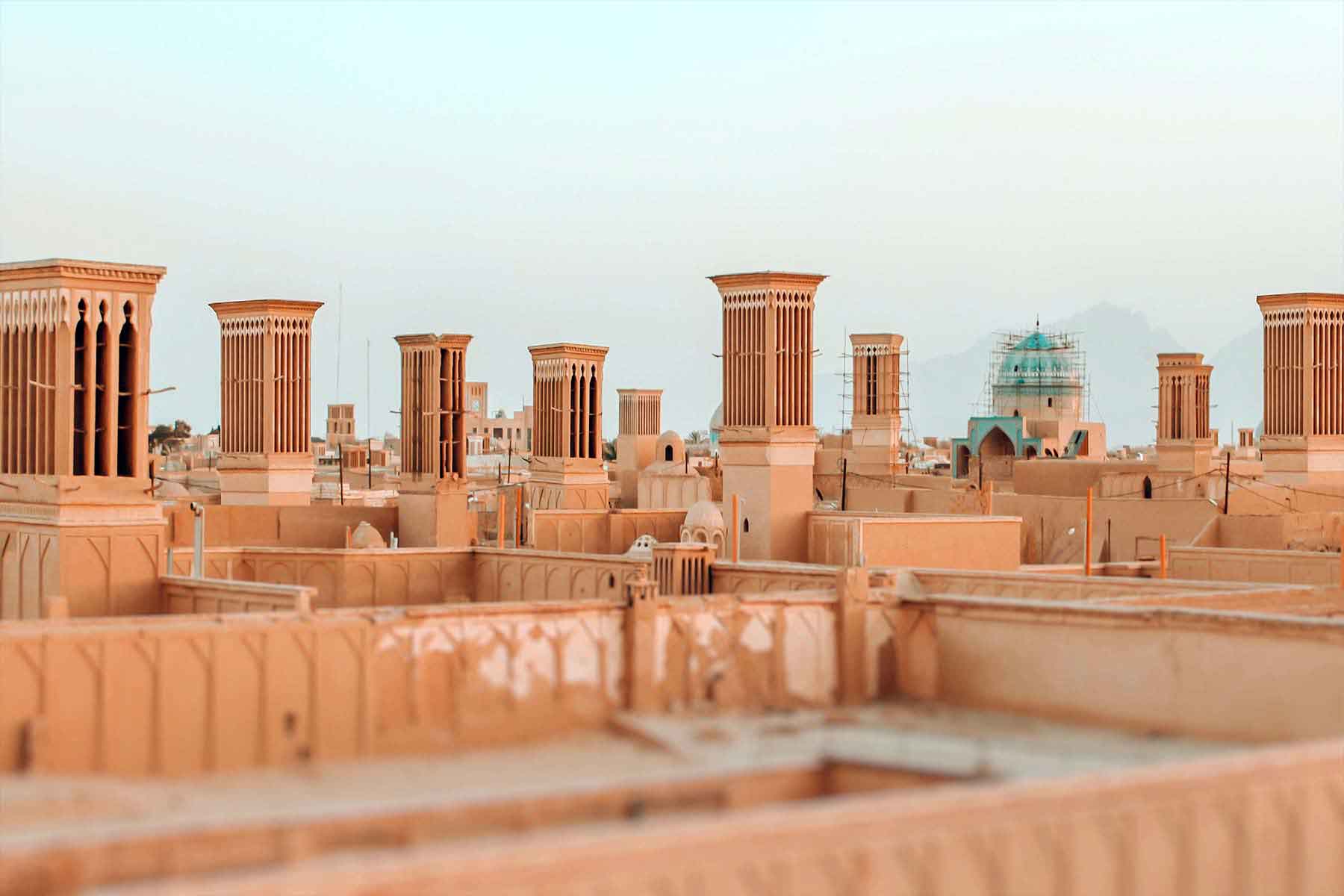
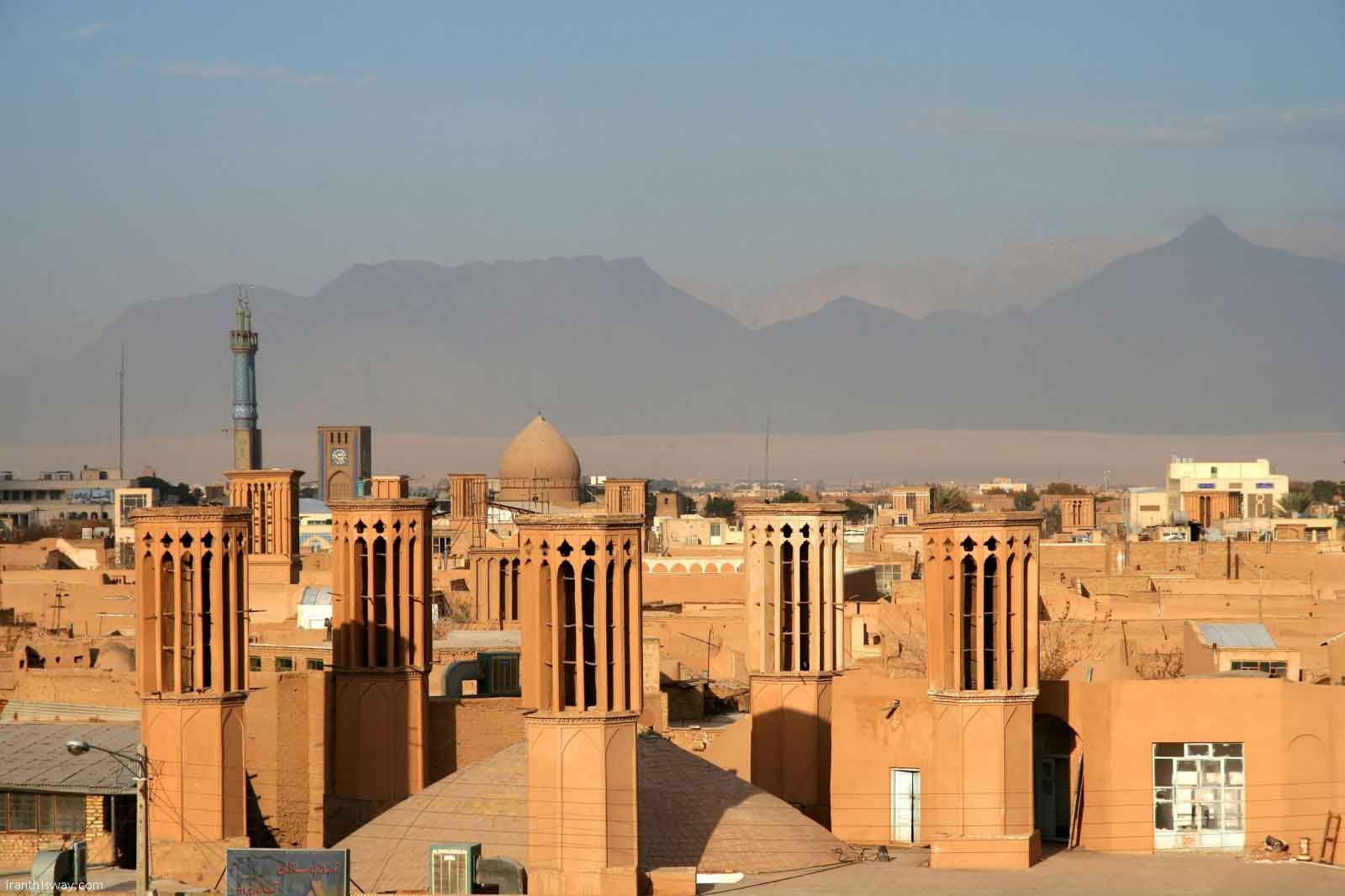
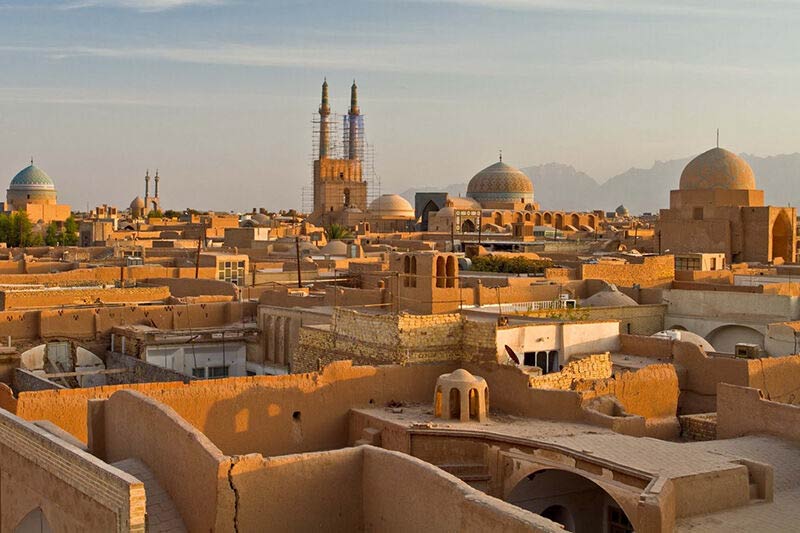
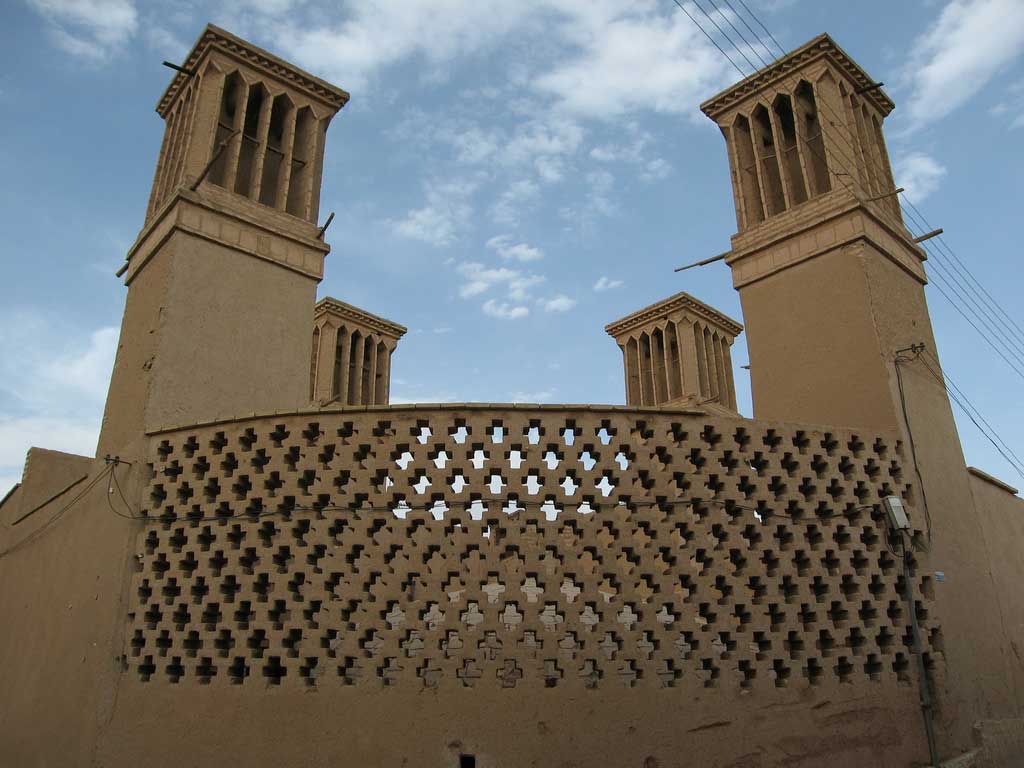
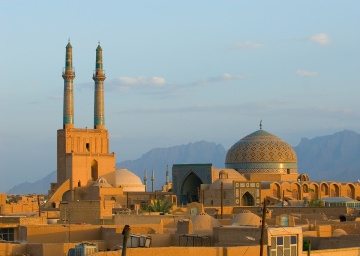
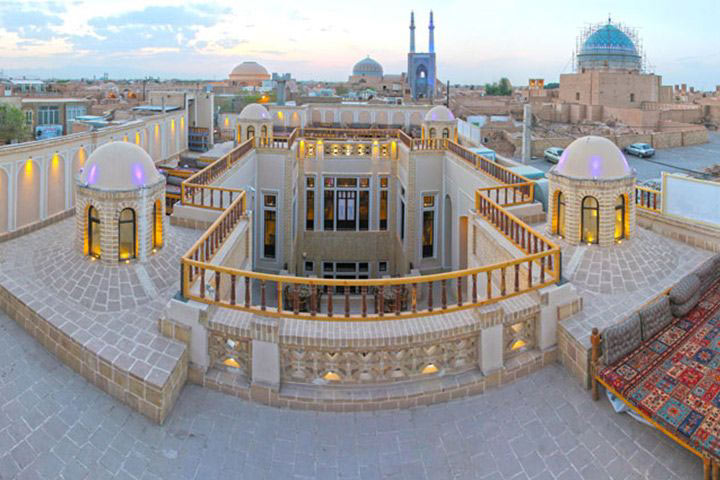
Yazd is the world’s first city built primarily of adobe and the second-oldest historic city in the world. The historic urban fabric of the city, covering an area of 743 hectares and a buffer zone of 5,000 hectares, has been inscribed on Iran’s National Heritage List.
This historic fabric includes neighbourhoods such as Fahadan, Kucheh-ye Biouk, Khorramshah, Sar-e Jam, Mir Qotb, Yaqoubi, Shesh Badgiri and others. The Fahadan neighbourhood is considered one of the oldest historic neighbourhoods of Yazd.
Within this historic fabric, Ilkhanid-period houses are still inhabited, making Yazd unique in this respect.
The oldest surviving adobe structure in the world is also located in Yazd Province. Known as Narin Castle (Kohandezh), it stands on a high hill in the ancient city of Meybod, overlooking the entire city and its surrounding areas.
To date, no country has claimed to have an older structure than Kohandezh.
Kohandezh refers to ancient citadels that were built at the dawn of urban settlements. These fortifications were constructed in the pre-Islamic period, particularly during the Median, Achaemenid and Parthian periods. They were typically compact, densely built structures constructed on natural or artificial hills.
The province is also home to one of the world’s longest qanats.
Zarch Qanat, the longest qanat in Iran, is located in Yazd Province and extends for approximately 100 kilometres. It is considered one of the oldest qanats in Iran, with a history of more than 3,000 years. The underground tunnel of Zarch Qanat extends for more than 71 kilometres, and it has 2,115 wells.
Yazd Sweets
Yazd Province, and particularly the city of Yazd, the provincial capital, is renowned for its wide variety of traditional sweets.
Ardakan Halva Ardeh
Halva Ardeh is a highly nutritious food that is mainly consumed for breakfast. Its main ingredients include sesame seeds, tahini (Ardeh), sugar, liquid glucose, permitted food sweeteners, citric acid, egg-white powder and Chubak root extract. Tahini (Ardeh) is made from hulled, roasted and ground sesame seeds from which the oil has not been extracted.
Halva Ardeh produced in Yazd Province, particularly in Ardakan County, has a natural taste and flavour because it contains no chemical additives and is still produced using traditional and partly manual methods. It is therefore more popular than Halva Ardeh produced using industrial methods.
Yazdi Cake
Yazdi Cake is one of the traditional sweets of Yazd and is commonly served at religious ceremonies in the province. The ingredients used to prepare this delicious cake include eggs, sugar, solid shortening or butter, white flour, fruit salt, baking soda, baking powder, yoghurt or milk, cardamom, and, optionally, raisins and pistachio slivers.
Yazdi Qottab
Qottab is one of the most famous and delicious traditional sweets of Yazd. Yazdi Qottab consists of two parts: an outer layer and an inner filling. The outer layer is a type of sweet pastry fried in oil. Its dough is made from a combination of wheat flour, milk or yoghurt, and egg yolk, and is fried in oil before being coated with powdered sugar. The filling consists of ground almonds, powdered sugar and cardamom.
Because it contains cardamom and ground almonds, this sweet has considerable nutritional value. Its distinctive flavour sets Qottab apart from other traditional Iranian sweets.
Baklava
Baklava is a popular sweet prepared in various forms in many countries, including Iran, Türkiye, the countries of Central Asia and the Caucasus, some Arab countries, Greece, Cyprus and parts of Russia. In Iran, the main centres of production are Qazvin, Tabriz and Yazd.
Yazdi Baklava is produced in various shapes, including diamond, square and cylindrical forms, and in different flavours, including pistachio, almond and coconut. Its ingredients include rose water, sugar, cardamom, flour, baking powder, egg yolk, powdered sugar, milk and oil.
Yazdi Pashmak
The popular sweet Pashmak is another traditional sweet of Yazd and is particularly popular among children. Pashmak is essentially a type of spun sugar confection made from sugar. Other ingredients, such as fruit essences, coffee, cocoa and saffron, are sometimes added to the sugar during the production process.
Noghl
Another popular sweet souvenir from Yazd is Noghl, which has historically been produced by coating various nuts and dried fruits with sugar through a process known as drageeing. About 25 years ago, the process was mechanized with drageeing machines and was no longer carried out entirely by hand. Modern Noghl is essentially the machine-produced version of the traditional confection that was prepared by hand with considerable effort in the past. Today, Noghl is produced in a variety of flavours, including orange blossom, jasmine and saffron, and with different types of nuts, such as walnuts, almonds and peanuts.
Different provinces of Iran offer their own varieties of Noghl, but Yazdi Noghl has a distinctive aroma and flavour. Its ingredients include sugar, water, willow-whered extract, walnut kernels (or other nuts), vanilla and other ingredients.
Noghl can be produced with different flavours and fillings. Among these, walnut Noghl is particularly popular and well known. Other varieties include walnut, almond and pistachio Noghl, as well as almond-sliver Noghl, with flavours such as vanilla, saffron, rose, sour cherry, coriander and willow-whered. Because Noghl is soft and sweet, it can be a suitable alternative to sugar cubes when drinking tea.
Haj Badami (Haji Badam)
This sweet is one of Iran’s traditional confections and is produced in various provinces, particularly Yazd. Its ingredients include almond kernels, powdered sugar, melted solid shortening, flour, green cardamom powder and pistachio powder.
Rice Bread (Nan-e Berenji)
Nan-e Berenji is another traditional Iranian sweet that is produced not only in Yazd but also in cities such as Kermanshah and Qazvin. Widely known among tourists, this sweet is made with rice flour, wheat flour, powdered sugar, solid shortening, eggs, rose water and cardamom. Varieties include plain Nan-e Berenji and saffron Nan-e Berenji.
Window Bread (Nan-e Panjereh-i)
Nan-e Panjereh-i, also known as Panjereh-i sweet or Khatoun Panjereh, is one of the oldest Iranian sweets. Its ingredients include white wheat flour, eggs, starch powder, rose water and oil, and it is decorated with powdered sugar. In the past, many women prepared this sweet at home.
Flour Sohan and Khani Sohan
Flour Sohan and Khani Sohan are varieties of Yazdi Sohan, each with its own distinctive taste and method of preparation.
Khani Sohan
Khani Sohan is one of the most famous types of Sohan produced in Yazd. Yazdi Sohan is made with wheat-germ flour, white flour, egg yolks, sugar, pistachio kernels, animal fat, cardamom and cinnamon.
Flour Sohan is made with flour, sugar, cardamom, saffron, oil and rose water.
Varieties of Loz
Loz is a traditional Iranian sweet prepared with different ingredients in various cities and provinces. Yazd is one of the cities where different varieties of Loz are offered as souvenirs. Among the most famous and popular Yazdi varieties are willow-whered Loz, almond Loz and coconut Loz.
Almond Loz (Bidmeshk)
This type of Loz is made with ground almonds, sugar, egg whites, willow-whered extract and pistachio powder for decoration. The presence of willow-whered extract gives this sweet its distinctive fragrance.
Coconut Loz
The main ingredient used in this type of sweet is desiccated coconut. It is also easy to prepare at home and does not require an oven. It is prepared in the same way as almond Loz, except that coconut replaces the almonds. Pistachio Loz is prepared in the same manner by replacing the almond powder with pistachio powder.
Handicrafts
Each province of Iran has its own distinctive handicrafts, shaped by its culture and climatic conditions. Yazd Province is also rich in handicrafts. The following are some examples that can be purchased as souvenirs when travelling to Yazd.
Pottery and Ceramics
Meybod, located in Yazd Province, is one of the major producers of pottery and ceramic products in Iran. Pottery from this region is produced in various forms, including simple unglazed pottery, glazed pottery, tiles and ceramics. The designs found on Meybod pottery are highly distinctive and visually striking. Traditional motifs such as birds and fish and the Khorshid Khanom (“Lady Sun”) motif are among the most common designs featured on Meybod pottery.
A significant part of Yazd’s handicrafts consists of various types of textiles, woven in different styles and using a range of raw materials. Some examples are introduced below.
Darayi Weaving
Darayi weaving is another traditional handicraft of Yazd with a long history in the region. Today, however, it has largely fallen into decline, and it is difficult to find traces of this craft in the streets and markets of Yazd. With a history of approximately 800 years, Yazdi Darayi is a type of textile made from silk and natural dyes. Since, in the past, only people with sufficient financial means could afford Darayi textiles, the craft came to be known by this name. In the past, Darayi fabric was used for quilt covers, bundles, needlework bundles and quilt linings. Today, it is mainly used for bedspreads and traditional tablecloths.
Greater attention to handicrafts and purchasing them as souvenirs may help restore the former prosperity of these beautiful textiles and contribute to sustaining their production.
Termeh
The art of Termeh weaving has a history of approximately 400 years. Zoroastrians used Termeh in making a type of trousers for ceremonial occasions. Termeh is a textile whose warp is made of silk, while its weft consists of yarn, wool, coloured fibres and silk. In the past, Termeh was woven by hand using the fingers and was therefore also known as finger-woven fabric. Later, the process became semi-manual and specialized looms were used.
Common motifs used in Termeh weaving include the Boteh Jegheh, Shah Abbasi and deer-antler designs. Different types of Termeh products include Shal Bandi, Shal Charghadi, striped shawls, Shal Atabaki, Shal Moharramat, Shal Rezaei, Kashmiri shawls, Yazdi shawls and others. Today, Termeh has a thriving market in the city of Yazd and can be purchased as a souvenir.
Sha’rbafi
Sha’rbafi is another traditional art of Yazd that was once widely practised. Initially, women practised this craft on wooden looms as a means of contributing to the household economy. It later developed into a workshop-based activity in which men also became involved. Over time, this beautiful traditional craft gradually fell into decline.
Shamd
Shamd is a lightweight fabric made from synthetic silk (viscose) or cotton yarn and is used as a summer cover. Simple and checked patterns are commonly used in Shamd weaving.
Chadorshab
Chadorshab weaving is common in Yazd County, Ardakan and the Zarach district. There are two types of Chadorshab. The first is thin and patterned and is known as Chadorshab-e Rokhtab-Pich, or bed-wrapping cloth. The second is thicker and is known as Chadorshab-e Sahraei, or field cloth, which is used for carrying fodder and agricultural products and features striped patterns.
Zilu
Zilu is one of the oldest handicrafts of Yazd, with a history dating back to the pre-Islamic period. It was also once an important commercial product of Iran. Because of its cool surface, this floor covering was widely used during the summer.
Meybod in Yazd Province is one of the most important centres of Zilu weaving. The oldest Zilu currently known is attributed to this region and can be seen in the Jameh Mosque of Meybod.
Cotton thread is used in Zilu weaving, with beautiful patterns such as Zolfak, Rokneh-Duni, large and small Hasht-Par, Band-e Roumi and Kelid incorporated into the designs. Blue and white are the dominant colours of Zilu, although orange, red and green are sometimes also used. The dyes used in Zilu weaving are natural and are obtained from plants such as madder and walnut husks.
Vision of Yazd as a Learning City
a) A Learning City develops plans and strategies to encourage value creation, personal growth, social cohesion and the development of the human capacities of all citizens.
b) A Learning City explicitly uses learning as a means of enhancing social cohesion and revitalizing and developing an inclusive economy that encompasses all sectors of society, while bringing together available resources.
c) A Learning City can provide local solutions to local challenges by encouraging individual citizens to become both learners and educators, and by encouraging citizens to embrace learning as an integral part of social activities.
d) The objectives of the Learning City of Yazd, centred on preserving social capital and safeguarding the rights of the youth of Yazd, include the following:
- A Learning City can provide an environment for the balanced and comprehensive development of young people’s personalities based on the principles and objectives of the city and national identity.
- A Learning City can provide a learning environment based on education, creating opportunities for life experience, and strengthening young people’s sense of responsibility, commitment and leadership in pursuing their objectives.
- A Learning City can contribute to improving the quality of life, while nurturing creativity and directing the innovative capacities of young people towards constructive activities and addressing essential needs.



Contact Information
Address
Unit 222, 2nd Floor, Phase 3, Jahan Nama Citadel, Taleghani St. Entrance, Opposite Shahr-e Ketab, Imam Hossein Sq., Isfahan, Iran
Phone Number
03132121470
Creative.city@isfahan.ir