

Kashan, the gateway to the history and art of Iran, is located in the centre of the Iranian Plateau, in the northern part of Isfahan Province. With an area of more than 6,500 hectares and a population of over 300,000, this ancient city is considered, after the metropolis of Isfahan, the second-largest city in the province in terms of population, economic activity, and science and technology.
However, what distinguishes Kashan from other cities in Iran is not merely its size and population, but also the 7,500-year history of its civilization. The Sialk Archaeological Hills, located on the outskirts of the city, provide clear evidence that Kashan is considered one of the earliest centres of urban settlement and human civilization in the world.
This ancient civilization has brought remarkable achievements to humanity. It was in this land that the arts of pottery-making, spinning and weaving, metal smelting, and the production of lustreware tiles were invented and developed. The exquisite artefacts surviving from this period are today preserved not only in Iran’s national museums, but also in some of the world’s most renowned collections, including the Louvre Museum in Paris, the State Hermitage Museum in St Petersburg, the Pergamon Museum in Berlin, and The Metropolitan Museum of Art in New York, showcasing the cultural grandeur of this region.
In addition to its ancient heritage, Kashan is a dynamic and pioneering city in the field of city diplomacy. Its membership in more than six international associations and organizations, including the Organization of World Heritage Cities, the Asian Mayors Forum, and the World Crafts Council, as well as its membership in the UNESCO Global Network of Learning Cities, demonstrates the city’s international standing. Moreover, this remarkable commitment and capacity came to fruition in 2025 (1404 in the Iranian calendar), when Kashan proudly joined the UNESCO Creative Cities Network (UCCN) in the field of Architecture. This achievement further affirms the city’s position as a cradle of civilization and authentic Iranian architecture, while providing an opportunity for the exchange of knowledge and international cooperation in the field of cultural heritage preservation.
Kashan’s souvenirs, much like the city itself, are a blend of fragrance, flavour and artistry. Undoubtedly, the city’s first and most famous souvenir is its pure rosewater. Known as the capital of rosewater production in Iran, Kashan, with its extensive rose gardens in areas such as Qamsar and Niasar, produces some of the finest and most fragrant rosewater in the world each year. The traditional rosewater distillation ceremony, which begins in mid-May, is itself one of Kashan’s cultural and tourist attractions. During this period, the delightful fragrance of Damask roses fills the city’s streets and alleyways. Alongside rosewater, a variety of other herbal distillates, including mint, chicory, orange blossom and thyme distillates, are also among the city’s popular souvenirs. In addition to their traditional medicinal uses, they are considered valuable gifts.
Kashan’s traditional foods and confectionery are also widely renowned. Kashan Kolucheh, made with whole-wheat flour, clarified animal fat, saffron and pistachios, is a delicious, lightly sweet biscuit with a long shelf life. Haji Badam, another dry and nutritious sweet, is made from ground almonds, sugar and cardamom and is an excellent alternative to sugar cubes served with tea. Kashan’s soft and delicate Pashmak is another of the city’s most popular treats among both children and adults, prepared with particular care and skill. Nan-e Abbasali is also regarded as one of Kashan’s traditional and nutritious breads and is baked as a charitable offering during Muharram.
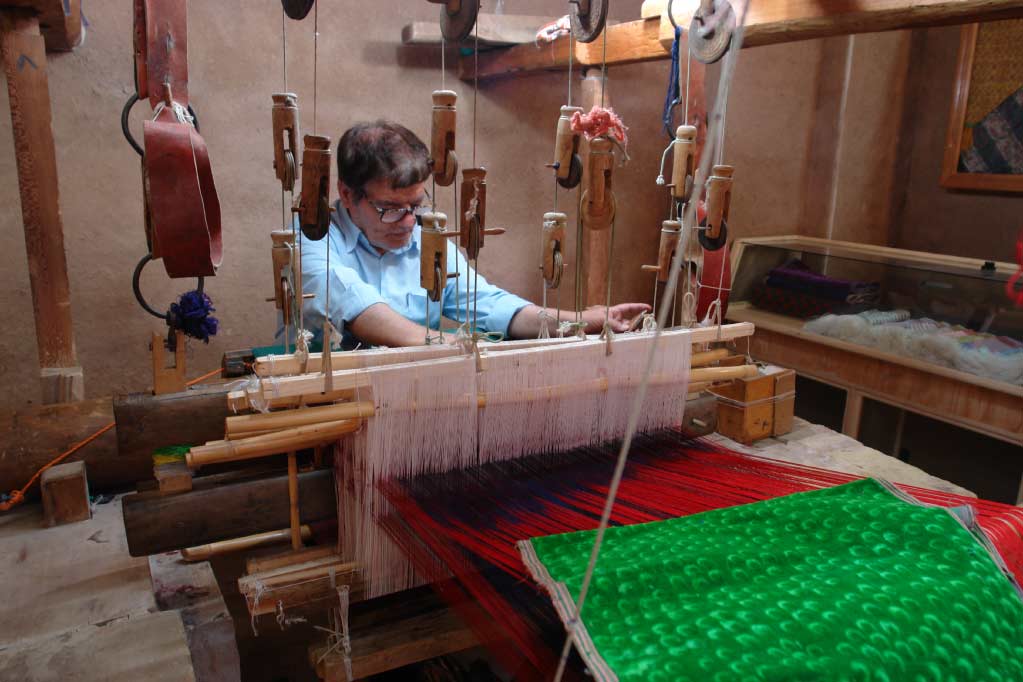
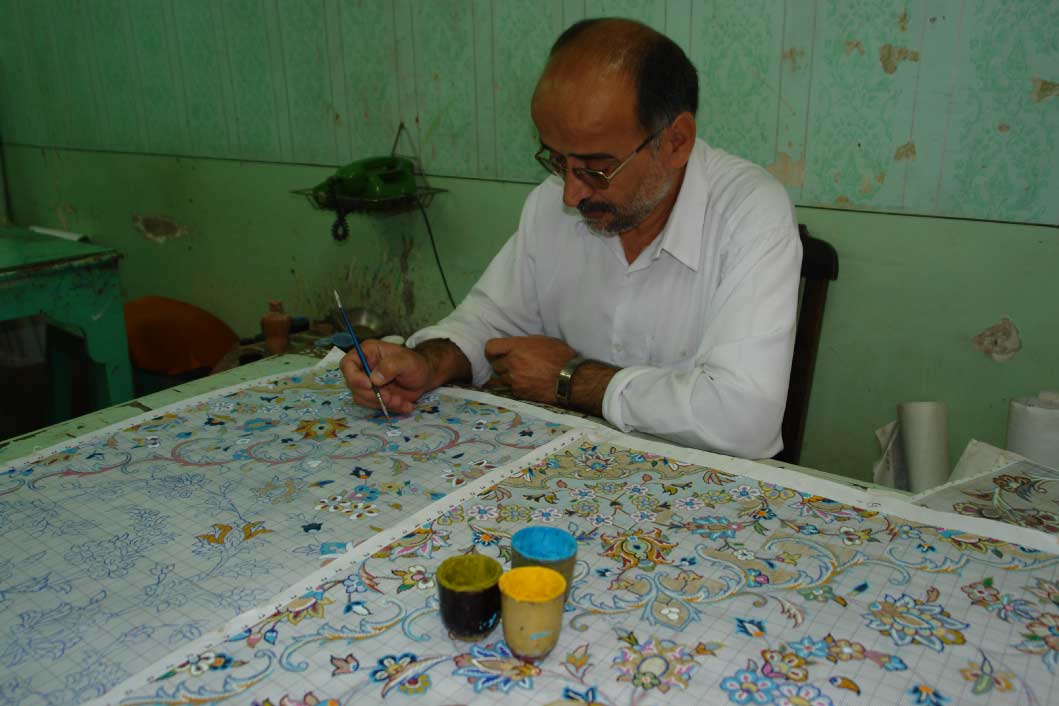
Alongside its food products, Kashan’s handicrafts constitute an important part of its souvenirs. Kashan handwoven carpet, inscribed on the UNESCO Representative List of the Intangible Cultural Heritage of Humanity, is among the finest and most valuable handicrafts of Iran. Pottery and ceramics, lustreware tiles and copperware, which are still produced using traditional methods in Kashan’s workshops, are enduring reminders of the city’s art and civilization. Sha’rbafi textiles and handmade giveh footwear are also among the city’s other distinctive and authentic souvenirs.
Sialk Archaeological Hills: The Gateway to Human Civilization
The Sialk Archaeological Hills, dating back 8,000 years, bear witness to the formation and development of human civilization. This civilization gradually progressed through different periods, from building houses with reeds and wood to establishing cities and engaging in trade with other regions. A visit to this site offers a unique experience of walking through the depths of history, where visitors can see at close hand objects that tell remarkable stories of the development of civilization and industry in the distant past. These include pottery fragments, jewellery, weaving spindles, metal tools, handmade mud bricks, pottery wheels and, most importantly, the ziggurat. The most significant known evidence of civilization at Sialk includes the earliest villages and human-built houses, the earliest domesticated animals and plants, the earliest pottery-firing and metal-smelting furnaces, and the earliest examples of writing and script. The Sialk site comprises the Northern Hill (Little Sialk), covering five hectares; the Southern Hill (Great Sialk), covering eight hectares; Cemetery A; and Cemetery B. From the oldest to the most recent, these hills showcase evidence from different periods of human civilization, including the Neolithic Age, the Chalcolithic period, the period of urbanization, the Iron Age and the Median period.
Borujerdi House: A Symbol of Iranian Houses
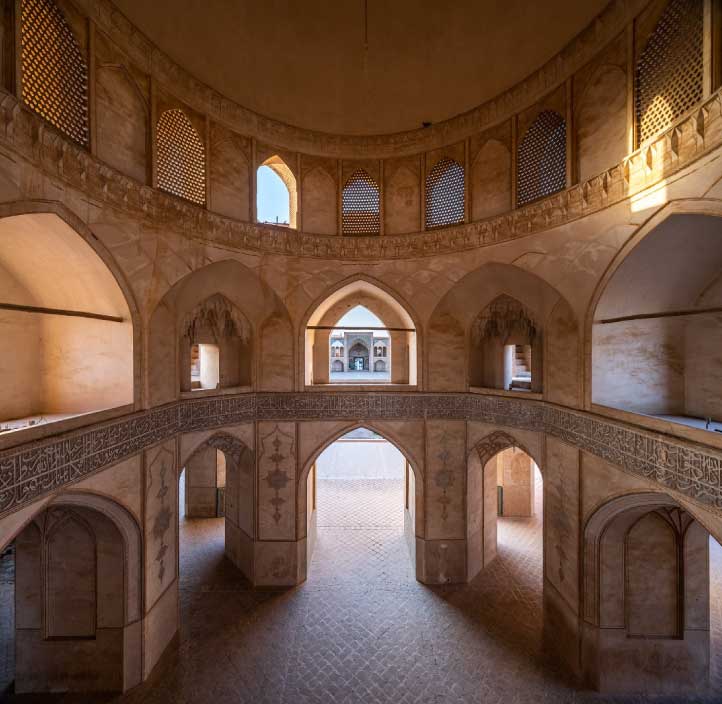
Borujerdi House is one of the historic and remarkable buildings of Kashan. Borujerdi House is a symbol of inward-looking Iranian architecture and, with its magnificent design, captivates every visitor. The house represents the splendour and beauty of authentic Iranian architecture. Covering an area of 1,700 square metres, the house consists of various sections. Master Ali Maryam Kashani designed and constructed the building in accordance with Kashan’s hot climate and religious considerations.
Fin Historic Garden: A Paradise on the Edge of the Desert
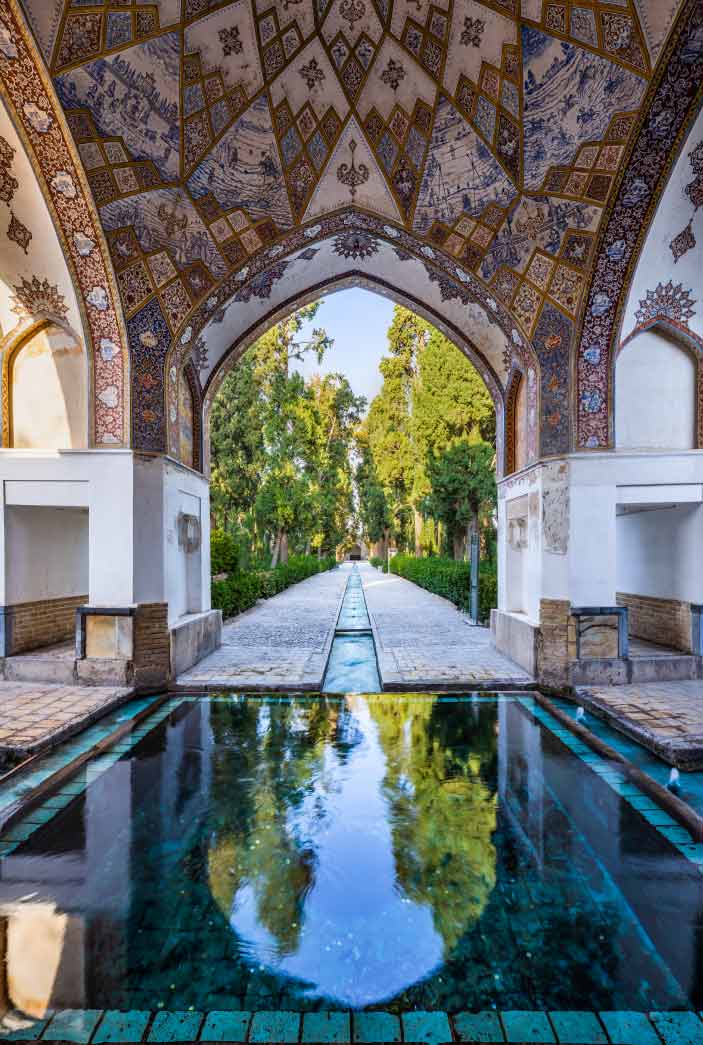
Fin Garden in Kashan is one of the Persian gardens which, in addition to its long history dating back at least 500 years, has been the setting for important historical and political events over the centuries. Like other Persian gardens, its architecture combines trees, water channels, beautiful stone paving, large pools and various historic buildings to create a magnificent and breathtaking setting. The garden is also home to several historic structures, including Karim Khan’s Private Quarters, the Boiling Pool, the Qajar-era Shotor-Golu, the Water Distribution Station and the Kashan National Museum, all of which are well worth visiting. Nevertheless, one of the main reasons for the fame of Fin Garden may be the assassination of Amir Kabir, the renowned Prime Minister of Iran, which is regarded as one of the most important historical events to have taken place in the garden.
Imam Khomeini Mosque and Seminary: A Legacy of Devotion and Simplicity
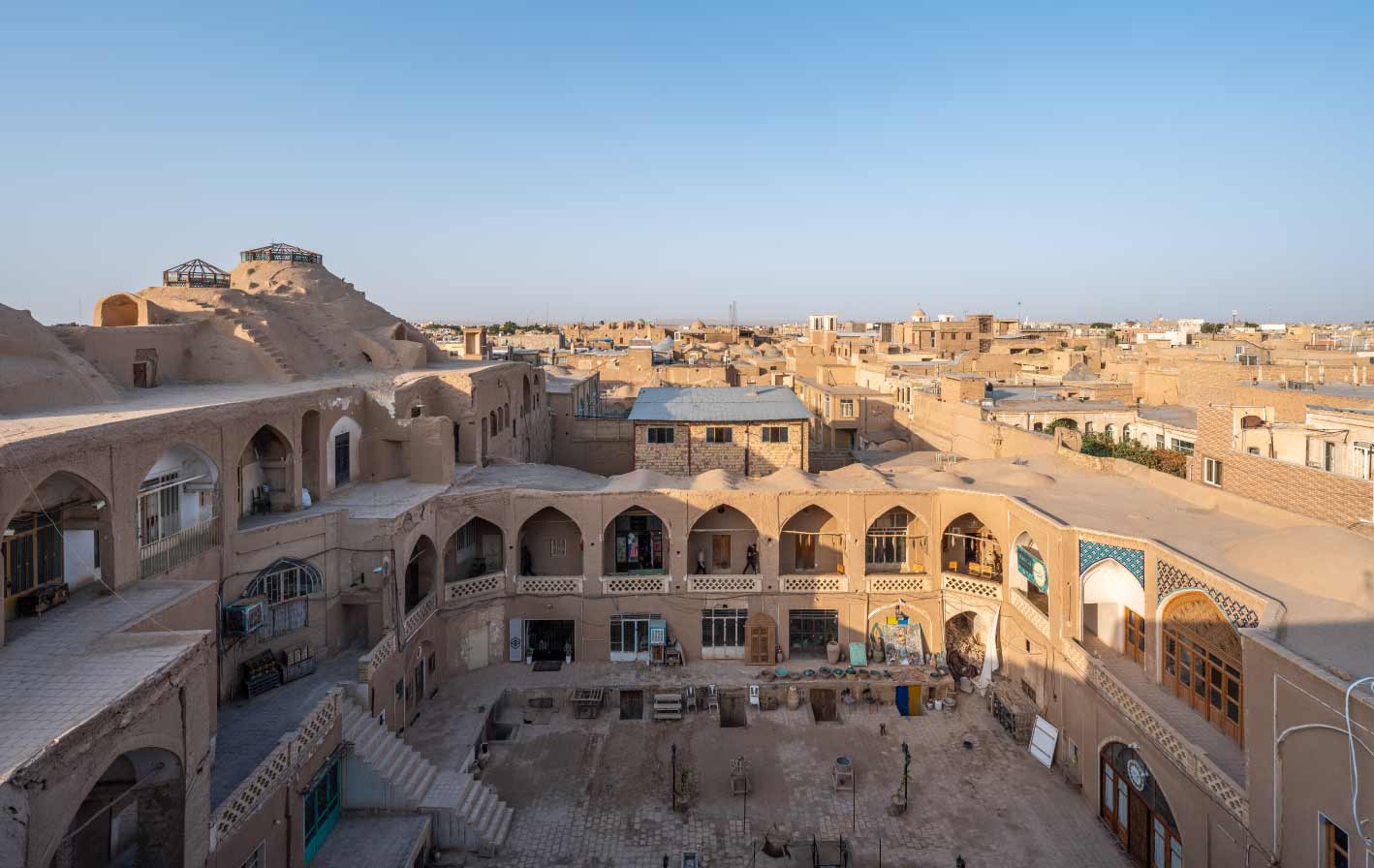
The Soltani Mosque and Seminary, located within the historic bazaar complex of Kashan, is a Qajar-period building that embodies the architectural features and techniques common to that era and remains standing today. The seminary, now known as the Imam Khomeini Mosque and Seminary, is one of the beautiful legacies of the Qajar period. The original structure of the Imam Khomeini Mosque and Seminary dates back to the reign of Fath-Ali Shah Qajar. Its construction was carried out between 1806 and 1815, and the teaching and administration of the seminary’s endowments were entrusted to Haji Molla Ahmad Naraghi. Over time, the building underwent various repairs and modifications. The northern and southern iwans have now been converted into enclosed spaces and classrooms. The seminary’s spacious courtyard and surrounding complex are rectangular, with 52 cells arranged around its four sides, each with a front iwan and a separate storage room. The building also features eight mud-brick inscriptions containing verses from the Qur’an, while the inscription of the main iwan is adorned with a qasida by Fath-Ali Khan Saba.
Historic Bazaar and Amin al-Dowleh Timcheh: A Jewel of the Silk Road
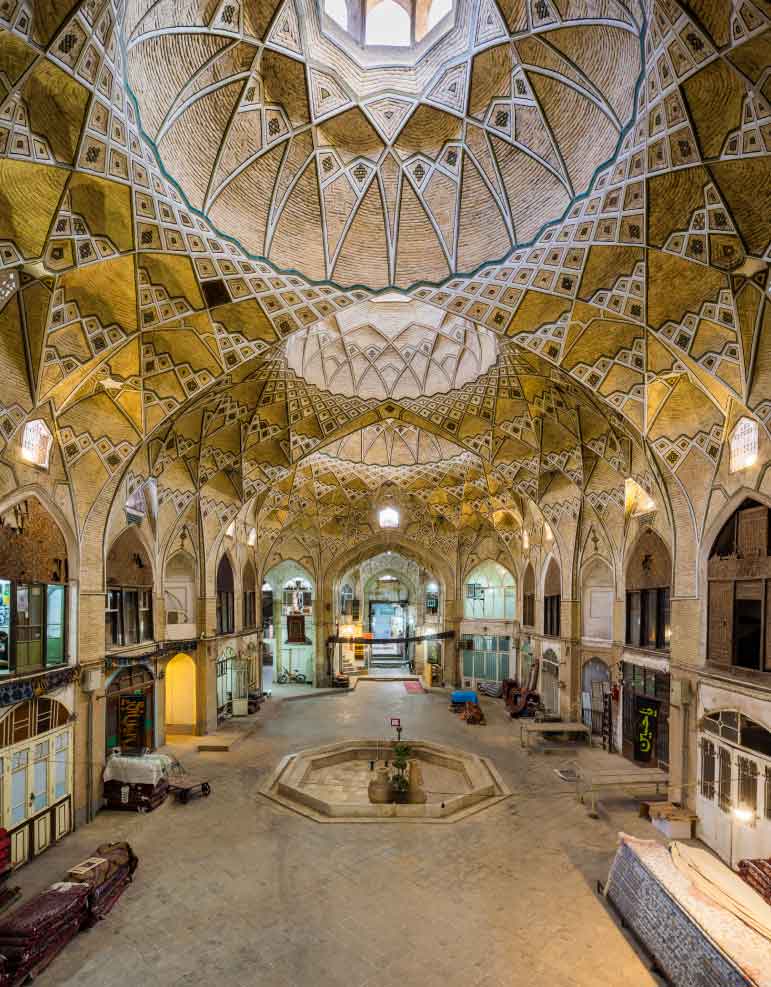
The Kashan Bazaar is one of Iran’s historic buildings, dating back to the Buyid period. During the Safavid period, the bazaar flourished and served as the commercial centre of Kashan. Following an earthquake in 1779, the Kashan Bazaar was completely destroyed and was subsequently rebuilt during the Qajar period. In 1876, the Kashan Bazaar was inscribed on Iran’s National Heritage List. Amin al-Dowleh Timcheh is one of the most remarkable sections of the historic bazaar, located at its centre alongside another section of the complex. Also known as Amin al-Dowleh Caravanserai, it is a Qajar-period building situated at the four-way intersection of the historic bazaar and is known as the Mianchal.
In the late 18th century, the bazaar was destroyed by an earthquake and was later rebuilt during the Qajar period through the efforts of Farrokh Khan Ghaffari, known as Amin al-Dowleh, one of the prominent figures of the time. One of the sections added to the Kashan Bazaar was this very timcheh, which was named Amin al-Dowleh after its founder. Construction of the timcheh took place between 1863 and 1868, and its architect was Master Ali Maryam Kashani.
Aqa Bozorg Mosque and Seminary: The Bride of the Mosques of the Middle East
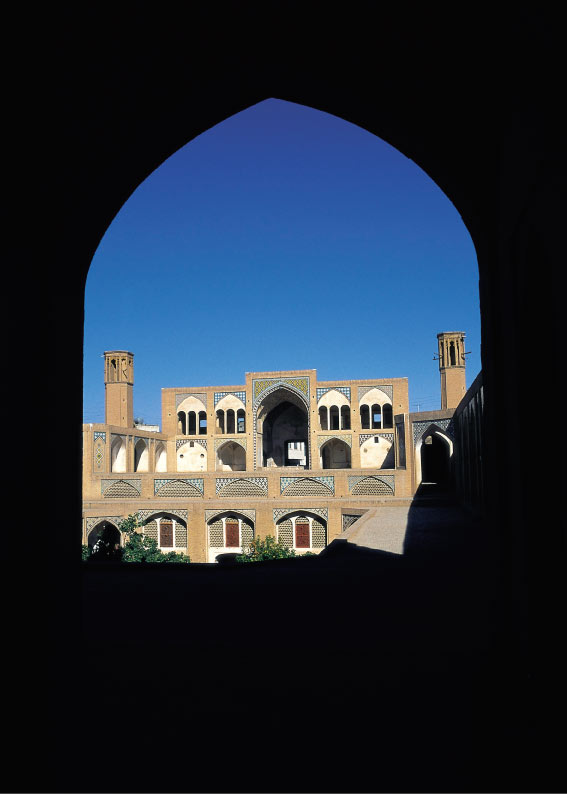
Aqa Bozorg Mosque and Seminary was built during the reign of Mohammad Shah Qajar and is one of the outstanding monuments of that period. The mosque and seminary, which is currently used as a seminary for religious students, is located on a street bearing the same name. Molla Mohammad-Mahdi Naraghi was one of the great religious scholars of Kashan who died at the same time as the birth of his son. According to the custom of the time, the son was given his father’s name. To distinguish between father and son, the father was referred to as Aqa Bozorg (“the elder Aqa”), while the son was called Aqa Kuchak (“the younger Aqa”).
Like his father, Aqa Kuchak entered the religious seminary and attained the rank of mujtahid. It is said that Mohammad Shah Qajar met the religious scholars of Kashan at the time and, upon learning of Aqa Kuchak’s scholarly standing, ordered that he too be referred to as Aqa Bozorg. Following this meeting, Haj Mohammad-Taqi Khanban, who was the governor and father-in-law of Molla Mohammad-Mahdi Naraghi, constructed a mosque and seminary where his son-in-law could teach. Construction of the mosque was completed during the reign of Naser al-Din Shah Qajar.
Tabatabaei Historic House: The Bride of Iranian Houses
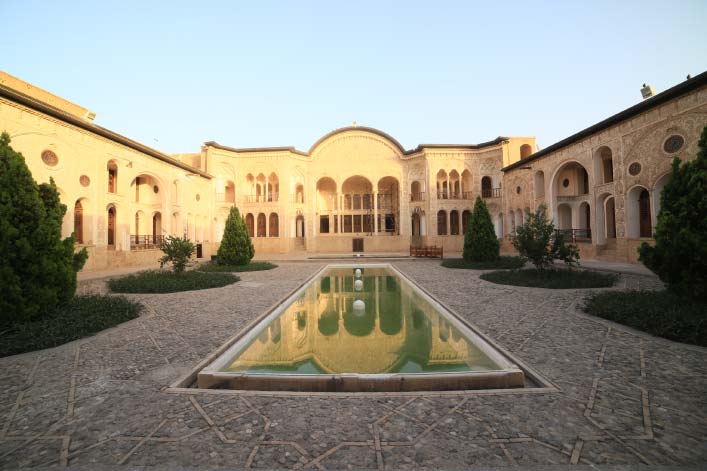
Tabatabaei Historic House, known as the bride of Iran’s historic houses, is one of Kashan’s most prominent historic buildings and residences. The house was built during the Qajar period by Haj Seyyed Jafar Tabatabaei Natanz, a Natanz-born merchant residing in Kashan, in the Sultan Amir Ahmad neighbourhood. It consequently became known as Tabatabaei House. Its architect was Master Ali Maryam Kashani, who constructed the house over a period of ten years. Covering an area of 4,700 square metres, the house consists of various sections.
As Kashan is located in a desert region, the building was constructed using the goudal-baghchehn technique, meaning that it was built slightly below ground level. This method offered advantages such as greater resistance to earthquakes and sound insulation. Religious principles and beliefs were also taken into consideration in the design, and the house was constructed in such a way that there was no direct view from the outside into the interior. The vestibules, mirror work, plasterwork and paintings of the house were executed in the finest and most beautiful manner under the supervision of leading master craftsmen.
Abbasian Historic House: A Masterpiece of Iranian Architecture
Abbasian Historic House is located in the Sultan Amir Ahmad neighbourhood of Kashan and is regarded as one of the masterpieces of Iranian architecture. Construction of the historic Abbasian House began in 1829 under Haj Mohammad Ebrahimi, a prominent merchant of Chinese porcelain and crystal ware at the time. With its pleasant spaces, the historic house offers a distinctive and unique appearance, and its beautiful setting is truly remarkable. It has also served as a location for the production of several television series and feature films.
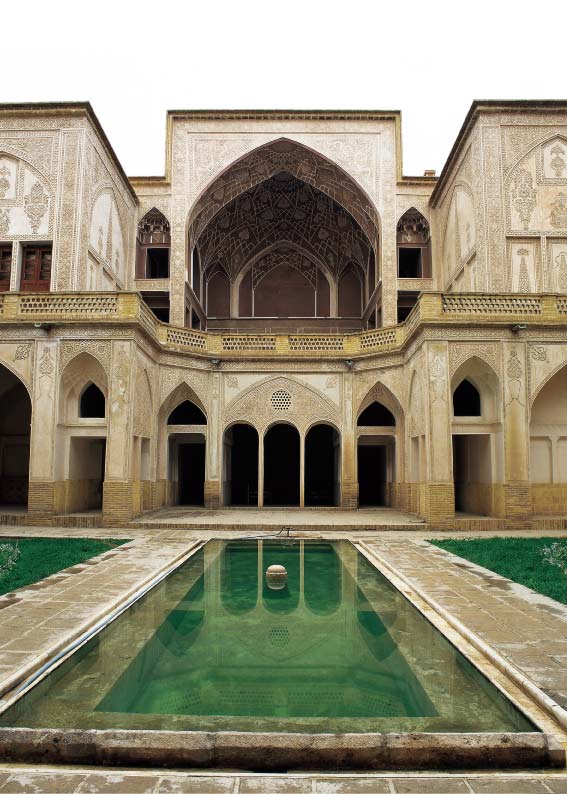
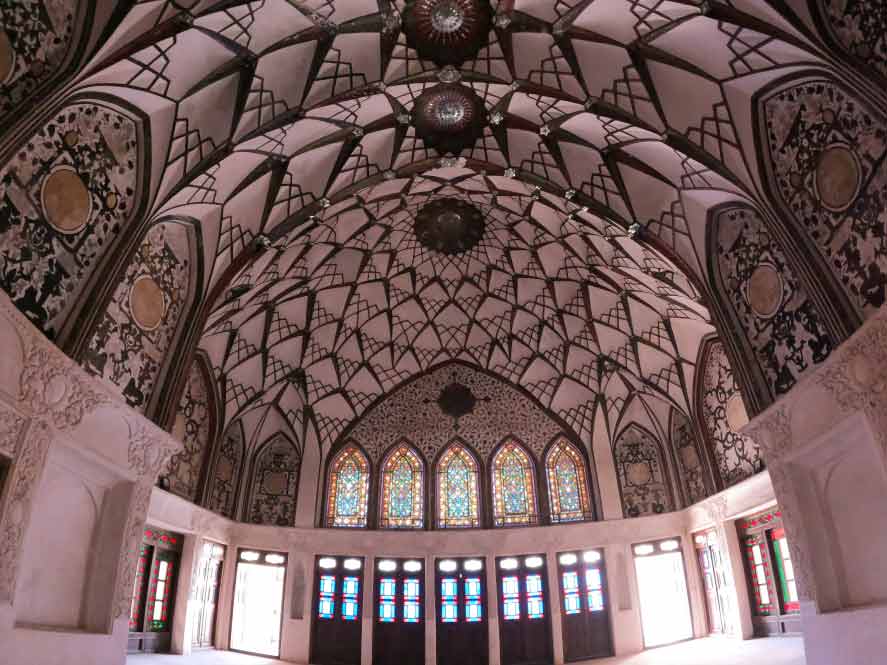
Abbasian Historic House can confidently be said to resemble none of the houses visitors may have seen before. The building’s simple exterior is initially surprising, and visitors may not even realize that it is a historic house. Yet upon entering its beautiful interior, the design and architecture reveal the grandeur and magnificence of the residence. The house features remarkable plasterwork and paintings incorporating elements of Islamic architecture, including qatarbandi, Yazdi-bandi, rasmi-bandi and gereh-sazi. Religious considerations were observed in its construction, and the house was divided into two sections: the andaruni (private quarters) and the biruni (public quarters). Symmetry was another important principle in the design, with the different sections of the historic Abbasian House arranged in perfect symmetry. The house also includes winter and summer quarters, with residents occupying the appropriate section according to the season and climate.
Ameriha Historic House: The Largest Iranian House
Ameriha Historic House is located in Kashan’s Sultan Amir Ahmad neighborhood. It is one of the largest historic houses in the city, dating back to the Zand period. It was later expanded during the Qajar period, when additional sections were added. Like most of Kashan’s historic houses, it consists of two main sections, the biruni and andaruni, each containing various spaces such as a howz-khaneh, iwan, three-door rooms and seven-door shahneshin rooms, all arranged harmoniously around the courtyards.
The architecture of Ameriha Historic House is based on traditional Iranian architectural principles. Both its exterior and interior sections are adorned with exquisite plasterwork, detailed woodcarving and other Iranian decorative elements. The house has several courtyards, all designed according to the principle of symmetry. Its windcatcher is the tallest among the windcatchers of Kashan’s other historic houses. Ameriha House stands as an example of the heritage of the Ameri family and represents their estates and settlements in the region. Such a residence is fitting for the grandeur and authenticity of this prominent family in the area.
Sultan Amir Ahmad Bathhouse: A Bathhouse of Art and Architectural Beauty
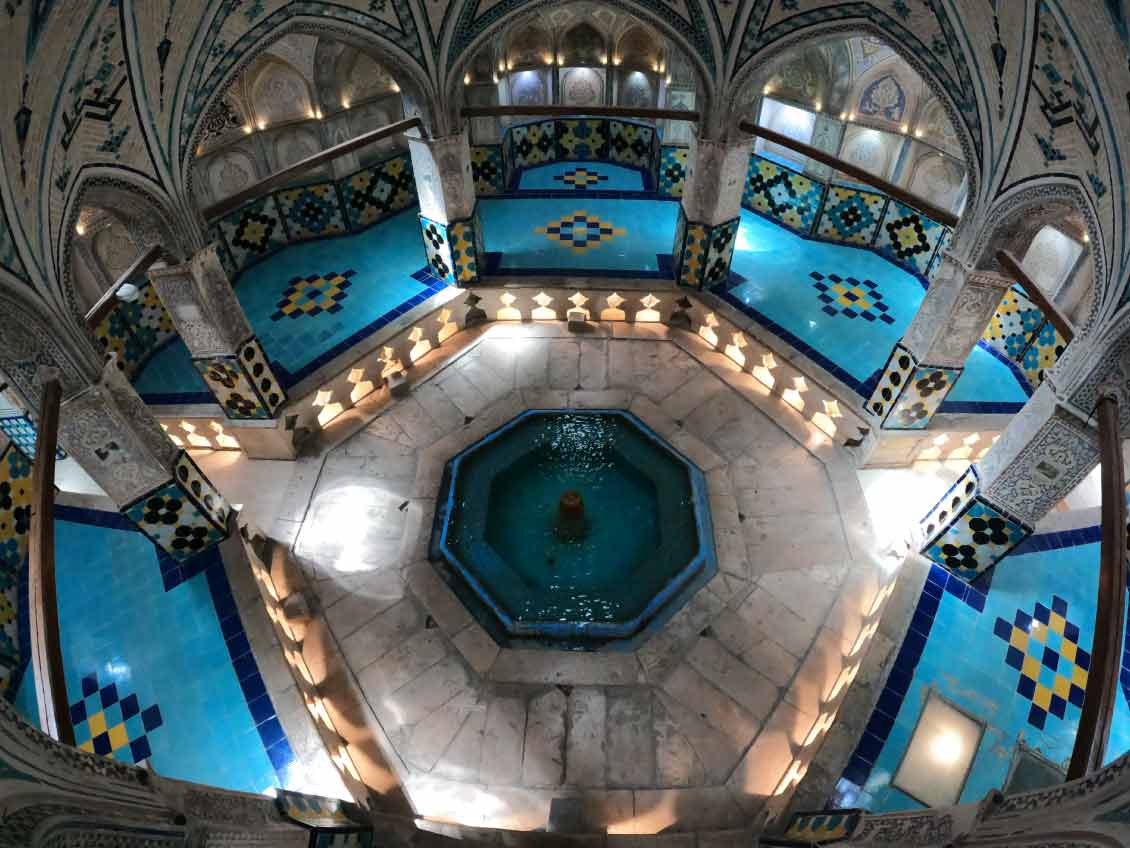
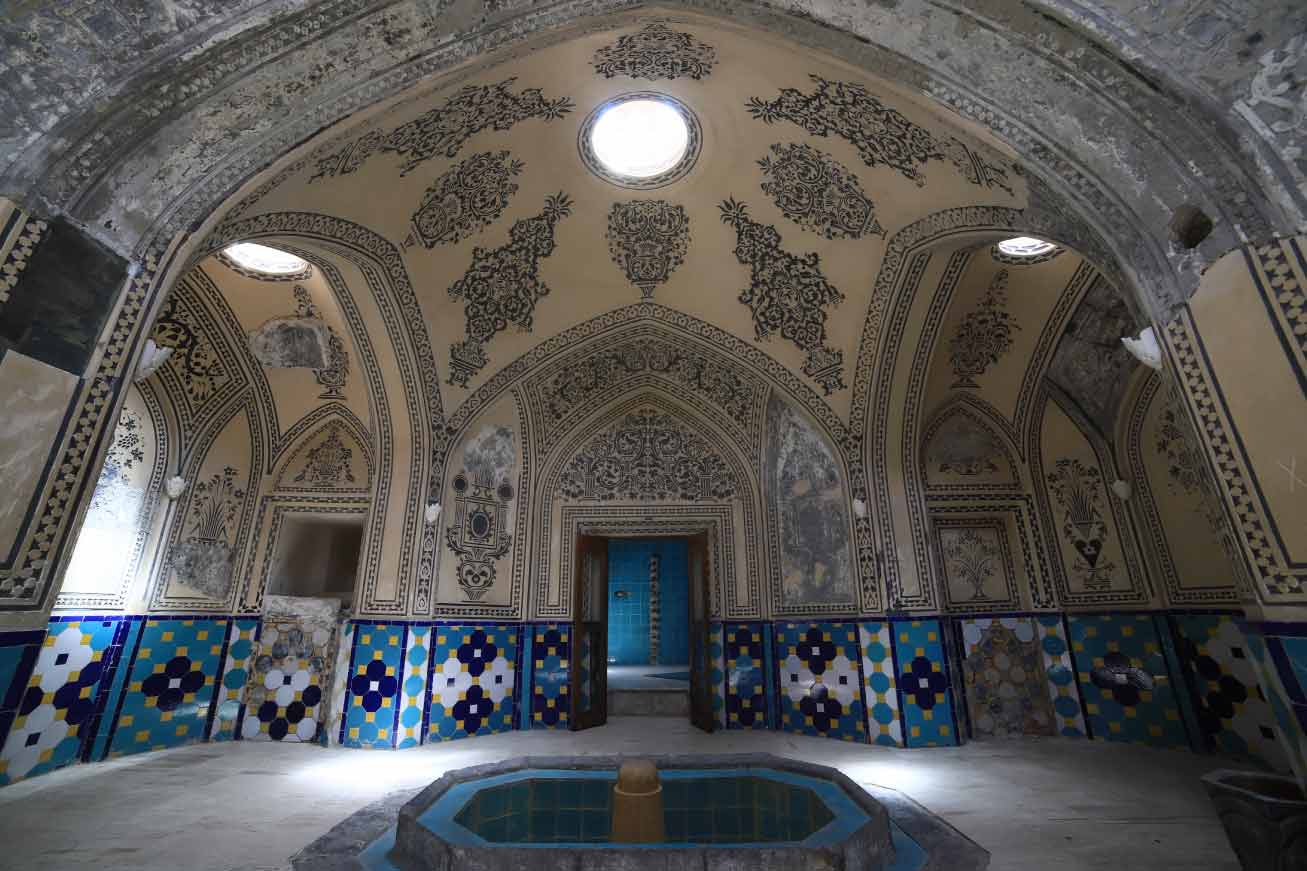
Sultan Amir Ahmad Bathhouse was built on an area of 1,000 square metres and is considered one of the most beautiful bathhouses in the world. Lime carving, plasterwork, tilework and vaulted ceilings are among the bathhouse’s decorative features and examples of magnificent Iranian architecture. Like many historic bathhouses, it was constructed slightly below ground level to help retain heat within the building.
Sultan Amir Ahmad Bathhouse takes its name from the adjacent Imamzadeh, the grandson of Imam Javad (AS). Evidence and archaeological remains recovered from the bathhouse following the devastating earthquake of 1771 indicate that its origins date back to the Seljuk period. However, the sarbineh (changing room) belongs to the Qajar period. Some believe that the bathhouse visible today in Kashan was constructed during the Qajar period, in 1875–1876, over the ruins of the older bathhouse, with a smaller bathhouse subsequently added to the complex.
Two wells were used to supply water to Sultan Amir Ahmad Bathhouse, while tanbushes, or clay pipes, were used to transport water between the different sections of the bathhouse. The colored glass known as goljam, used in openings in the ceiling or walls of the bathhouse, is another notable and admirable feature of the architecture employed in this building.
Kashan’s Vision as a Learning City
Kashan’s vision for becoming a Learning City is based on making effective use of its vast historical, cultural and social capital while intelligently addressing the challenges ahead. By joining the UNESCO Global Network of Learning Cities in 2019 (1398 in the Iranian calendar), Kashan took a major step towards achieving this vision. Membership in the Network provides Kashan with a unique opportunity to draw on the successful experiences of other cities, share its own knowledge and move towards sustainable and inclusive development.
Kashan’s vision is that of a city in which lifelong learning is recognized as a central pillar of urban development. This means mobilizing all the city’s resources to create learning opportunities for all citizens, at all ages and across all areas of life. Building on its scientific background, Kashan draws on approximately 10 universities and higher education institutions, as well as the presence of 22 researchers among the world’s top 2% of scientists, to enhance the city’s scientific and research capacity.
The vision is for a city that, by promoting a culture of reading and research, becomes a hub of science and innovation in the region.
At the same time, Kashan faces significant challenges, including the management of limited water resources, land subsidence, the development of green spaces through water-efficient approaches, waste management and urban smartification. The Learning City vision seeks to transform these challenges into opportunities for learning and innovation, enabling citizens, universities and the private sector to work together to develop creative and sustainable solutions. Moreover, drawing on its rich heritage in architecture and handicrafts and leveraging the capacities of the UNESCO Creative Cities Network (UCCN), Kashan seeks to promote learning in the fields of art, culture and creative industries, while preserving its authenticity and transforming the city into a hub of creativity and entrepreneurship at both the national and international levels.
Actions of Kashan as a Learning City
In pursuit of its vision of becoming a Learning City, Kashan has placed a diverse range of practical measures on its agenda that go beyond the routine activities of urban management and focus on empowering citizens and raising public awareness. One of the most important of these measures is the implementation of extensive cultural and educational programmes at cultural centres and other facilities operated by the municipality. These programmes are designed and implemented to promote a culture of reading, provide life-skills education, foster entrepreneurship, and raise awareness of the city’s cultural and historical heritage. Through a range of workshops, training courses and conferences, Kashan Municipality seeks to bring learning beyond formal educational settings and into the everyday lives of its citizens.
Active and continuous participation in webinars and international events of the UNESCO Global Network of Learning Cities represents another important step taken by Kashan in this direction. Such participation provides an opportunity to exchange experiences with leading cities around the world, learn about best practices in urban management in the field of learning, and update the knowledge of urban managers. By sharing its valuable experiences in areas such as the revitalization of historic urban areas, the development of ecotourism and social participation, Kashan has established itself as an influential city within this international network.
Moreover, by drawing on its social capital and encouraging citizen participation, Kashan is strengthening one of the fundamental pillars of a Learning City. The city’s long-standing tradition of charitable activities and social participation provides a favourable foundation for implementing participatory educational and cultural programmes. Benefactors and non-governmental organizations, in cooperation with the municipality, have played a leading role in the development of educational, healthcare and cultural facilities and, during crises such as the COVID-19 pandemic and periods of conflict, have contributed significantly to maintaining hope and vitality in the city through self-learning and awareness-raising initiatives. In addition, by organizing events such as the traditional rosewater distillation ceremony and cultural festivals, Kashan not only safeguards its intangible cultural heritage but also creates opportunities for experiential learning and intergenerational interaction, representing another step towards the realization of a Learning City.
Contact Information
Address
Imam Khomeini St., Al-Yasin Historic House, Centre for Communications and International Affairs, Kashan, Iran
Phone Number
03155223159
kashanforeignoffice@gmail.com
Learning City Mayor
Mr. Abolfazl Sarouqian
Learning City Coordinator
Mr. Hamid-Reza Pourbarat