

Creative City of Gastronomy
Creative City of Gastronomy
Creative City of Gastronomy
Creative City of Gastronomy
Kermanshah, also known as Kermanshahan, is the capital of Kermanshah Province. Covering an area of approximately 24,640 square kilometres and with a population of nearly two million, the province comprises 14 counties, 35 cities, 31 districts and 84 rural districts.
It is the ninth most populous city and one of Iran’s metropolises. Located between the Iranian Plateau and the Mesopotamian Plain, Kermanshah shares 371 kilometres of border with Iraq.
Kermanshah is situated in the north-western part of the Zagros Mountains. It is bordered by Kurdistan Province to the north; Lorestan and Ilam provinces to the south; Hamedan Province to the east; and Diyala and Halabja in Iraq to the west.
Historical records indicate that Kermanshah was one of the earliest centres of human civilization. The region was situated along major communication routes such as the Royal Road and the Silk Road, giving it an exceptional position in trade and the transportation of goods across the region. Kermanshah was one of the principal centres of settlement during the Median period, and during the Achaemenid and Sasanian periods, the region, known as Media, was also considered an important political centre.
The province was one of the most significant regions throughout the historical periods, and numerous valuable remains from those periods have survived, including Taq-e Bostan, the Bisotun Inscription, and the Temple of Anahita. Throughout the centuries, Kermanshah’s distinctive strategic position has continued to give it particular importance, and today it remains one of the most important cities in western Iran.
Kermanshah Province is located between the Iranian Plateau and the Mesopotamian Plain. This geographical setting has contributed to its predominantly mountainous character. The province has considerable climatic diversity and is therefore considered a four-season province. Qasr-e Shirin, in the west of the province, has a warm climate, while cities such as Paveh and Sonqor have cold, mountainous climates.
History of Some Traditional Kermanshahi Foods
Nan-e Tiri
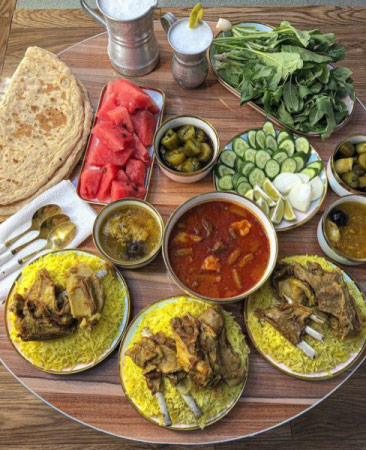
Nan-e Tiri is a thin, round, white-coloured bread. It is called Tiri because the dough portions are flattened and made thin using a tool known locally as cho-tiri, a type of stick. This traditional local bread is prepared in Dalahu and some other parts of the province and is used on various occasions, including religious and ritual ceremonies, votive offerings, weddings and funerals.
At weddings and henna ceremonies, this thin local bread is traditionally placed over dishes such as Polo Masva and Chelow Gosht, which are served in large copper or metal communal trays. The round shape of the bread is said to symbolize the roundness of the world, while its white colour represents good fortune and a prosperous life. During mourning ceremonies, the prepared halva is traditionally placed inside Nan-e Tiri and distributed among those attending.
Béji
Béji has traditionally had a place on the Nowruz and Haft-Sin table. The name Béji is derived from the verb zhian or zhin, meaning “to live”.
In the indigenous culture of Kermanshah, Béji is placed in the bundle prepared for a young man leaving for military service as provisions for his journey, as he is about to experience an important turning point in his life. Béji also holds a special place in wedding ceremonies. It was served to guests and was also wrapped in a piece of cloth and tied around the bride’s waist as a symbol of sustenance, prosperity and blessing, accompanying her as she began a new life in her husband’s home.
Ash-e Daneh Kolaneh
Ash-e Daneh Kolaneh is one of the forms of intangible cultural heritage preserved among Kurdish communities. It is prepared both during winter and on special occasions intended to preserve traditional customs, including Ash-e Dandan, the beginning of the Kurdish spring, Gavareh and Kol, and votive offerings to Shahmaran.
Since ancient times, Kurdish communities have consumed these soups as a traditional means of protecting themselves from certain illnesses during the winter.
Ash-e Dandan (Degan Roy-e Kaneh): Preparing this soup when a child’s first milk tooth begins to emerge has traditionally been a common custom among Kurdish families.
Gavareh and Kol: This soup is also traditionally prepared at the beginning of the Kurdish spring (the first day of Bahman). According to local tradition, long ago, on the 18th of Dey, a group of travellers passing through the Patagh mountain pass were caught in a severe snowstorm. Local people came to their aid and prepared Ash-e Daneh Kolaneh for them.
Shahmaran: According to the beliefs of the ancestors, Shahmaran is a mythical being regarded as the king of all other living creatures. People in these areas therefore prepare Ash-e Daneh Kolaneh as a votive offering to Shahmaran, seeking protection from the bites and stings of living creatures such as snakes and scorpions.
Ash-e Abbasali
Ash-e Abbasali is a delicious, highly nutritious traditional soup from Kermanshah with a history dating back approximately 200 years. It is said that around two centuries ago, a cook named Abbasali made a vow to prepare this soup at iftar and distribute it among those observing the fast. For this reason, Ash-e Abbasali is particularly associated with iftar and the month of Ramadan. However, owing to its rich protein and mineral content, it is also regarded as a complete meal that can be enjoyed throughout the year.
Traditional Kermanshahi families also commonly refer to this soup simply as Ash-e Vasli. The most famous Ash-e Abbasali in Kermanshah is prepared in Timcheh, one of the city’s historic neighbourhoods. In recent years, this dish has also won first place at the Iranian Food Festival on several occasions.
Traditional Souvenirs of Kermanshah
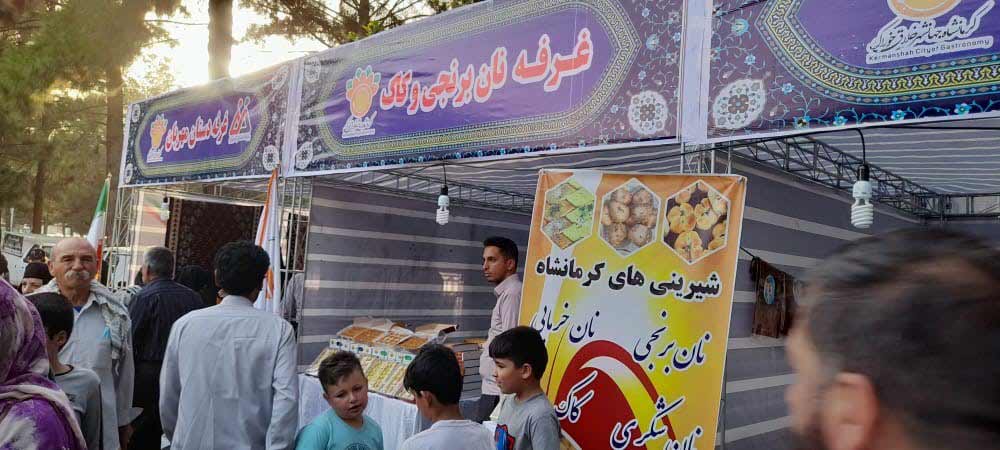
Some of Kermanshah’s traditional souvenirs include Nan-e Berenji, Kak, Nan-e Khorma-i, Shokari, Nokhodi, Béji, Barsaq, and Kermanshahi animal fat (Roghan-e Heyvani).
Nan-e Saji
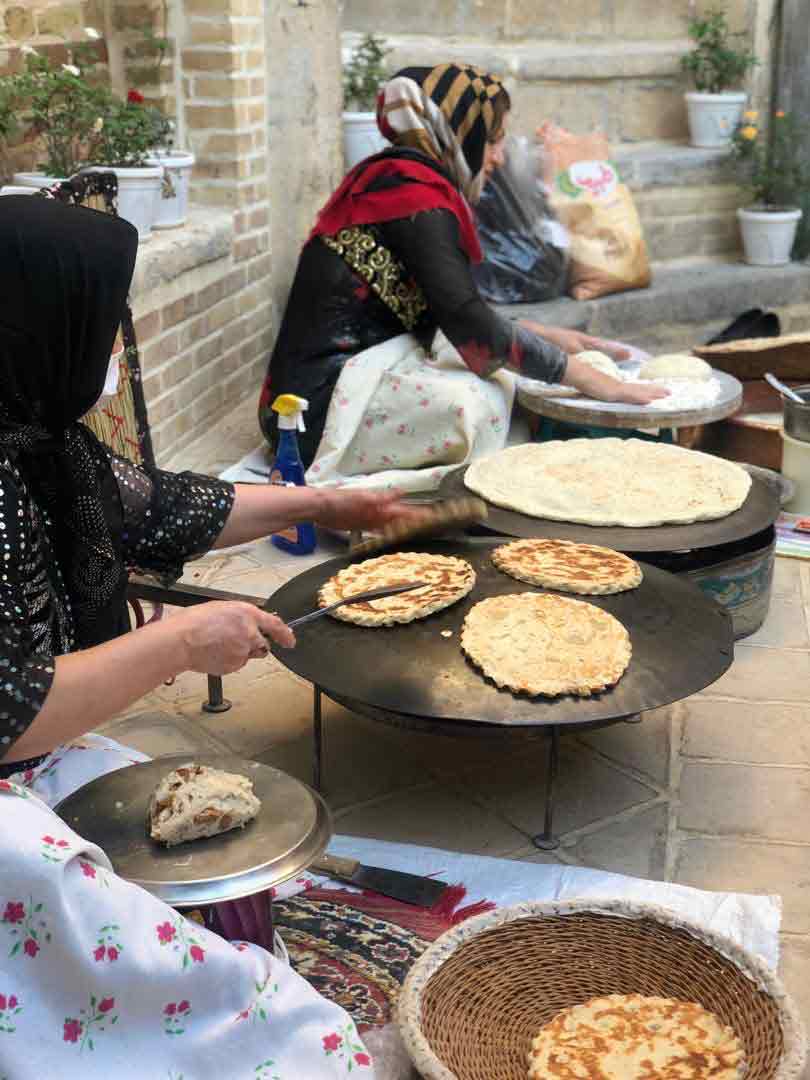
Wheat is a symbol of sustenance, prosperity and blessing. Bread was the staple food on the tables of past generations, and Nan-e Saji is a type of flatbread baked on a saj, a traditional griddle, with a wood fire underneath. In the local dialect, the firewood used for this purpose is known as chili or chileg.
Nan-e Saji is commonly prepared in various shapes and sizes on the saj and is particularly widespread in western Iran. Very thin varieties of saj bread include Nan-e Tiri (Tiri) and Tap-Tapi, while the thicker variety is known as Fatira. All of these varieties have been registered as part of Iran’s intangible cultural heritage under the broader category of Nan-e Saji.
Chelow Gosht, Zhir-e Berenji and Gordag
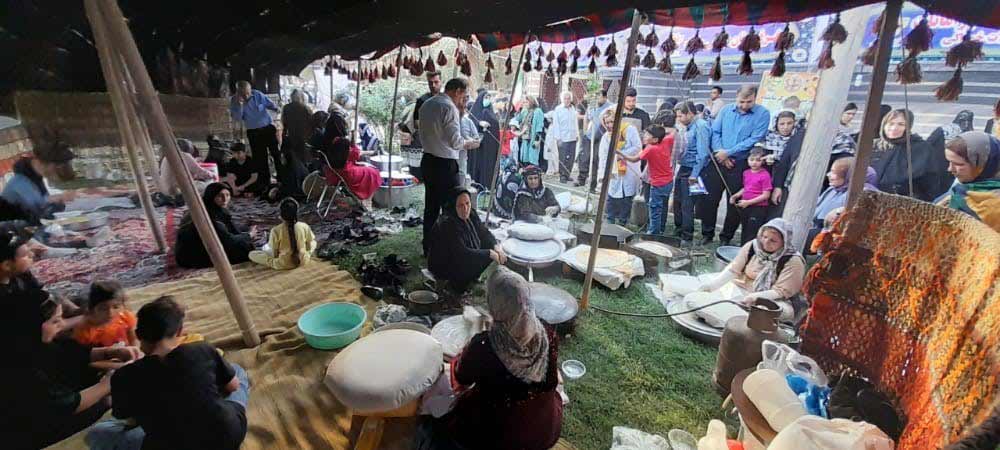
These are among the traditional and longstanding dishes prepared by the nomadic communities of Kermanshah and are served at ceremonies, gatherings and as votive offerings. A distinctive feature of this Kermanshahi nomadic dish is its method of serving: it is presented in large communal copper or metal trays.
First, a quantity of rice is placed in the tray, followed by large pieces of lamb, usually with the bone. Another layer of rice is then placed over the meat.
The distinctive aroma of Kermanshahi animal fat further enhances the flavour of the dish. The meat broth is poured into metal bowls and placed beside the communal tray, while a piece of bread is placed on top of the rice.
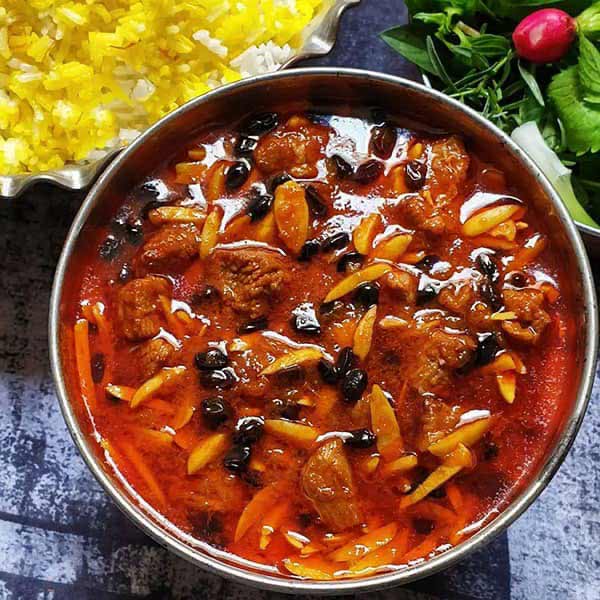
Kermanshahi Khoresht-e Khalal-e Badam
As is well known, foods prepared by the indigenous people of a region are, in many ways, a gift from nature and the surrounding environment. Nature provides local communities with food products that are well suited to their environment. Our ancestors were well acquainted with these natural principles and therefore used ingredients that grew in and around their settlements.
Kermanshah Province is a mountainous region with a cold and dry climate. Such climatic conditions encouraged local people to consume warming and spicy foods. In fact, by eating foods considered warming in traditional dietary beliefs, local communities not only obtained the energy they needed but also helped themselves cope with the severe cold of the region. Khoresht-e Khalal is one such traditional dish, considered warming in nature and valued for its nourishing and nutritious properties.
Kermanshahi Khoresht-e Khalal-e Badam, commonly known simply as Khoresht-e Khalal, is a traditional Iranian dish specific to Kermanshah Province that has long been served at gatherings and celebrations. It is traditionally considered an essential dish when visiting a Kermanshahi household, where preparing this delicious traditional food is regarded as a gesture of respect and hospitality towards guests.
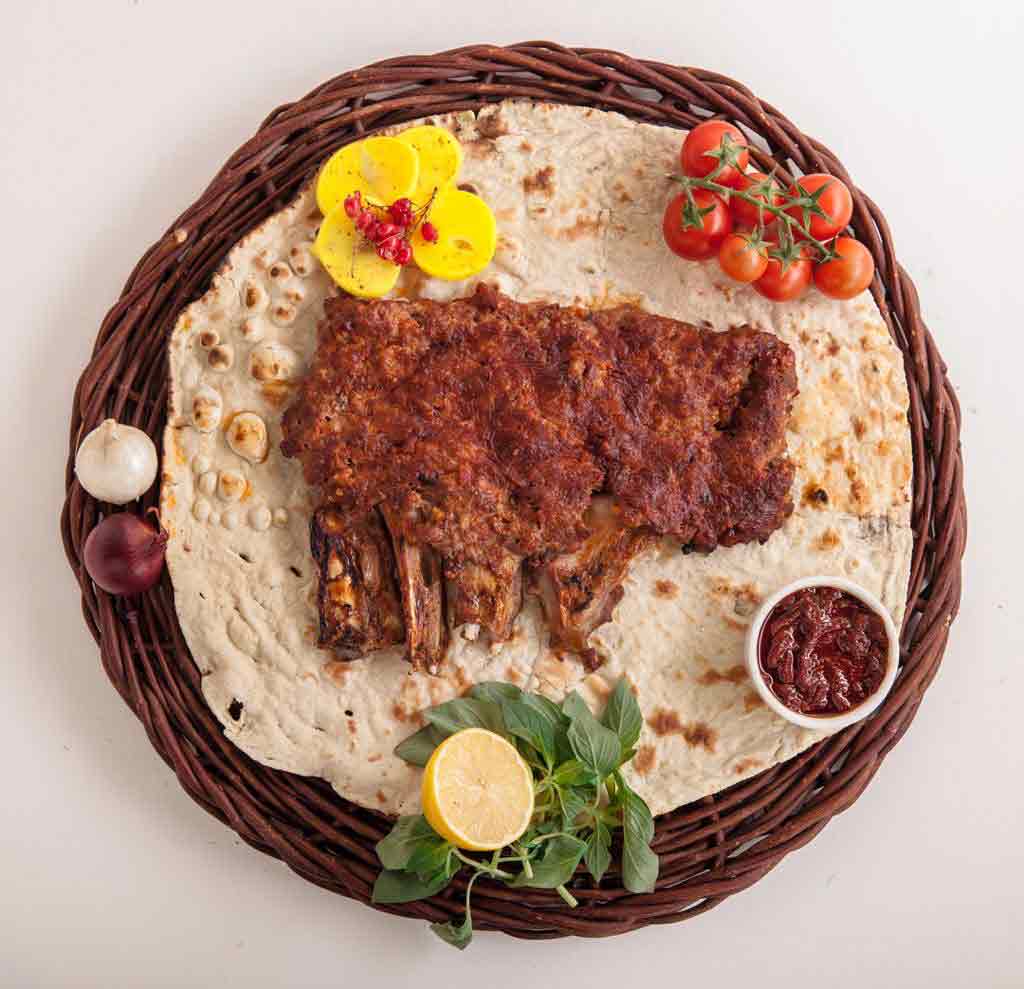
The reputation of Khoresht-e Khalal has spread throughout Iran, to the extent that Kermanshah is widely associated with both Kermanshahi animal fat and this distinctive dish. Kermanshahi Dandeh Kebab is another highly renowned local speciality.
The unique historical and tourist attractions of Kermanshah, together with its more than 4,000 historical and cultural sites, provide a strong basis for attracting visitors to the province. Kermanshah is also home to more than 12,300 sites inscribed on the National Heritage List, as well as 50 designated tourism areas and 14 tourism-target villages, further enhancing its potential as a major tourist destination.
Natural Attractions of the Province
Niloufar Spring
Quri Qaleh Cave, dating back approximately 65 million years
Paraw Cave
Mountain Park: the rooftop of Kermanshah
Do-Ashkaft Cave: the earliest dwelling sites of Kermanshah’s Neanderthal inhabitants of the Zagros
Iran’s highest waterfall: Piran Waterfall
Sahneh Spring
Bal Spring and River (Kani Bal): the Bal River, considered the shortest river in the world, is only 15 metres long.
Religious Attractions
A combination of religion, history and art can be found at Tekyeh Moaven al-Molk and Tekyeh Biglarbeigi.
Kermanshah Bazaars
Nan-e Berenji Market: known for the delightful aroma of traditional sweets and Kermanshahi animal fat
Traditional Kermanshah Bazaar (Dark Bazaar)
Bisotun Historical Site
The Bisotun Historical Site, one of the most remarkable tourist attractions of Kermanshah, takes visitors to the heart of history and encompasses numerous historical remains from different periods. Owing to the chronological diversity of its historical periods, Bisotun is regarded as an open-air museum of Iran’s history. This land, also known as the Gateway to Asia, is home to unique monuments and remains, including the Bisotun Inscription, the Statue of Hercules, the Mithridates II Rock Relief, Farhad Tarash, the Sasanian Bridge, the Ilkhanid Caravanserai, Shah Abbas Caravanserai, and the Safavid Bridge.
The Bisotun Caravanserai has served as accommodation for travellers from the Safavid period to the present day. Today, while retaining its original function, it provides accommodation and hospitality services as a boutique hotel.
Taq-e Bostan
One of Kermanshah’s most important historical attractions is the renowned Taq-e Bostan rock relief complex, located at the end of the beautiful Shahid Keshvari Boulevard. The streets leading to this historic site are also lined with dozens of establishments offering local Kermanshahi cuisine, adding to the attraction of the area.
Tagh-e Gara
Located on the Kermanshah–Sarpol-e Zahab Road.
Zij-e Manijeh
A thousand-year-old legend in Sarpol-e Zahab, Kermanshah.
Kermanshah Rock-Cut Tombs: Chambers in the Mountains
Rock-cut tombs are cavities carved into mountains by the people of ancient Iran to bury their deceased along with their belongings. These tombs were generally designed for several individuals and became particularly prevalent during the Median and Achaemenid periods.
- Eshaqvand (Sakavand)
- Dokkan-e Davood
- Darband-e Sahneh
- Ravansar
- Shamsabad
- Dareh
- San Rostam
- Bard-e Asheghan
- Bernaj
Museums of Kermanshah
- Museum of Ancient Heritage
- Kermanshah Museum of Martyrs
- Stamp Museum and Exhibition
- Holy Defense Museum
- Zagros Paleolithic Museum
- Kazazi Museum and High School
- Kermanshah Handicrafts Museum
- Zoological Museum
- Kermanshah Anthropology Museum
- Museum of Clothing and Jewellery
- Kermanshah Natural History Museum
- Museum of Calligraphy and Manuscripts
Kermanshah is home to various ethnic groups, including Kurds, Laks and Lurs, as well as followers of different religions and faiths, including Shi’a and Sunni Muslims, Yarsanis (Ahl-e Haqq), and Jews.
Why and How Did Kermanshah Become a UNESCO Creative City of Gastronomy?
In 2015, the City Development Strategy (CDS) studies for Kermanshah were initiated with an investment-oriented approach. In this context, the Kermanshah Lotus brand was selected, with the water lily symbolizing life and living, and the slogan “Kermanshah, the City That Loves You” was adopted as the city’s main slogan.
During these studies, the tourism industry was identified as the main driver of the city’s development. Among the various dimensions of the tourism industry, gastronomy was recognized as one of its principal elements, with significant cultural, economic and social dimensions.
Given Kermanshah’s pivotal role in western Iran, its shared border with Iraq, and its location along historic routes such as the Silk Road, the Royal Road and the Great Khorasan Road, which connected the western and eastern parts of the region, the city continues to play a significant role in Iran’s international connectivity. Kermanshah’s role at the international level has been given particular attention in the city’s strategic development strategy.
Evidence of the special place of gastronomy in Kermanshah can be found in the Sasanian rock reliefs of Taq-e Bostan, as well as in the traditions associated with food, each of which preserves traces of culinary practices and stories passed down through generations.
In religious terms, the people of Kermanshah—including Shi’a and Sunni Muslims and followers of the Yarsan faith—have their own traditions in which food associated with religious customs and rituals has always been an important and enduring element. Geographically, the region’s rich diversity of wild plants and edible vegetation is another important aspect of its culinary heritage.
In spring, the land of Kermanshah becomes home to dozens of varieties of wild plants. Creative women from the nomadic communities use these plants to prepare dozens of different foods, ranging from traditional breakfasts to breads, sweets and local dishes. From a cultural and mythological perspective, Ash-e Daneh Kolaneh for Shahmaran, prepared at the beginning of the Kurdish spring—around mid-February in the Gregorian calendar—is traditionally associated with growth and renewal. There are hundreds of stories, each connected to a particular food. It is even said that Papgeh Shwaneh of Kermanshah, with roots going back several centuries, was one of the world’s earliest forms of fast food, traditionally eaten by shepherds as a meal that could sustain them for more than ten hours without the need for another meal.
Joining the UNESCO Creative Cities Network (UCCN) not only creates greater dynamism and motivation among stakeholders across the city, but also provides an opportunity for the international community to recognize the culinary capacities of this land. In addition to creating opportunities in the field of tourism, membership can contribute significantly to promoting the production, packaging and trade of a wide range of food products in Iran and internationally.
Creativity in food production is inherently rooted in the ancestral heritage of the people of Kermanshah, while the city’s location in a border region and its foreign transit terminals provide an existing foundation for international trade. Membership in the UNESCO Creative Cities Network provides an opportunity to translate these existing capacities into practical action.
Following an assessment of the city’s capacities by experts from the Cultural, Social and Sports Organization of Kermanshah Municipality, consultations with professors from leading universities, and discussions with experts from the National Commission for UNESCO in Iran, the possibility of Kermanshah joining the UNESCO Creative Cities Network was examined. The proposal was subsequently presented to the Kermanshah City Council, and consultations were held with the city’s stakeholders. Ultimately, Gastronomy was selected as the creative field for Kermanshah.
Following this decision, a committee entitled the Creative City Committee was immediately established. Relevant documentation was prepared, including information on the city’s historical background, a database of local foods and culinary traditions, information on food-sector practitioners in Kermanshah, and a call for graduates specializing in the food industry. In cooperation with the Kermanshah Art Centre, work also began on compiling the first Atlas of Kermanshah Cuisine.
Following the assessment of the province’s capacities in this field, a Memorandum of Understanding between the National Commission for UNESCO in Iran and the City of Kermanshah was signed on 11 August 2020 (21 Mordad 1399), in the presence of the then Mayor of Kermanshah, Dr. Saeed Toloei, and the then Secretary-General of the National Commission for UNESCO in Iran, Dr. Hojjatollah Ayoubzadeh.
On 29 October 2021 (7 Aban 1400), Kermanshah was officially designated as a UNESCO Creative City of Gastronomy.
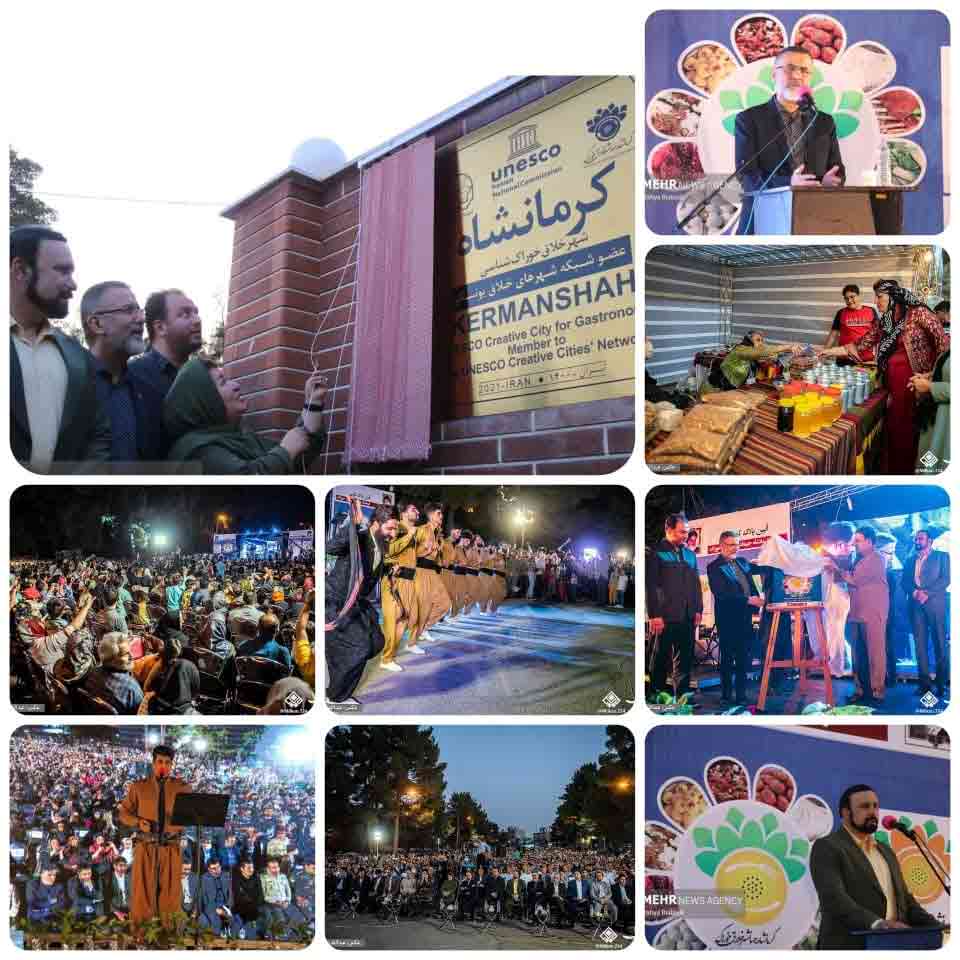
Unveiling Ceremony of the Plaque Designating Kermanshah as a Creative City of Gastronomy
By presenting Kermanshah, the Creative City of Gastronomy, with a golden plaque, UNESCO has helped ensure that we will always remember how our ancestors, from time immemorial, combined the artistry of nomadic women with the generosity of the Zagros Mountains, the abundance of wild plants, and the countless blessings bestowed by God upon this land to create this achievement for our city. With its rich cultural, religious and ritual heritage, Kermanshah Province can shine brightly in this field.
The golden plaque was installed at Pedar Square, near Taq-e Bostan, on 8 July 2022 (17 Tir 1401), in the presence of Dr. Hojjatollah Ayoubzadeh, then Secretary-General of the National Commission for UNESCO in Iran, and Dr. Nader Norouzi, Mayor of Kermanshah.
Actions and Vision of Kermanshah as a Creative City of Gastronomy
- Developing cooperation with other UNESCO Creative Cities in the field of gastronomy at the national and international levels;
- Consolidating the role of gastronomy in tourism development and economic growth;
- Reviving forgotten and neglected foods rooted in the culture, traditions and customs of the region;
- Organizing festivals, exhibitions and competitions in the field of gastronomy to promote and introduce local culinary heritage;
- Safeguarding the identity of indigenous and traditional foods passed down from previous generations, each of which has its own stories and cultural narratives;
- Activities of the Kermanshah Creative City Secretariat in the field of gastronomy.

Contact Information
Address
Kermanshah, 22 Bahman St., Second 30-Metre St., Next to Derakhshan Park, Cultural Organization of Kermanshah Municipality, Third Floor, Creative City of Gastronomy Secretariat
Phone Number
083 3839 7636 | 0918 336 6967