

Message from the Director-General of UNESCO on the Occasion of the International Day for the Conservation of the Mangrove Ecosystem
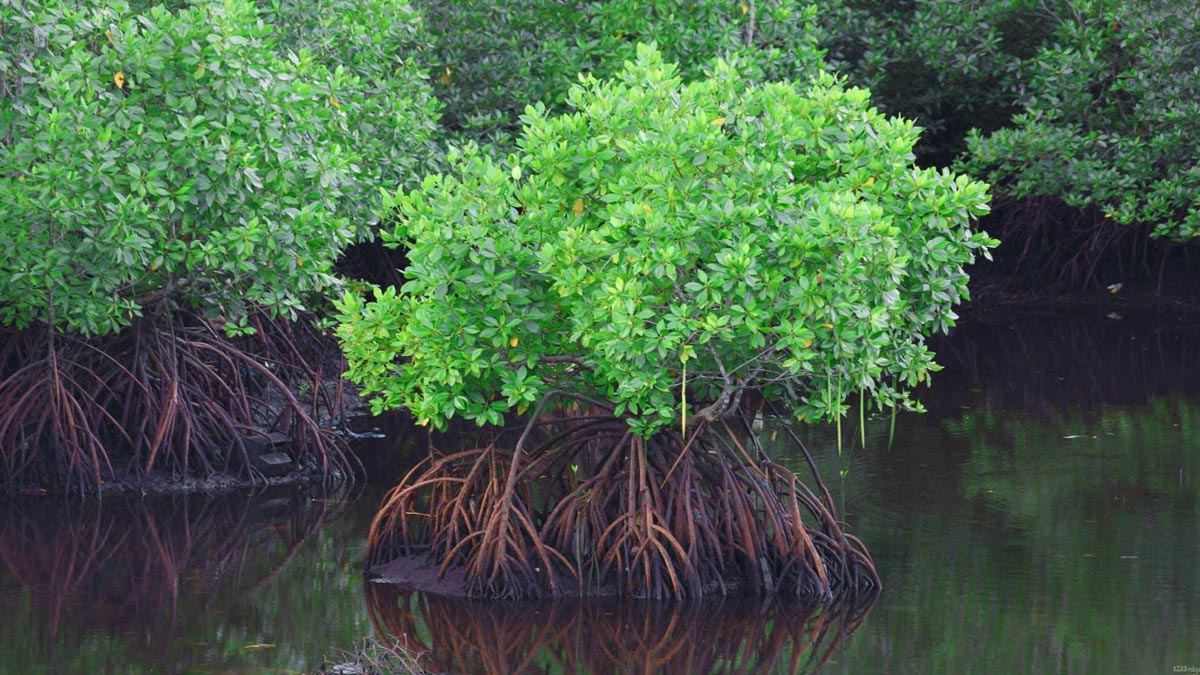
| Marking 26 July, the International Day for the Conservation of the Mangrove Ecosystem, Audrey Azoulay, Director-General of UNESCO, issued a message underscoring the need to protect these rare, fragile and vital ecosystems. She described mangrove forests as a link between land and sea, serving not only as a refuge for life but also as a source of coexistence between humans and nature. |
In her message, Ms. Audrey Azoulay stated:
“Mangrove forests are a link between land and sea. Rooted in saltwater and tidal soils, these plants form a rare and fragile world; a refuge for life that must be protected.
From their tangled roots to the tips of their branches, mangrove forests are complex habitats where numerous species come to feed and reproduce. They also help reduce coastal erosion and soften the impact of powerful waves, playing a vital role for nearby human communities.”
Highlighting the presence of mangrove forests in literature, the Director-General of UNESCO referred to the poem Mangroves by Colombian poet Tomás González, stating:
“This power occupies a special place in the poetry collection Mangroves, in which he calls for a return to the fundamental unity of nature: for the trees to emerge first, then fade and blend into the air, into the landscape behind them, into the mud; for the sea diver to plunge into the sea in a moment filled with salt, sunlight and reflection; and for the sea to shine first, then merge once again with the land.”
Half of the World’s Mangrove Forests Are at Risk
Azoulay went on to warn that an estimated half of the world’s mangrove forests are at risk. Protecting these valuable ecosystems not only safeguards the countless aquatic and terrestrial species that depend on them, but also creates economic opportunities and strengthens knowledge exchange among Indigenous peoples, local communities and scientists.
UNESCO’s Role in Protecting Mangrove Forests
She highlighted UNESCO’s practical efforts in this field, stating:
“For this reason, UNESCO works to protect mangrove forests through networks such as biosphere reserves, Global Geoparks and World Natural Heritage sites, as well as through direct involvement in conservation projects around the world.”
She went on to name specific projects undertaken by the Organization. In Latin America and the Caribbean, UNESCO’s MangRes project has been restoring mangrove forests in seven countries since 2022: Colombia, Cuba, Ecuador, El Salvador, Mexico, Panama and Peru. Across the Pacific, the Our Ocean’s Sustainability project, launched last year, combines traditional local knowledge with scientific expertise to protect Thailand’s largest mangrove ecosystem.
Education: The Key to Long-Term Conservation
The message further stated:
“Recognizing the vital role of environmental education in the long-term conservation and management of these ecosystems, UNESCO has partnered with the OceanTeacher Global Academy to train the next generation of specialists. Through specialized courses and community training workshops, we are also working to raise global awareness and promote collective action to better protect mangrove forests.”
The Director-General of UNESCO concluded by emphasizing:
“On this International Day, our aim is for everyone in our communities to recognize the value, beauty and fragility of these ecosystems and commit to protecting them.”