Message from the Secretary-General of the Iranian National Commission for UNESCO on World Science Day: Science in the Service of Peace, Trust, and Sustainable Development
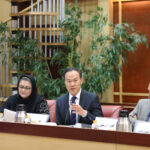
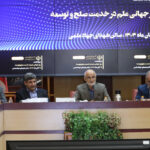
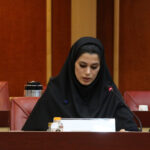
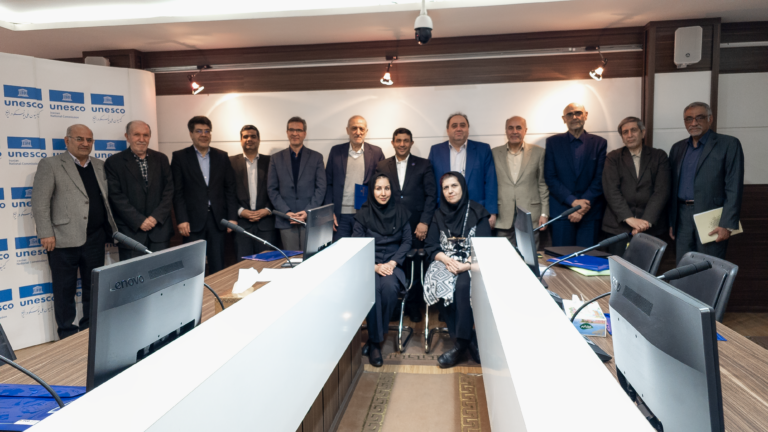
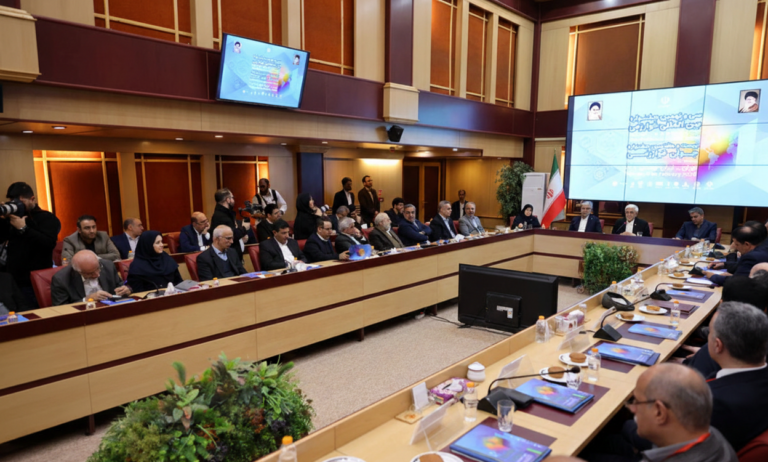
| On the occasion of World Science Day for Peace and Development (10 November 2025), and at the start of the 14th Science Promotion Week in Iran, a meeting attended by a group of officials, thinkers, and representatives of scientific institutions was held at the Ministry of Science, Research and Technology. On this occasion, Dr. Hassan Fartousi, Secretary-General of the Iranian National Commission for UNESCO, delivered a message expressing his views and emphasizing the role of science in sustainable development, social trust, and public participation. The message was read at the official ceremony by a representative of the Commission. |
The full text of the message from the Secretary-General of the Iranian National Commission for UNESCO is as follows:
“Professors, researchers, students, and those interested in science and sustainable development,
Ladies and Gentlemen,
Greetings,
First, I regret that I am unable to attend this event in person, as it coincides with the 43rd session of the UNESCO General Conference, being held in the historic and cultural city of Samarkand.
Today, on World Science Day for Peace and Development, you, distinguished members of the academic and scientific community, have gathered to discuss the fundamental role of science in shaping a better future. This year, World Science Day is being celebrated under the theme ‘Transformation, Trust, and the Future’, a theme that encompasses three key and vital concepts for the path ahead of humanity.
In a world undergoing change at an unprecedented pace, science plays a central role in guiding these transformations. From emerging technologies to solutions for addressing environmental crises, science provides us with the tools for understanding, analysis, and action. Yet, this transformation is not confined to technology; it is also reflected in our ways of thinking, lifestyles, and social structures. Science invites us to reconsider our values, priorities, and approaches to governance.
In a world that at times faces distrust, misinformation, and social divisions, science can play a restorative role. Social trust develops when scientific processes are transparent, comprehensible, and accessible to all. Promoting a scientific culture, public education, and strengthening scientific literacy are among the pillars of building this trust.
In this regard, UNESCO has placed particular emphasis in recent years on the links between science, policy, and society. Trust in science is essential not only for developing evidence-based solutions but also for their public acceptance and successful implementation. UNESCO believes that science must serve everyone and, through public participation, become a form of social capital.
A future in which justice, sustainability, and peaceful coexistence are realized requires investment in science, support for young researchers, and stronger regional and global scientific cooperation. Science can help us address complex challenges such as climate change, health crises, and social inequalities.
In its strategic documents, including the Recommendation on Open Science, UNESCO emphasizes the need for open access to knowledge, transparency in scientific processes, and public participation in the production of knowledge. The Organization views science not merely as a tool for economic growth, but also as a means of cultural enrichment, social development, and political empowerment.
UNESCO has consistently presented science as a tool for peace, dialogue, and sustainable development. In line with this approach, the Iranian National Commission for UNESCO has sought, through educational, research, and cultural programs, to make science a common language among cultures and nations. We believe that science can transcend borders, recognize differences, and pave the way for peaceful coexistence.
Science must not be a privilege reserved for a particular group. We must create conditions that enable women, young people, minorities, and disadvantaged communities to participate in scientific processes. Diversity in science not only enriches knowledge but also contributes to the achievement of scientific equity.
Today, more than ever, we need synergy among scientific institutions, universities, governments, and civil society. Science cannot thrive in a vacuum; it requires an appropriate social, cultural, and political environment. Together, we must take steps towards building a better future based on knowledge, dialogue, and trust.
In this regard, the Iranian National Commission for UNESCO is proud to express its readiness to cooperate with scientific, academic, cultural, and international institutions to promote science. We stand ready to take joint steps towards promoting science for peace, sustainable development, and the empowerment of communities, and to build a brighter future for generations to come.
Thank you for your attention.”
At the ceremony, which was organized at the initiative of the Iranian Association for Science Promotion in cooperation with the Ministry of Science, Research and Technology, a message from Dr. Hossein Simaei, Minister of Science, Research and Technology, was read by Dr. Mohammad-Ali Dadgostarnia, the Minister’s Media Assistant. The message emphasized that “World Science Day is an opportunity to reflect on the philosophy and mission of science and its role in building a more just and peaceful world.”
Subsequently, Dr. Vahid Shalchi, Deputy Minister of Science for Cultural and Social Affairs, highlighted the role of universities and scientific associations in expanding scientific discourse, stating: “Science can provide a platform for peace and dialogue and must become part of social interaction.”
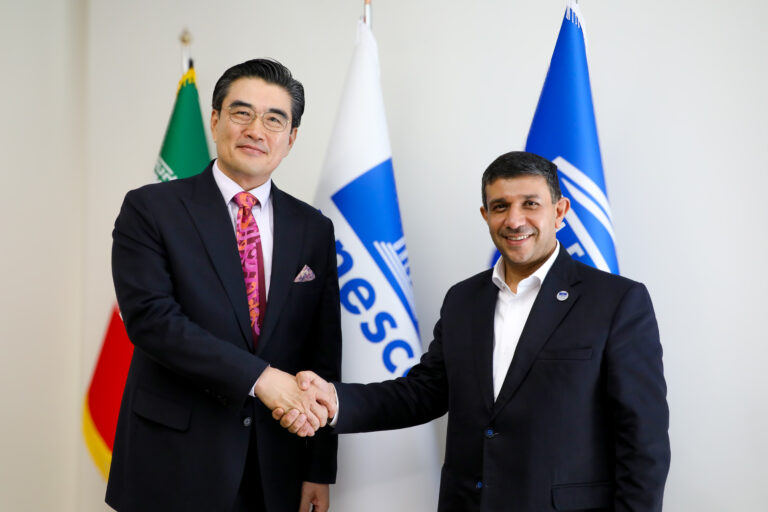
Ying Sorang, Head of the UNESCO Office in Tehran, also stated: “Science is not merely about innovation; it is a bridge to strengthening mutual understanding among nations and achieving sustainable development. Inclusive science education and the sharing of knowledge across borders lay the foundations for a peaceful and sustainable world.”
Dr. Ghadimi, President of the Iranian Association for Science Promotion, then stated that “science is a source of peace of mind and growth,” describing science promotion as the process of bringing the light of knowledge into people’s everyday lives and emphasizing the need to strengthen the connection between science and society.
Dr. Mostafa Moeen, President of the Association for Ethics in Science and Technology, also delivered remarks and read the “Charter of Ethics for Peace,” emphasizing that “peace is not a distant aspiration but something that must be built, and it can only be achieved through cooperation among scientific, civil, and cultural institutions.”
Subsequently, Dr. Zia Hashemi, Deputy for Cultural and Social Affairs to the First Vice President, highlighted the role of science in the peaceful coexistence of nations, stating: “Science in the service of peace and development is not an ideal, but a global necessity. Through science, we can live in peace with nature and with one another, and build a shared and sustainable future.”
At the end of the ceremony, Dr. Nabavi, Secretary of the Commission on Scientific Associations, summarized the speeches and emphasized the importance of synergy among scientific institutions and strengthening a culture of dialogue to achieve sustainable development.
The final part of the program also announced the official launch of the 14th Science Promotion Week in Iran, along with an exhibition and a series of scientific and cultural meetings to be held at the University of Tehran.