Russia Publishes a Code of Ethics for Artificial Intelligence
Developing an operational document to promote the responsible development and use of artificial intelligence systems, inspired by global ethical principles The process of drafting the “Code of Ethics for Artificial Intelligence,” which began in Russia in October 2021, has reached its final stage with the publication of the document’s final text. The Code sets out a set of principles, codes of conduct and implementation guidelines specifically developed for stakeholders in the field of artificial intelligence. It aims to clarify how ethical principles should be implemented, establish practical mechanisms, and guide the development, deployment and use of ethical AI systems at both the development and operational stages.
|
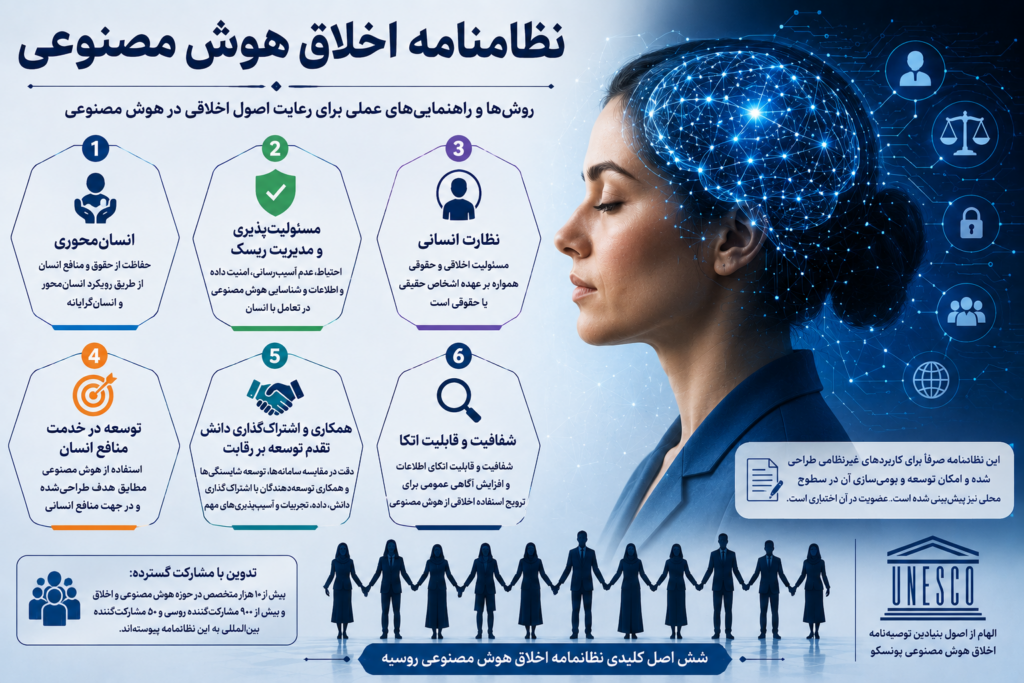
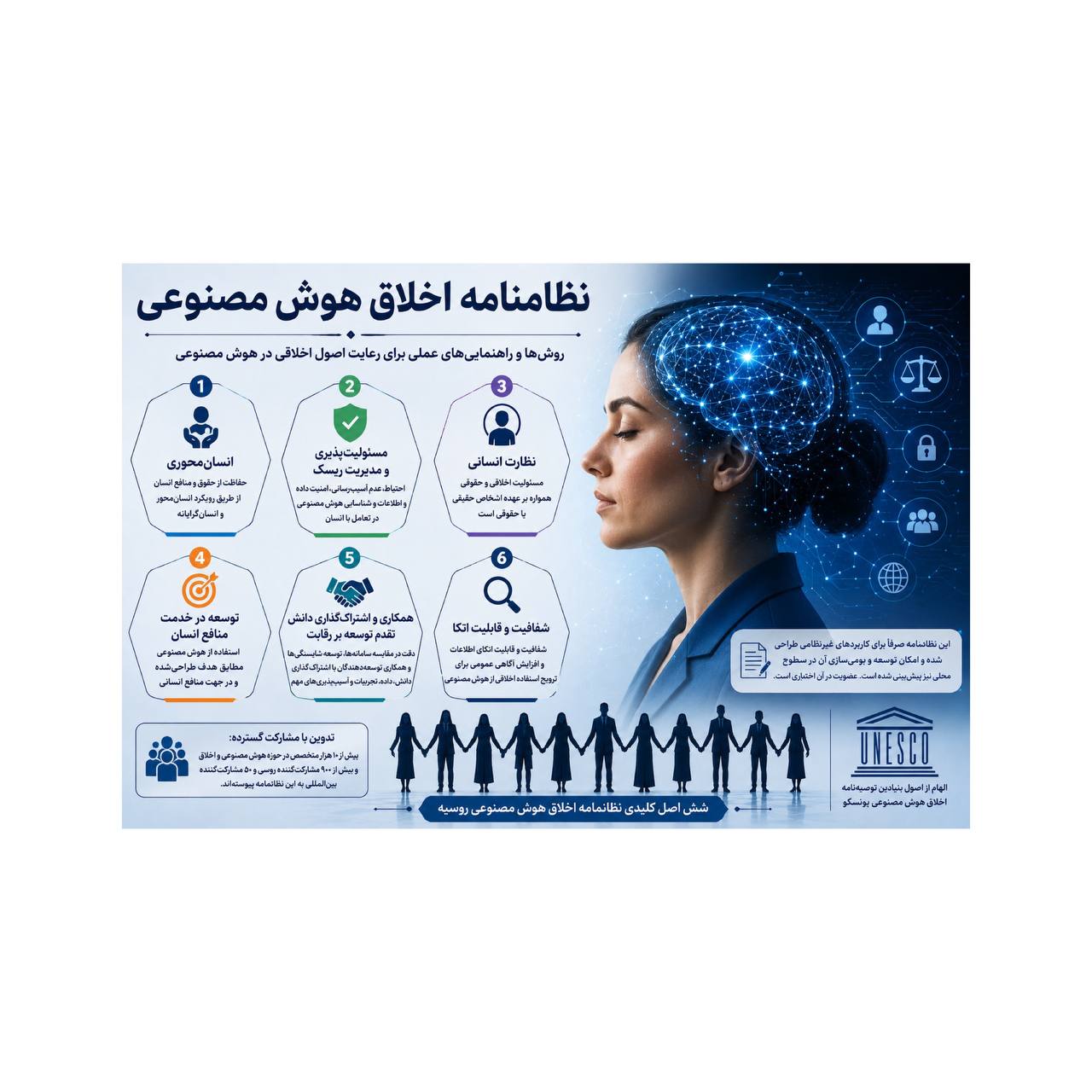
More than 10,000 artificial intelligence and ethics experts were consulted during the drafting of the Code, which has so far been joined by more than 900 Russian participants and 50 international participants.
The document includes provisions for appointing an AI ethics officer, establishing specialized commissions, developing best practices, and providing practical guidelines and methods for complying with ethical principles. The Code is designed exclusively for civilian applications and also emphasizes the possibility of developing and adapting it to local contexts.
The primary objective of the document is to fill ethical gaps in areas that are not yet fully covered by national legislation or international regulations. Its structure is divided into two main sections: ethical considerations and practical approaches to implementing them. Participation in the Code is voluntary.
Six Key Principles for the Ethical Development of Artificial Intelligence
The first section of the Code outlines six fundamental considerations for the development and use of artificial intelligence. The foremost principle is the protection of human rights and interests through a human-centred and humanistic approach, ensuring that technological development does not hinder the flourishing of human cognitive abilities, creativity, cultural values or linguistic diversity.
The document also emphasizes the recognition of human autonomy and free will, the preservation of individual decision-making independence, and the avoidance of developing systems that deliberately undermine human cognitive abilities. AI stakeholders are required to comply with national laws and legal liability requirements throughout all stages of AI systems’ life cycles, prevent discrimination in algorithms and data, and develop the necessary tools to identify and eliminate discriminatory biases.
Other principles set out in the Code include accountability based on risk assessment, precaution, non-maleficence, data and information security, human oversight of AI outcomes, the use of systems in accordance with their intended purposes and human interests, prioritizing cooperation and knowledge-sharing over competition, and promoting transparency and public awareness of artificial intelligence.
According to the document, ethical and legal responsibility for the use of AI will always rest with natural or legal persons. In sensitive cases, independent third-party assessments are also recommended to examine the social, human and human rights impacts of AI systems.
Implementation Mechanisms and Comparison with UNESCO’s Recommendation
The second section of the Code explains the practical implementation of the document. It provides a detailed account of its legal foundations, terminology, registration procedures and implementation mechanisms.
A comparative analysis of the Code and UNESCO’s Recommendation on the Ethics of Artificial Intelligence indicates that Russia’s Code adopts many of the Recommendation’s fundamental principles, including human-centredness, non-discrimination, accountability, risk assessment, human oversight and transparency. However, it translates these principles into behavioural and operational guidelines for AI stakeholders.
By contrast, UNESCO’s Recommendation provides a global, policy-oriented framework that extends beyond ethical principles to cover a broad range of areas, including the environment, gender, culture, education, the economy, health and international cooperation. From the perspective of global governance, it therefore offers a more comprehensive scope.