

Intercultural Dialogue: The Central Function of the Ancient Silk Road
Secretary-General of the National Commission for UNESCO in Iran: The central function of the ancient Silk Road, as a route that fostered civilizations, should be understood in terms of promoting and expanding culture and intercultural dialogue, as mutual understanding and respect for the subcultures and cultures of different nations facilitated and fostered economic relations.
At the opening ceremony of Endless Clouds of the Silk Road, held on 12 October 2024 at the Malek National Library and Museum, an exhibition of works jointly presented by the Shanghai Museum of Art Collections and the Malek National Library and Museum was inaugurated. The exhibition featured manuscripts, historical coins, travelogues, paintings and calligraphic works dating from the 19th century, as well as a collection of design works.
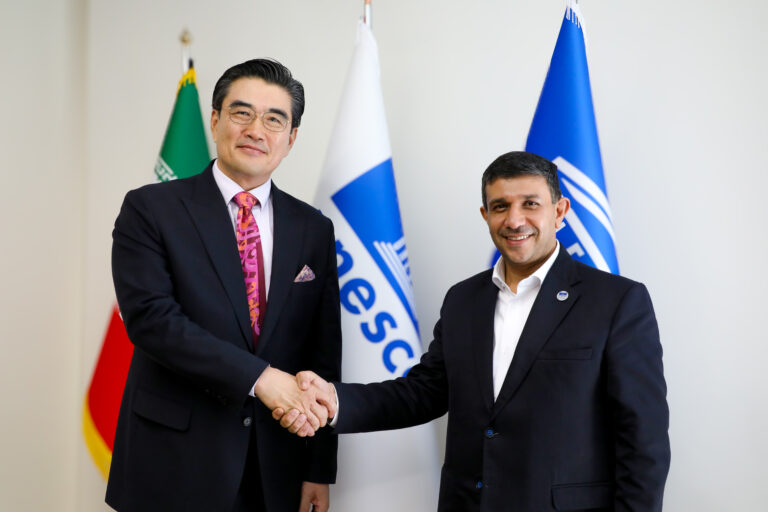
The opening ceremony was attended by Hassan Fartousi, Secretary-General of the National Commission for UNESCO in Iran; Abdolmahdi Mostakin, Director of the Culture Group of the National Commission for UNESCO in Iran; Zunig Pi Wu, Ambassador of China to Iran; Hu Mochin, Director of the Shanghai Museum of Art Collections; Hojjat al-Islam Seyyed Jalal Hosseini, Head of the Museums, Libraries and Documents Organization of Astan Quds Razavi; Mohammad Khorasani-Zadeh, Director General of Visual Arts; Hadi Mirzaei, Director General of Museums; Jabraeil Nokandeh, Director of the National Museum of Iran; Bijan Moghaddam, Director of the Niavaran Palace Museum; Ali Bardbar, CEO of the Bardbar Foundation and art collector; as well as artists, officials from Astan Quds Razavi’s cultural institutions, and representatives of the Ministry of Foreign Affairs. The event was held on Saturday, 12 October, at the Malek National Library and Museum in cooperation with the Bardbar Foundation