International Day of Peaceful Coexistence: A Call to Deepen Mutual Respect, Dialogue, and National Consensus
In a world rich in diversity and differences, and sometimes marked by tensions, peaceful coexistence is not merely the absence of violence; rather, it is a dynamic, learnable, and sustainable process grounded in mutual respect, constructive dialogue, and cooperation to achieve shared human interests. At a time when the international community is facing complex crises, conflicts, hostile military aggression, and the resulting humanitarian consequences, reaffirming the principles of peaceful coexistence is more essential than ever. 16 May has been designated the International Day of Peaceful Coexistence by United Nations General Assembly Resolution 72/130. It is a day to remind us that peace is a collective responsibility and a skill that can be cultivated at every level of society; from the home and school to universities, the media, civil society organizations, and public policymaking.
|
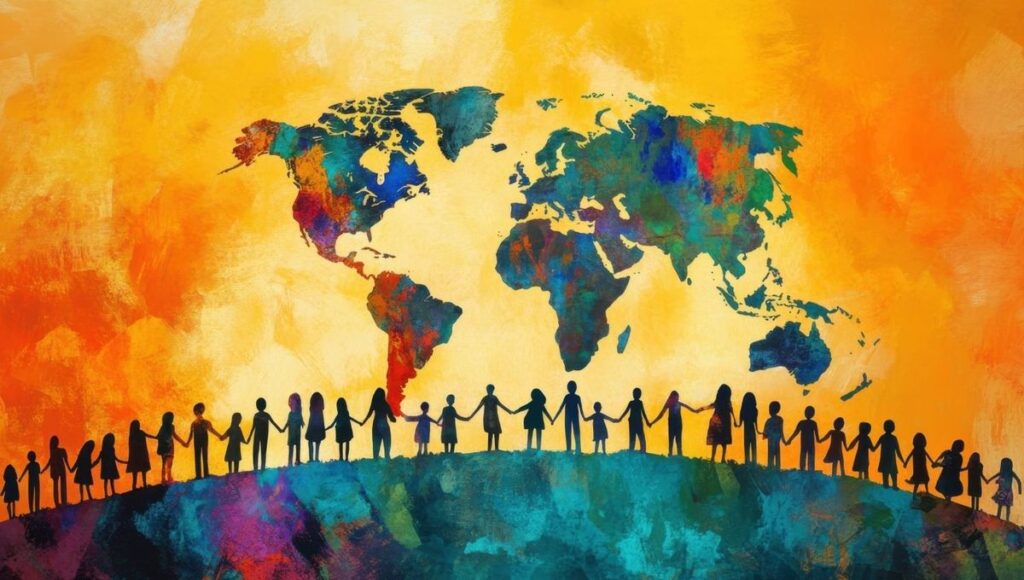
Inspired by the rich legacy of peace-oriented thought and action across diverse cultures and civilizations, this day emphasizes the principles of conscious coexistence: accepting differences, listening to and understanding one another, upholding human dignity, and resolving disagreements through dialogue, mediation, and ethical and civic mechanisms. This vision aligns with the Sustainable Development Goals, particularly Goal 4 (Quality Education) and Goal 16 (Peace, Justice and Strong Institutions), and can help build a safer, more humane, and more compassionate future.
Peaceful coexistence is founded on a set of social and cultural values and competencies, including the acceptance and appreciation of cultural and linguistic diversity, empathetic dialogue and efforts to achieve mutual understanding, respect for others as contributing members of society, and the resolution of disputes through civic, legal, and dialogue-based mechanisms. In UNESCO’s contemporary approaches, fostering a “Culture of Peace” and developing “Intercultural Dialogue Competencies” are considered fundamental pillars for strengthening social resilience, public trust, and solidarity among citizens.
In Iranian society today, strengthening an inclusive national identity and social consensus requires, more than ever, the promotion of a culture of dialogue, constructive interaction, and respect for cultural and social diversity. Bringing different social groups and communities closer together is possible only through mutual listening, responsible participation, and the strengthening of social capital; a path whose foundation and horizon are defined by peaceful coexistence.
Today’s world faces challenges such as the spread of hate speech, discrimination, inequality, violence, and ruthless and irresponsible military aggression. Under these circumstances, peaceful coexistence is not merely an optional choice, but an ethical and social imperative for safeguarding human dignity and social cohesion. This fundamental principle flourishes through Global Citizenship Education, the advancement of media literacy, and the strengthening of intercultural dialogue, and can serve as a safeguard against cycles of violence, extremism, and social fragmentation.
Education, culture, and the media play a decisive role in promoting a Culture of Peace and peaceful coexistence. Their contributions range from incorporating the concepts of peace, tolerance, human rights, and dialogue into education systems, to safeguarding tangible and intangible cultural heritage as an asset for strengthening mutual understanding, promoting responsible narratives in the media and on social networks, and actively combating hate speech.
On this international day, the Iranian National Commission for UNESCO invites all institutions, local communities, academics, cultural and media professionals, and citizens to play an active role in strengthening national solidarity and fostering a culture of understanding and tolerance by reinforcing educational programs, expanding intercultural dialogue, supporting peace-oriented ideas and initiatives, and promoting hopeful and compassionate narratives.
Peaceful coexistence is the art of living together while embracing differences and diversity, listening to one another, and seeking mutual understanding to build a shared future. On this international day, we reaffirm our collective responsibility and extend our hand in cooperation to all citizens and institutions to pave the way for a safer, more just, and more humane future for present and future generations, grounded in respect, dialogue, social consensus, and national solidarity.