

Creative City of Crafts and Folk Art
Creative City of Crafts and Folk Art
Creative City of Crafts and Folk Art
Isfahan is located in central Iran at 51°39′40″ E longitude and 32°38′30″ N latitude. It lies east of the Zagros mountain range and is situated on a sedimentary plain consisting of relatively extensive plains extending in a north-west to south-east direction.
The city of Isfahan currently covers an area of 19,102 hectares. Its legal boundaries are divided into five urban sectors and 15 municipal districts. The plain on which Isfahan is located is relatively flat, with an average gradient of less than 0.3 per cent, extending from north-west to south-east.
In terms of climate, the city is located in the dry belt of the Northern Hemisphere and therefore has a dry desert climate, with cold winters and hot summers. Its average temperature is approximately 16°C, and its average annual rainfall is around 110 millimetres. The prevailing wind direction during most seasons is from the south-west and west, and the winds are generally not strong.
Early historians attributed the foundation of the city of Isfahan to Tahmuras, the third king of the Pishdadian dynasty, while some attributed it to Alexander and others to a period even earlier. In any case, historians generally attest to the city’s antiquity.
In terms of its etymology, the name Isfahan appears in historical and geographical sources in various forms, including Spahan and Sepahan, and is most probably derived from the word sepah (army). This suggests that the city was historically a place where armies gathered.
Isfahan is renowned for its unparalleled historical beauty and has long been known as the “Half of the World.” However, the province also offers visitors a range of other attractions, one of the most enjoyable of which is its cuisine.
Beryani
One of the most famous dishes prepared and served in Isfahan Province is Beryan. However, among tourists, this dish is mistakenly referred to as Beryani or Beryooni, whereas Beryooni actually refers to the place where Beryan is sold. This traditional and delicious dish is not only famous in Isfahan but is also widely known and popular throughout Iran. Domestic and international tourists visiting this beautiful and charming city invariably make a point of tasting this delicious dish.
The people of Isfahan Province prepare Beryan using mutton shoulder and flank, onion, dried mint, oil, salt, pepper and turmeric, cinnamon, ground saffron and kashk. In Isfahan Province, Beryan is traditionally served with some cooked and minced lamb’s lung, the broth prepared from the Beryan, kashk, Sangak bread, basil and a jug of chilled doogh.
Yakhmeh Torsh
Yakhmeh Torsh is one of the traditional dishes of Isfahan Province. Unfortunately, it is now prepared and cooked by the people of the province on a much smaller scale than in the past. Because it contains a considerable amount of fruit, including dried apricots, quince and plums, this local dish is considered highly nutritious and beneficial.
The people of the province prepare this delicious dish by combining lamb, quince, plums, dried apricots, rice, salt, sugar and turmeric. In Isfahan Province, Yakhmeh Torsh is served with bread.
Kaleh Joosh
Kaleh Joosh is a very delicious dish rich in calcium and protein and is recognised as one of the traditional and local dishes of Isfahan Province. This nutritious dish is also prepared as a main dish in other provinces, including Hamadan and Sistan and Baluchestan.
The main ingredient of Kaleh Joosh is kashk, which gives this local dish its pleasant flavour. The people of Isfahan Province prepare it using minced meat, walnuts, kashk, flour, onion, dried mint, salt, pepper, turmeric and water. Adding meat to the dish is optional and depends on the preferences of family members. Sometimes, garlic is also added to Kaleh Joosh. In Isfahan Province, this nutritious and delicious dish is served with bread.
Halim Bademjan
Halim Bademjan is a highly nutritious and popular dish that is widely enjoyed by the people of Isfahan Province. There are usually various methods of preparing this delicious dish, each offering a distinctive and wonderful flavour and aroma.
The people of Isfahan Province prepare this traditional local dish using mutton shoulder or neck, kashk, fried onions, grated garlic, fried aubergines, naana dagh (fried mint), saffron, salt, pepper and various preferred spices. In some families in the province, lentils or white beans are also added when preparing Halim Bademjan. During the colder months of the year, this delicious dish served with bread is particularly comforting.
Gheimeh Rizeh
Another traditional and popular dish of Isfahan Province is Gheimeh Rizeh. This dish is usually prepared and served for lunch. Fresh herbs, together with a small bowl of yoghurt or pickles, make a particularly delicious accompaniment to this dish.
The people of Isfahan Province prepare this traditional dish using lean minced mutton, grated onion, chickpea flour, fried onion, tomatoes, dried mint, oil, salt, pepper and various spices according to the preferences of family members. Tomato paste may also be used instead of fresh tomatoes. The dish is generally served with fresh herbs and yoghurt.
Kookoo Ghandi
Kookoo Ghandi, which is now prepared much less frequently than in the past by cooks in Isfahan Province, is another traditional and local dish of the province. It is a dish more commonly prepared by grandmothers and older generations of homemakers, renowned for their excellent and distinctive cooking.
As its name suggests, this traditional dish has a distinctly sweet and pleasant flavour. Cooks in Isfahan Province prepare Kookoo Ghandi using potatoes, eggs, saffron, sugar, rosewater and citric acid. If you have the opportunity to be a guest of the warm and hospitable people of Isfahan Province, be sure to ask them how this dish is prepared. You certainly will not regret it.
Ash-e Somagh
A tangy dish infused with the warmth and affection of a mother’s cooking, Ash-e Somagh is a distinctive and delicious soup prepared for the family. It is another traditional and popular food of Isfahan Province and is widely prepared and enjoyed by families in the province during the cold season.
The people of Isfahan Province prepare Ash-e Somagh using rice flour or broken rice, dried sumac, minced meat, herbs, onion, oil, salt and pepper. This traditional dish has a particularly pleasant aroma and flavour, and visitors to the beautiful and fascinating province of Isfahan are strongly encouraged to try it.
Gaz
Isfahan is synonymous with its famous confectionery, Gaz. According to some accounts, this renowned and popular sweet appears to have originated during the Safavid period in Isfahan Province, gradually developing from a confection known as Halva-ye Chubeh. However, historians continue to disagree over the accuracy of this claim.
Nevertheless, there is no doubt that Gaz is one of the traditional and indigenous sweets of Isfahan Province. The confection takes its name from the extract of a plant known as Angabin. Today, Gaz is prepared using glucose, rosewater, egg whites, sugar, pistachio kernels, slivered almonds, hazelnuts and bidmeshk (musk willow). In Isfahan Province, Gaz-e Angabin is also produced by adding a very small amount of Angabin extract. However, because Angabin is expensive, this variety is produced in limited quantities.
Poolaki
One of the most delicious traditional sweets of Isfahan Province is undoubtedly Poolaki, which is prepared and enjoyed in various forms. Preparing this delicious confection is not particularly difficult.
The people of Isfahan Province prepare Poolaki using sugar, sesame seeds and cardamom.
Every corner of this historic city is filled with traces of the authentic civilisation and culture of Iran, bearing witness to part of the proud history of this land. Isfahan is one of the most beautiful and popular provinces in Iran and has long been known by the title “Half of the World.”
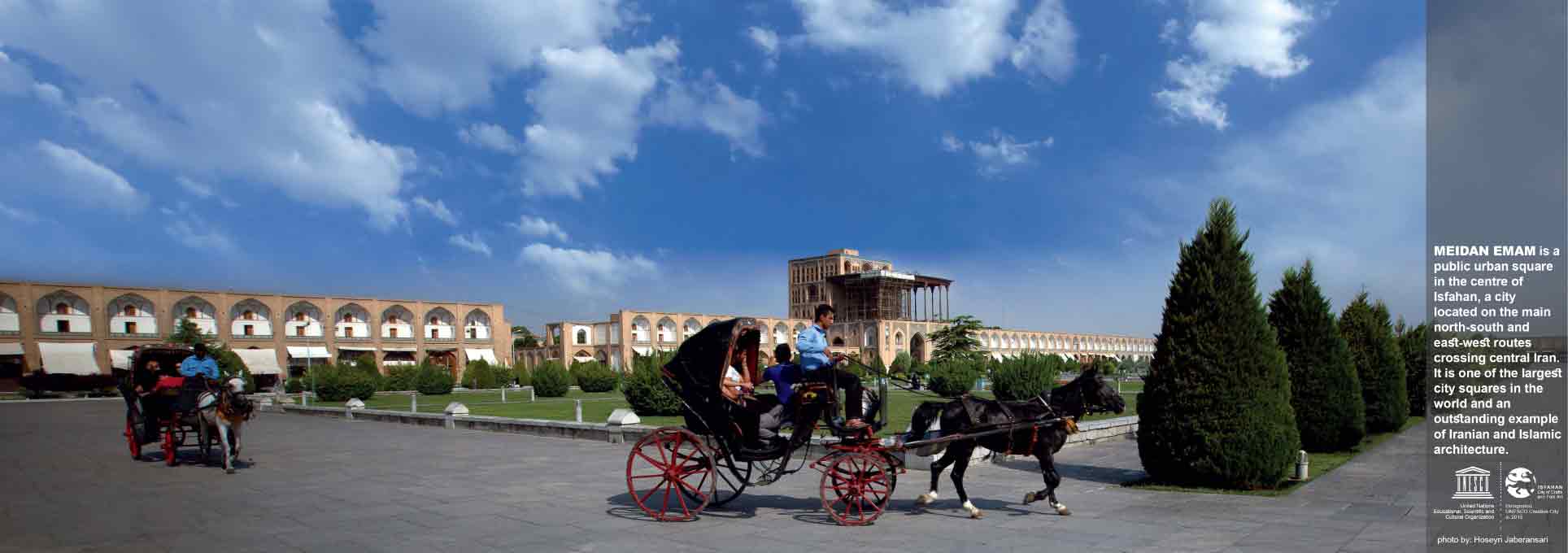
Naqsh-e Jahan Square
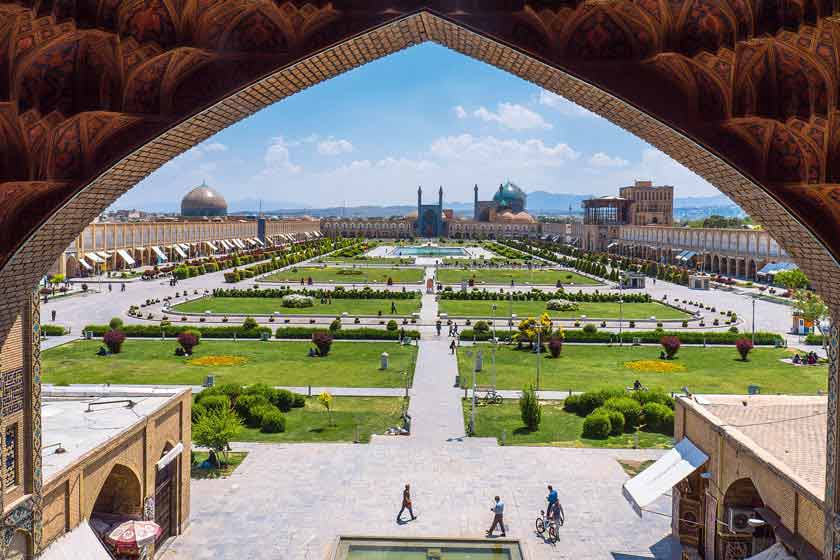
Naqsh-e Jahan Square, officially known as Imam Square, is one of the most beautiful and popular attractions of Isfahan and has been inscribed on the UNESCO World Heritage List. Isfahan itself is famously known as the “Half of the World.”
Naqsh-e Jahan Square, officially known as Imam Square, is the central square of Isfahan and forms part of a historic complex. What distinguishes this square from many of its counterparts is its rectangular shape, which differs from the circular or oval forms of many conventional squares. The rectangular square is 560 metres long and 160 metres wide; in other words, its length is equivalent to approximately 430 paces and its width to 160 paces.
Naqsh-e Jahan Square in Isfahan encompasses historic monuments and sites including Ali Qapu Palace, Sheikh Lotfollah Mosque, Imam Mosque, Qeysarieh Gate, Qeysarieh Bazaar of Isfahan, and the polo gates.
Ali Qapu Palace
Ali Qapu Palace is one of the most visually striking buildings in Naqsh-e Jahan Square. During the Safavid period, it was regarded as one of the finest palaces in the world, incorporating all the features and facilities expected of a royal palace. The building is 48 metres high and has six floors, which are connected by spiral staircases.
Ali Qapu is a magnificent structure situated on the western side of Naqsh-e Jahan Square, opposite Sheikh Lotfollah Mosque. It is renowned worldwide as one of the most important masterpieces of early eleventh-century AH architecture. Construction of the historic Ali Qapu building dates back to 1054 AH, during the reign of Shah Abbas I. Following the transfer of the Safavid capital from Qazvin to Isfahan, it was constructed to serve as the seat of government and official residence of the Safavid rulers. The construction of Ali Qapu continued through five architectural phases, particularly during the reigns of Shah Abbas I’s successors, Shah Abbas II and Shah Soleyman, and the building became increasingly magnificent over time.
One of the most spectacular parts of the palace is the stucco work on its uppermost floor, known as the Music Room or Sound Room, where representations of various musical instruments can be seen. The splendour of the building also lies in its miniatures, created by the renowned Safavid-era artist Reza Abbasi, which have given the palace a distinctive artistic character.
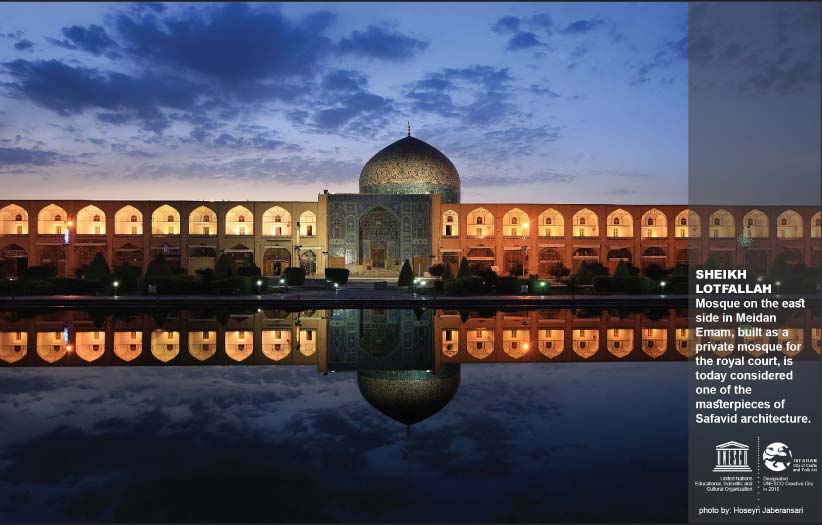
Sheikh Lotfollah Mosque
Sheikh Lotfollah Mosque is one of Iran’s distinctive mosques, built during the Safavid period and today regarded as one of the principal attractions of Isfahan.
The mosque is considered a masterpiece of eleventh-century AH architecture and tilework. It was built by order of Shah Abbas I by Master Mohammad-Reza Isfahani, one of the renowned architects of the period. Construction took approximately 18 years, and even after centuries, the mosque remains a remarkable masterpiece in its use of colour and light in architecture.
One of the most fascinating features of the building is the peacock design at the centre of the interior of the dome, whose feathers appear to be completed by the light entering through the upper arch above the mosque’s entrance.
This religious monument was built to honour Sheikh Lotfollah Maysi and attracts large numbers of tourists every year.
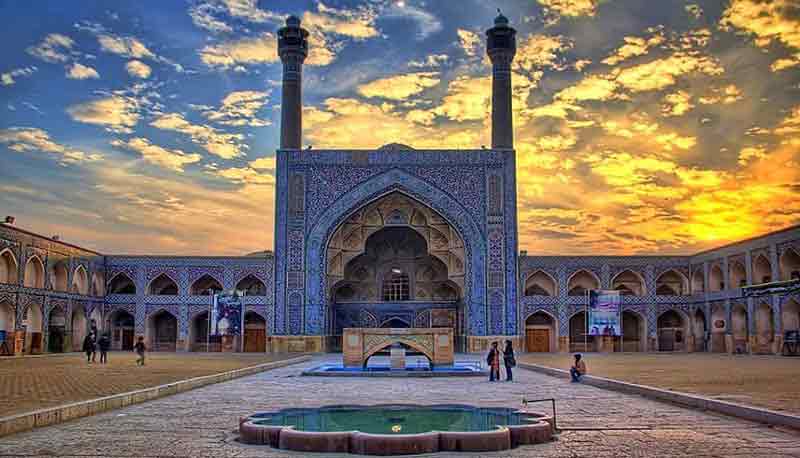
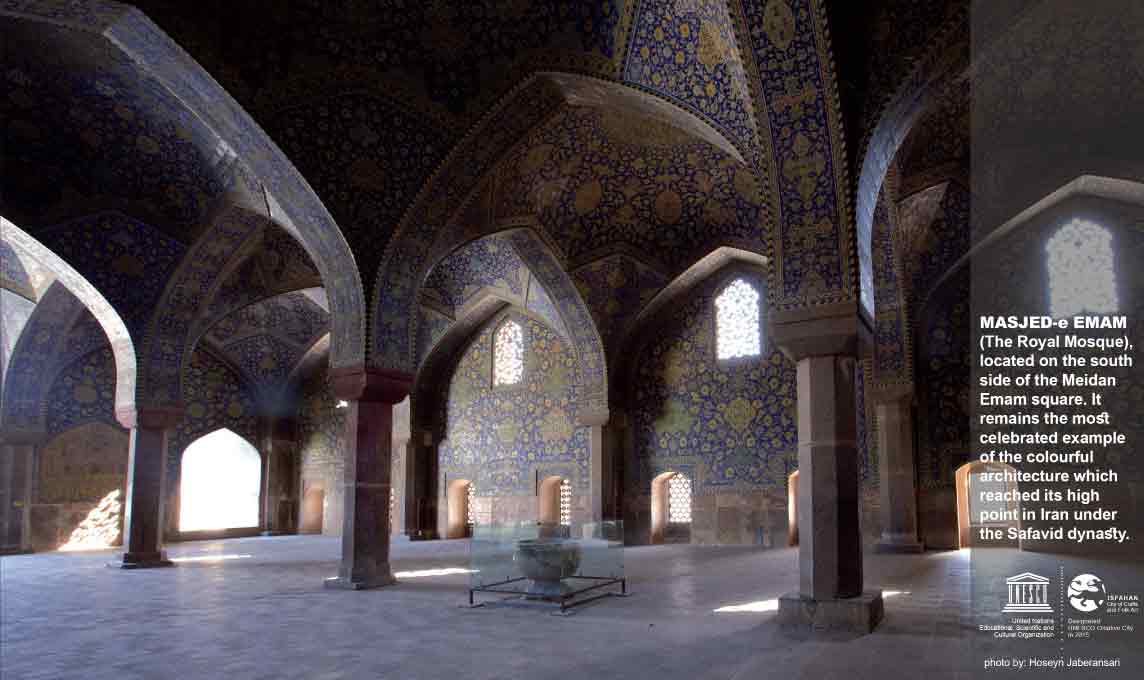
Imam Mosque
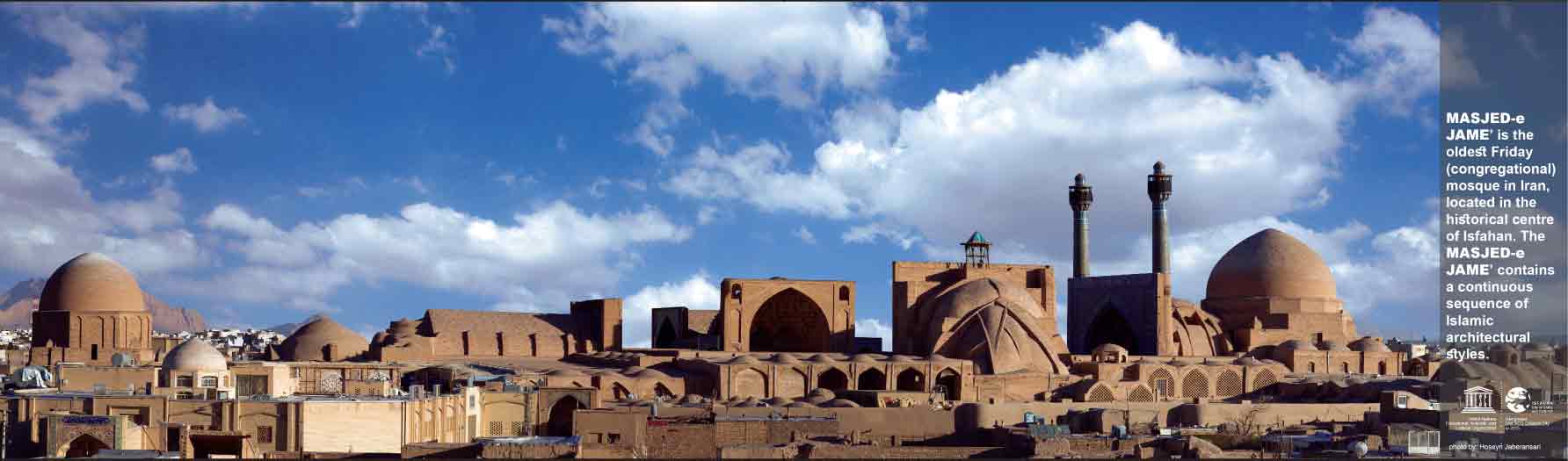
Imam Mosque in Isfahan, also known as Shah Mosque, Soltani Mosque and Jameh Mosque, is the most important historic mosque in Isfahan and one of the major masterpieces of Islamic architecture in Iran.
The mosque is situated on the southern side of Imam Khomeini Square (Naqsh-e Jahan Square). It is an unparalleled masterpiece of architecture, tilework and woodwork dating from the eleventh century AH. Its construction began in 1020 AH, by order of Shah Abbas the Great, in the 24th year of his reign, while its decoration and subsequent additions continued during the reigns of his successors.
The mosque is significant for its architecture and beautiful decorative elements and attracts many visitors who come to admire the building. The splendour of its colours and the grandeur of its entrance portal and dome offer one of the most breathtaking architectural sights. The repetition of architectural elements, symmetrical arcades, the beauty of the large ablution pool, the tilework and other features all contribute to the mosque’s remarkable visual appeal.
The architect of the building was Master Ali-Akbar Isfahani, while Mohabbat-Ali Begollah supervised its construction. Calligraphers including Alireza Abbasi, Abdol-Baqi Tabrizi, Mohammad-Reza Emami and Mohammad-Saleh Emami created its inscriptions.
Qeysarieh Gate
Qeysarieh Gate is one of the structures dating from the Safavid period. It stands at one corner of Naqsh-e Jahan Square and serves as the main entrance to the Bazaar of Isfahan. Having endured the passage of time, it continues to stand firmly in its historic location.
The building originally had three floors, but following the destruction of one of them, only two floors remain today. The demolished floor was dedicated to the naqqareh-khaneh, where music was played to announce the hours of the day to the people. The second floor was used for administrative and commercial activities, while the ground floor contained shops for buying and selling goods.
Qeysarieh Gate comprises four subsidiary entrances, one main gateway and a pool. Paintings by Reza Abbasi, the bell of the Monastery of Hormuz, and the clock of the Portuguese Castle can be seen above the gate. The gate leads visitors into the bustling passageways of the Grand Bazaar of Isfahan, the beating heart of the economy of the “Half of the World.”
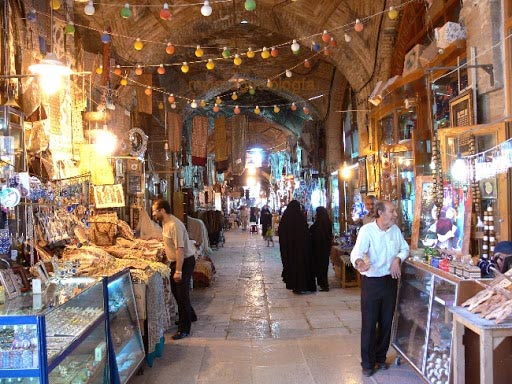
Bazaar of Isfahan
One of the largest and most beautiful bazaars in Iran is the Bazaar of Isfahan, which, owing to its location within Naqsh-e Jahan Square, is regarded as one of Iran’s most outstanding bazaars in terms of its tourism significance.
Part of this bazaar is known as Qeysarieh Bazaar, whose entrance in Naqsh-e Jahan Square is marked by a magnificent gateway.
Qeysarieh Bazaar is located within the historic fabric of Isfahan and is primarily dedicated to carpet merchants. Also known as the Soltani Bazaar, it was one of the largest and most luxurious centres for trade during the Safavid period. It was established in 1029 AH, during the Safavid era, to the north of the historic Naqsh-e Jahan Square, connecting the square with Atiq (Old) Square and Isfahan of the Seljuk period.
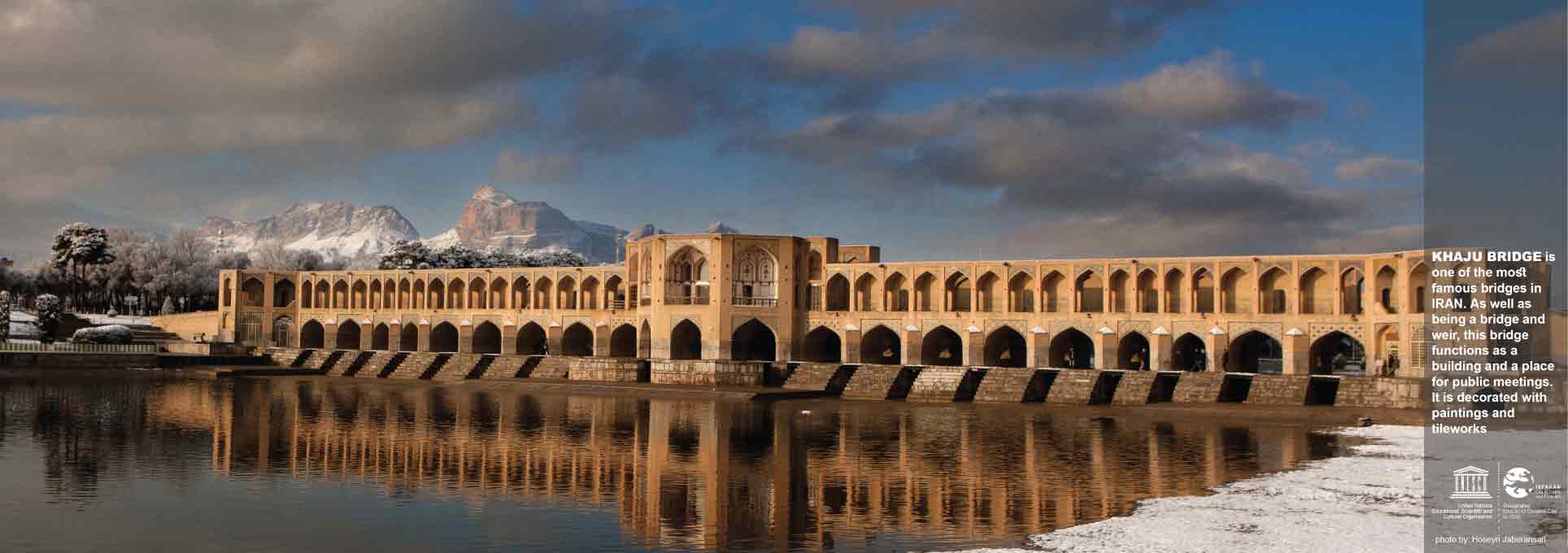
Khaju Bridge
Khaju Bridge is one of the masterpieces of the reign of Shah Abbas II, constructed over the Zayandeh Rud River. Khaju Bridge, also known as Baba Rokn al-Din Bridge, served functions including acting as a dam and regulating the flow of water.
The bridge has a distinctive appearance and is therefore regarded as the most beautiful bridge in Isfahan. It lies to the east of Si-o-se-pol Bridge and, in addition to its striking architecture, features beautiful paintings. Its central section shines like a jewel.
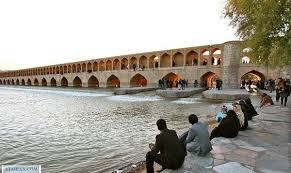
Allahverdi Khan Bridge (Si-o-se-pol)
Allahverdi Khan Bridge, also known as Si-o-se-pol, is a beautiful and unique bridge with 33 arches, symbolising Anahita. It is one of the masterpieces of Safavid architecture and among the most famous bridges in Iran. It stands at the southern end of Chaharbagh Street, also known as Enghelab Street, in Isfahan.
Si-o-se-pol was constructed over the Zayandeh Rud River under the supervision and at the expense of Allahverdi Khan, the renowned Safavid military commander. The bridge was also a venue for the Ab-Pashan or Ab-Rizan water festival. Every year on 13 Tir, participants celebrated by sprinkling water and rosewater on one another.
The Khaj-Shuyan ceremony, associated with the Armenians of Isfahan during the Safavid period, was also held on this bridge, which served as a gathering place for poets, prominent figures, dignitaries and other members of the public.
The bridge has long been admired by experts around the world. Percy Sykes described Si-o-se-pol as one of the world’s foremost bridges, while Jean Chardin regarded it as a masterpiece of architecture.
Chehel Sotoun Palace
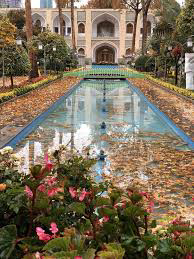
Chehel Sotoun Palace is one of the historic monuments of Isfahan and covers an area of more than 67,000 square metres. Its construction began during the reign of Shah Abbas I and was completed during the reign of Shah Abbas II.
Chehel Sotoun Palace bears an inscription commemorating its history and is described as the “most blessed building in the world.” The palace is located east of Chaharbagh-e Bala Street, south of Sepah Street and west of Naqsh-e Jahan Square.
Its architecture combines Chinese, Iranian and European artistic and architectural elements. It has a principal eastern-facing veranda consisting of two sections: one supported by 18 tall wooden columns, and a central section with four columns resting on four stone lions. The carvings of these lions are designed in such a way that two lions appear to form a single human head.
Monar Jonban
Monar Jonban is one of the remarkable architectural monuments of ancient Iran. This historic structure was built during the Ilkhanid period, under the rule of Öljaitü, and was nationally registered in 1942.
Monar Jonban is a simple mud-brick structure that is nevertheless remarkable and mysterious. It consists of an ivan in the style of the Mongol period and two minarets built over the tomb of a seventh-century mystic known as Amu Abdullah Karladani.
Despite the considerable structural strength of the minaret, it can be made to move in place, which gave the monument its name, Monar Jonban, meaning “Shaking Minarets.” The master tileworkers of the period decorated this unique monument with star-shaped and lapis-lazuli-coloured tiles.
Monar Jonban is located 6 kilometres along the Isfahan–Najafabad road and is among the sites included on the itinerary of visitors travelling to Isfahan.
The feature that has made the monument famous is that when one of the minarets is shaken, the other minaret also moves. A spiral staircase provides access to the roof and minarets, while each minaret contains 17 steps leading to its top.
Vank Cathedral
Vank Cathedral is considered one of the most important attractions of Isfahan. Its full name is Holy Savior Cathedral (Vank), and it was built during the reign of Shah Abbas II.
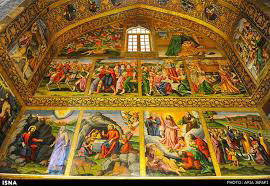
The cathedral is one of the historic Armenian churches of Isfahan and is located in the New Julfa district. It has two domes, built in a rounded form inspired by Iranian architectural styles. The ceilings and walls of the cathedral’s place of worship are covered with beautiful paintings depicting narratives and scenes from the Bible, including representations of the birth of Jesus, Heaven and Hell.
The cathedral also houses a museum and library, both of which are of considerable historical value.
Why and How Did Isfahan Become a UNESCO Creative City of Crafts and Folk Art?
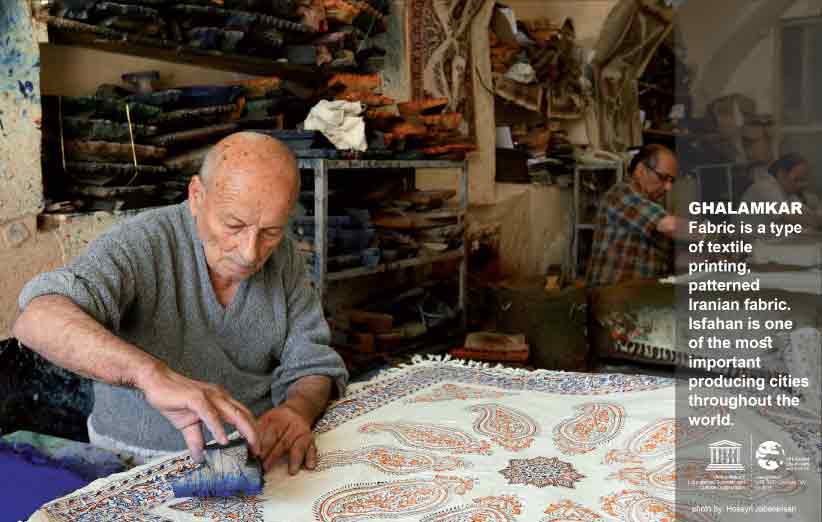
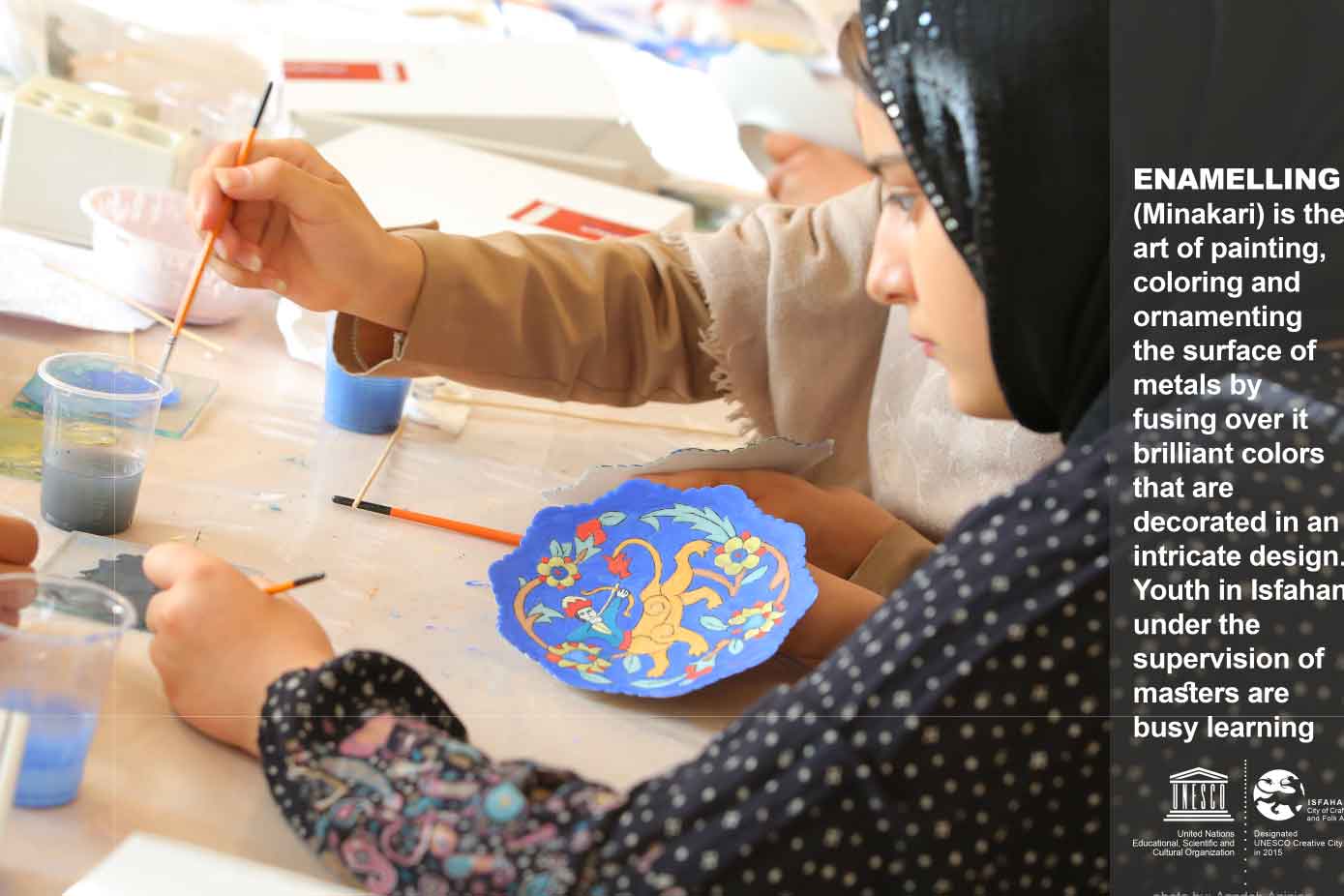
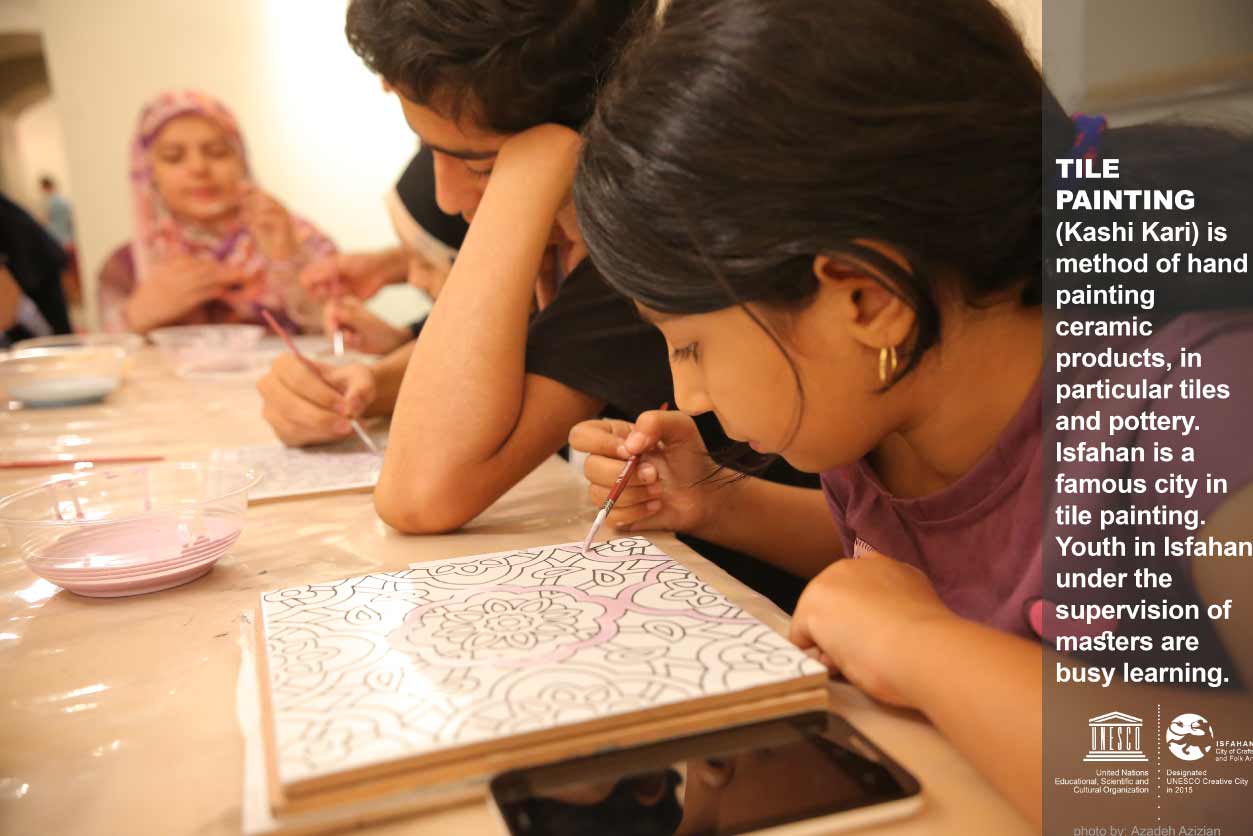
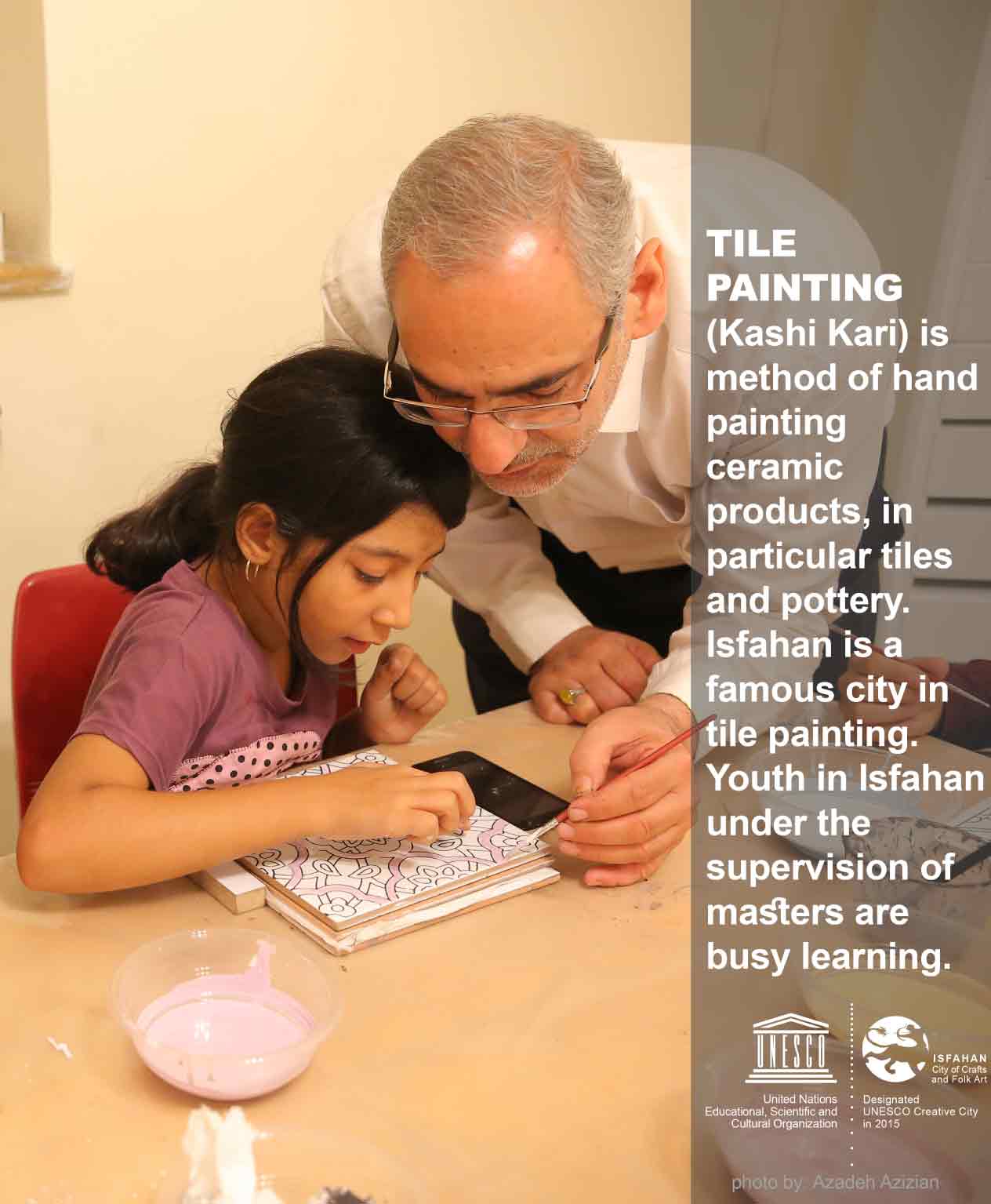
The handicrafts of Isfahan are among the most authentic examples of artistic production in the world of arts and crafts. The remarkable diversity of handicrafts and traditional arts, encompassing dozens of fields and hundreds of subfields, has transformed the city into a unique artistic centre and a recognised hub for artists and art enthusiasts.
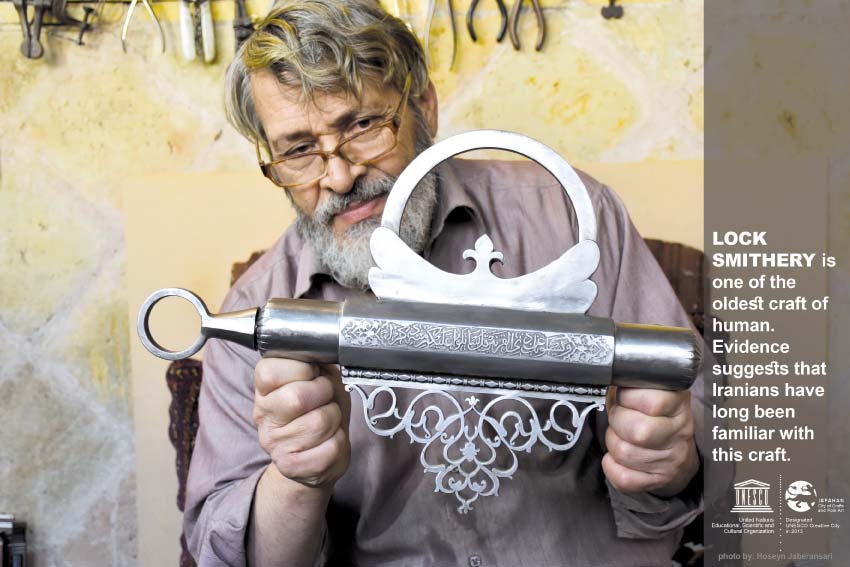
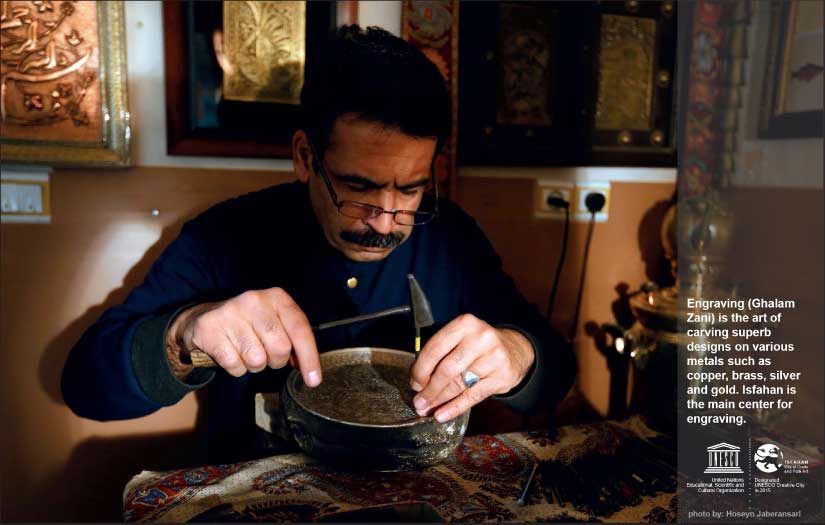
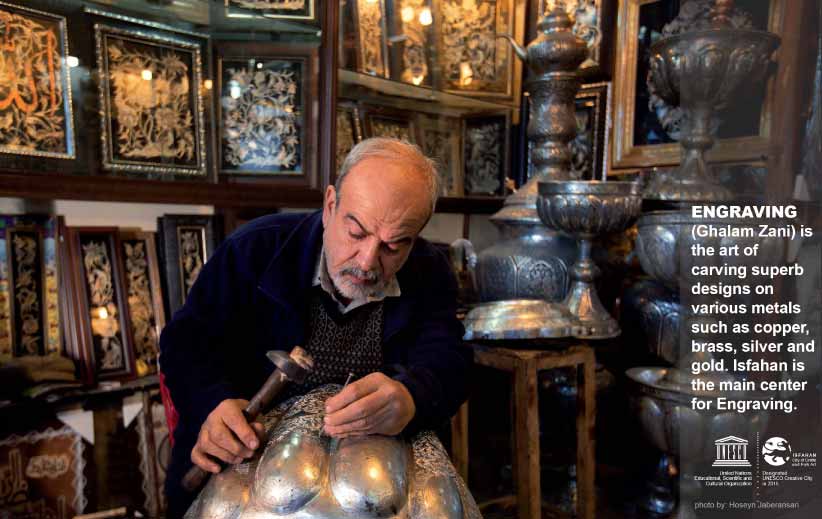
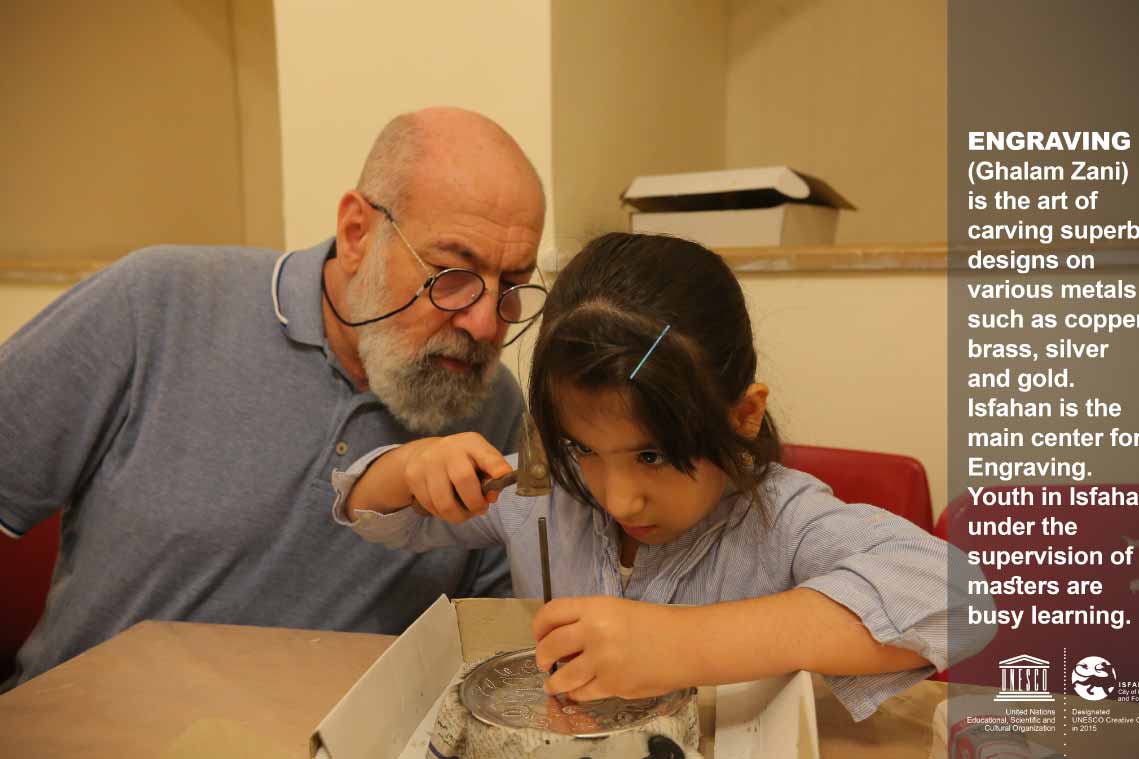
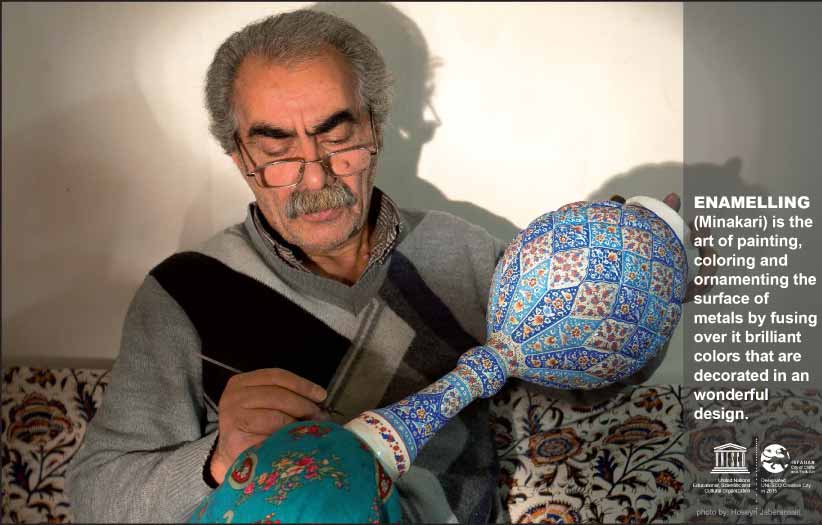
Art flows through every corner, neighbourhood and street of this city: from wood in woodcarving and inlay work; from mineral stones in turquoise inlay; from precious stones and metals in gold- and jewellery-making, silversmithing and copperware, engraving and filigree work; from colour and canvas in miniature painting and traditional painting; from plaster and stone in stucco work and sculptural structures; from textile production and Qalamkar printing, the weaving of carpets and local gelims, to silk weaving and embroidery; from leatherwork; and from stone and bone to wood and ivory in Khatamkari. The motifs and textiles of Isfahan, as well as the working of leather and fabric and the printing and designing of textiles, are all expressions of the city’s rich artistic heritage. In short, art has a place in every field in Isfahan.
The presence of numerous local markets throughout Isfahan provides easy access to artistic products. This offers a special opportunity for tourists and has encouraged visitors from Iran and around the world to travel to the city to admire and purchase works of art.
The historic city of Isfahan is located in central Iran and is the third-largest city in the country in terms of area and population. It is renowned and distinguished not only in Iran but also internationally for its artistic production and the diversity of its active and living artistic fields.
UNESCO established the Creative Cities Network many years ago to identify and introduce cities distinguished in one of seven principal fields: Literature, Gastronomy, Crafts and Folk Art, Music, Media Arts, Design, and Film. These fields reflect the spirit that shapes the activities of each particular city, and it was through this framework that Isfahan joined the UNESCO Creative Cities Network (UCCN).
Actions and Vision of Isfahan as a Creative City of Crafts and Folk Art
Future Vision for Isfahan
- Enhancing synergies and expanding cooperation with other members of the UNESCO Creative Cities Network in the field of Crafts and Folk Art at the national and international levels
- Consolidating the role of Crafts and Folk Art in the world
- Participating in the annual meetings of the UNESCO Creative Cities Network and hosting these meetings
- Establishing clear policies and regulations to support the creative industries
- Contributing to economic growth in the field of handicrafts and job creation, particularly for vulnerable groups in society
- Introducing and supporting handicraft artists and masters, and creating opportunities for creative artists in the field of Crafts and Folk Art to showcase and present collaborative artistic works
- Reviving and expanding cultural traditions, promoting cultural diversity, and safeguarding the identity and heritage of past generations in the field of Crafts and Folk Art, while integrating them with modern technologies to create innovative handicrafts
- Organising annual national and international exhibitions and competitions in the field of handicrafts
- Strengthening the infrastructure required for the development and application of creative industries
- Accelerating the transition from heavy industries towards creative industries
- Encouraging broader participation by the public sector, private sector and civil society
- Creating educational opportunities at the national and international levels
Actions of the Isfahan Creative City Secretariat in the Field of Crafts and Folk Art
Establishment of an International Sub-Network
In line with the objectives and missions established for cities that are members of the UNESCO Creative Cities Network, the necessary correspondence has been undertaken with a view to concluding cooperation agreements between Iran and four countries—Portugal, South Africa, Thailand and the Republic of Korea for the following purposes:
- Enhancing synergies and expanding cooperation between the two cities, as well as with other members of the UNESCO Creative Cities Network in the field of Crafts and Folk Art
- Consolidating the role of Crafts and Folk Art in the world
- Promoting economic development in the field of handicrafts
- Introducing and supporting handicraft artists and masters
- Reviving and expanding cultural traditions and promoting cultural diversity in the field of Crafts and Folk Art
- Safeguarding the identity and heritage of past generations in the field of Crafts and Folk Art and integrating them with modern technologies to create innovative handicrafts.
Holding Virtual Meetings among Members of the UNESCO Creative Cities Network at the National Level
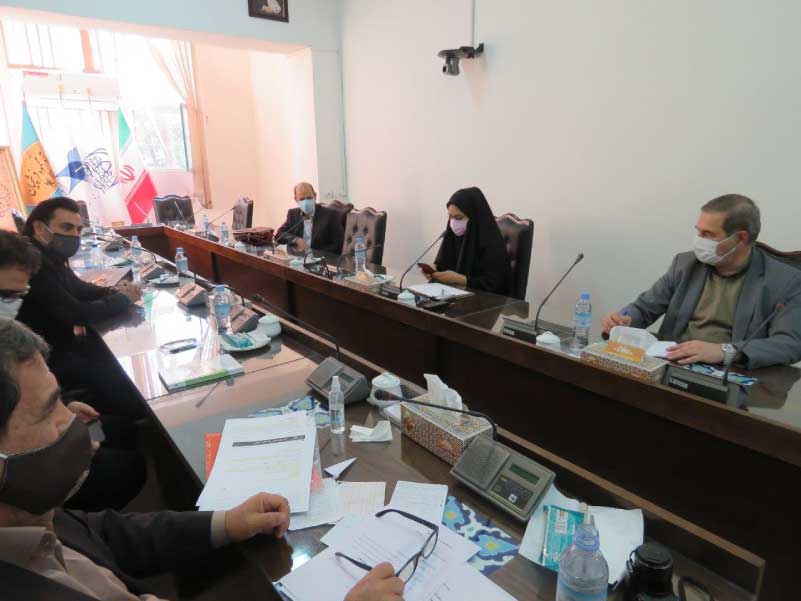
With the aim of introducing Isfahan as a Creative City of Crafts and Folk Art and a member of the UNESCO Creative Cities Network, presenting the activities undertaken by the Creative City Secretariat within the Creativity and Innovation Office of Isfahan Municipality, fulfilling the responsibilities assigned by UNESCO to cities that are members of the Network, and facilitating the exchange of achievements and experiences and greater synergy, a series of online meetings of the Creative Cities Network was organised by the Creativity and Innovation Office of Isfahan Municipality.
The Office also participated in two other joint meetings with other Iranian Creative Cities, Rasht and Sanandaj, which were held to share experiences of membership in the UNESCO Creative Cities Network.
Production of Digital and Written Content in the Form of a Collection of 40 Treasures
Given that the city of Isfahan has been designated a UNESCO Creative City of Crafts and Folk Art, it is essential for the Municipality to take serious and effective steps to strengthen and advance the indicators identified and established by UNESCO in this field. One such measure is the visual documentation and recording of the works and lives of artists and masters working in various fields.
Accordingly, agreements were concluded for the production and filming of a series of short films on Crafts and Folk Art as part of the “Rasteh 3” collection, as well as for the translation and subtitling into English and Chinese of the short films in the “Rasteh 1” and “Rasteh 2” collections, which had previously been produced by the respected Cultural, Social and Sports Organisation of Isfahan Municipality on handicraft occupations.
During Crafts and Folk Art Week, coinciding with World Crafts Day, the Creativity and Innovation Office of Isfahan Municipality organized 17 programs across the city of Isfahan as part of a major city-wide event.
A total of 22 organisations, private-sector entities and non-governmental organisations supported Isfahan Municipality in organising this major city-wide event. As a result, a large Crafts and Folk Art Ecosystem Working Group was established under the Creative City of Crafts and Folk Art Secretariat, with artists working in this field forming its core members.
For example, the Chamber of Commerce joined the initiative as a private-sector partner, planning workshops focused on export-oriented handicrafts and providing the venues for them. Subsequently, the Handicrafts Union mobilised its members to participate in these workshops.
Workshops were also held at four locations across Isfahan Creative City: Jahan-Nama Citadel Veranda, Chaharbagh-e Abbasi, Julfa and Khaju Bridge.
Unveiling Ceremony for the Plaque Designating Isfahan as a Creative City of Crafts and Folk Art
The unveiling and installation of the plaque designating Isfahan as a Creative City of Crafts and Folk Art marked the final event of World Crafts and Folk Art Week programmes in Isfahan. UNESCO had presented the city with a golden plaque, intended to serve as a lasting reminder, engraved at the heart of Isfahan, that the creativity of the artists of this world city must never fade or be forgotten.
Saadi Passage hosted the unveiling ceremony for the plaque presented by UNESCO to Isfahan. The city authorities’ thoughtful choice of location led to Naqsh-e Jahan Square, the most fitting site in Isfahan, being selected for its installation. From now on, the plaque will serve as an identity card for Isfahan, inviting every passer-by to look upon it with pride.
Unveiling Ceremony for the Plaque Designating Isfahan as a Creative City of Crafts and Folk Art
- Preparation of a news report for IMNA
- Isfahan Ziba Newspaper
Download the PDF report on the events organized to mark World Crafts and Folk Art Day
Receive the Firoozeh Special Issue on Isfahan as a Creative City of Crafts and Folk Art
Contact Information
Address
Unit 222, 2nd Floor, Phase 3, Jahan Nama Citadel, Taleghani St. Entrance, Opposite Shahr-e Ketab, Imam Hossein Sq., Isfahan, Iran
Phone Number
03132121470
Creative.city@isfahan.ir