

Creative City of Gastronomy
Creative City of Gastronomy
Creative City of Gastronomy
Creative City of Gastronomy
Rasht, the capital of Gilan Province, is located at 49°36′ E longitude and 37°16′ N latitude from the Greenwich meridian. With an area of 136 square kilometres, Rasht County is bordered by the Caspian Sea to the north, Bandar-e Anzali and Someh Sara to the west, Rudbar County to the south, and Astaneh-ye Ashrafiyeh and Lahijan to the east.
Gilan Province is situated between the Alborz Mountains and the Caspian Sea. The interaction between these two geographical features has resulted in high levels of precipitation, a moderate climate, and dense, lush vegetation throughout the province.
In this province, the difference between daytime and nighttime temperatures is not particularly pronounced. Despite the very high levels of precipitation, cold and freezing days are relatively rare. However, the high level of humidity in the province should not be overlooked. The average annual temperature in Gilan Province is approximately 8°C. The south-western coastal areas are also colder than the south-eastern coastal areas.
Rasht, as the capital of Gilan Province, has a hot and humid climate during the summer and a cold and humid climate during the winter. Nevertheless, among the counties bordering the Caspian Sea, it is regarded as one of the most temperate urban areas. This Mediterranean climate has contributed to Rasht being recognised as one of the leading tourist destinations in Iran.
Rasht was initially a village situated between the two rivers of Gohar Rud and Siah Rud, and therefore has a long history. However, in terms of its history as a city, it was first mentioned by Hamdallah Mustawfi in the eighth century AH. The old names of Rasht were Dar al-Marz and Dar al-Aman; before these, it was known as Bieh.
In dictionaries, Bieh is defined as a river or the confluence between two rivers, and it appears that the reason for this name was the city’s location between two rivers, which served as a form of protection and a natural boundary for the city. The etymology of the name Rasht has been interpreted in the Dastur dictionary as meaning the plaster used by builders to secure stones and bricks. In the dictionaries Anjoman Ara, Anandraj, Fars-e Asadi, the local Shushtari dictionary, Borhan, Nazem al-Atibba and Jahangiri, it has been given meanings including: something that crumbles or falls apart; anything that collapses and disintegrates; a wall on the verge of collapse; plaster used to whitewash houses; mud and rubbish; soil and dust; soil; and coloured or dyed.
Dehkhoda maintains that, since the city of Rasht was built in 900 AH, the date of its construction was used to derive its name, and the word Rasht has the Abjad numerical value of 900.
The development of Rasht began during the reign of Shah Abbas Safavid, when it was still a village. During the Qajar period, the city expanded as a result of the economic development of Iran and Russia. The old names of the neighbourhoods of Rasht, most of which reflected the occupations of their inhabitants, have also been recorded in travel accounts. With the exception of two or three cases, the neighbourhoods continue to be known by their traditional names. The principal ones include:
Saghrisazan, Rudbaratan, Khamiran-e Zahedan, Dabbaghian, Kouzehgaran, Khamiran-e Chehel Tan, Chelleh-Khaneh, Chamar-Sara, Ostadsara, Paskiyab, Sorkh-Bandeh, Atashgah-e Bisotun, Saqalan, Zarjoub, Kiyab, Sabzeh-Meydan, and Do Baradaran (Chahar Baradaran), which are among the historic neighbourhoods of Rasht. This historic urban fabric, while constituting part of the city’s cultural heritage and evoking the monuments, remains, traditions and customs of the past, can also be regarded as one of the significant challenges facing the city’s urban fabric.
Rasht, known as the “City of Silver Rains,” is the capital of Gilan Province. Its name was first recorded in the book Hudud al-Alam, written in 372 AH, where it was described as a major district.
From 1004 AH, by order of Shah Abbas, Rasht became the capital of Gilan Province and the centre of the silk trade, which was the province’s principal product at the time. This led major landowners and Iranian, Russian, Greek and Armenian merchants engaged in the silk trade to take a greater interest in the city, resulting in significant growth in Rasht.
Melgunov, a Russian traveller who visited Rasht in 1275 AH, wrote in his memoirs that the city at that time had 5,463 houses, 1,021 shops and a population of 27,314. In his view, Rasht was a prosperous city with beautiful houses facing the sea, and merchants from India, Bukhara, Rome and the Ottoman Empire travelled there in pursuit of silk.
During the Constitutional Revolution and the period that followed, Gilan became one of the centres of Iran’s political, social and economic transformations. The Jangal Movement, the expansion of cities, the establishment of numerous educational institutions, and the improvement of the cultural level of Rasht’s citizens placed the city among the most progressive cities in the country.
Rice
The climate of Gilan provides suitable conditions for rice cultivation and activities in rice paddies. Various types of rice with pleasant aromas are harvested in Gilan Province and supplied to different parts of the country.
Most visitors to Rasht purchase enough rice for several months or even for an entire year and can be assured of the quality of the product they purchase. Buying rice in the north, particularly directly alongside the region’s rice paddies, is considerably more economical and eliminates many of the costs associated with intermediaries.
Tea
Tea is the most important and authentic souvenir of Rasht and Gilan Province. If you have tasted the authentic and natural tea of Gilan even once, you will never forget it. There are many tea plantations throughout Gilan Province, but the city of Lahijan is particularly renowned for its fragrant and richly coloured teas. Many visitors to Rasht try to purchase a considerable amount of Lahijan tea during their trip to Gilan Province, in addition to northern rice, and enjoy it throughout the year.
Reshteh Khoshkar
Reshteh Khoshkar is in fact a type of confectionery, and to purchase it, one should visit confectionery shops in Rasht and other cities of Gilan Province. Ramadan is the most important time of year for the production and sale of Reshteh Khoshkar in Rasht. This sweet is very delicious and is regarded as the principal traditional confectionery of the people of Gilan.
Olives
Olives are delicious and nutritious fruits that are consumed on their own or commonly served at formal gatherings and on festive tables. Rasht is one of the most important centres for olive cultivation, and a wide variety of olives can be found in the city. Olive prices in Gilan Province, particularly in its capital, Rasht, are relatively affordable, allowing visitors to purchase large quantities of olives at a lower cost than in most other provinces.
Caspian White Fish
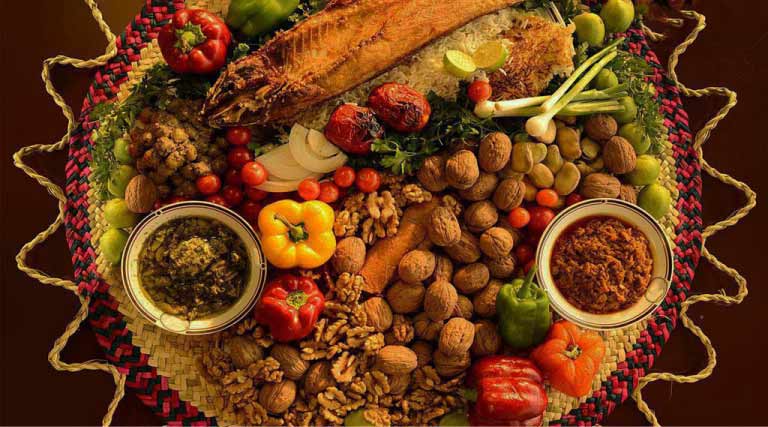
Caspian white fish has many bones, which has somewhat reduced its popularity, as they make it more difficult to consume as a meal. Nevertheless, owing to its high-quality meat, it is regarded as one of the most important souvenirs of Rasht.
Fuman Cookies
Few people are unfamiliar with Fuman cookies, also known as the famous Lahijan cookies. Fuman cookies are among the most delicious foods of Gilan Province. They have been supplied to other parts of the country for many years and were regarded as a suitable food ration in many schools in disadvantaged areas. These cookies are among the most popular souvenirs among foreign tourists visiting Rasht.
Why and How Did Rasht Become a UNESCO Creative City of Gastronomy?
Steps for the Registration of Rasht as a UNESCO Creative City with UNESCO
- A Memorandum of Understanding between the National Commission for UNESCO in Iran and the City of Rasht was concluded on 17 August 2014 in the presence of the Governor-General of Gilan Province and with the signatures of the two parties, Dr. Mohammad-Reza Saeedabadi, Secretary-General of the National Commission for UNESCO in Iran, and Mohammad Ebrahim Khalili, Mayor of Rasht.
- Following information provided by the National Commission for UNESCO in Iran regarding Rasht’s potential in the field of gastronomy, the Municipality of Rasht decided to develop and materialize the economic and social dimensions of the city’s creativity in this field. Accordingly, the International Affairs Office of Rasht Municipality compiled and translated the information requested in the application form for membership in the UNESCO Creative Cities Network (UCCN) and submitted it to UNESCO Headquarters in Paris on 15 July 2015.
- The first joint meeting with the National Commission for UNESCO in Iran was held to undertake cultural, social and environmental measures aimed at achieving the status of a Creative City (Sustainable City – Healthy City).
- Following the establishment of the Cooperation Office of the National Commission for UNESCO in Iran, joint cooperation was undertaken between the Municipality and the UNESCO Office in Iran, including the following:
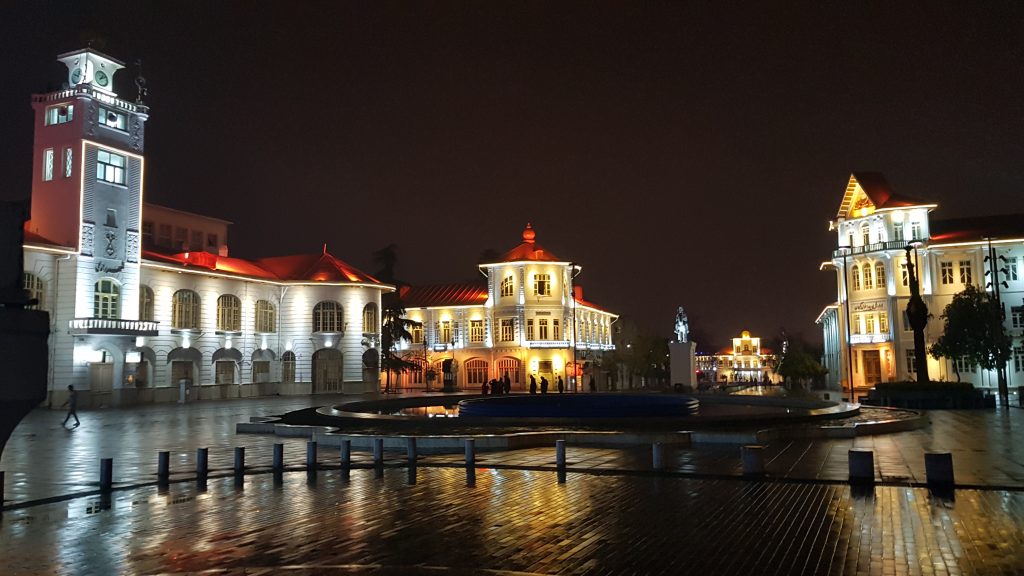
- The Rasht Cooperation Office with the National Commission for UNESCO in Iran was established in the historic Municipal Building.
- On the first day of the establishment of the Cooperation Office between the National Commission for UNESCO in Iran and the Municipality of Rasht, the office was introduced by the Secretary-General of the Commission at Rasht Municipality, the first such initiative in Gilan Province, in the presence of members of the Rasht Islamic City Council, the Mayor, municipal managers and a number of university professors.
- Following the Commission’s familiarization with the cultural and social potential of Rasht, as well as the city’s Intangible Cultural Heritage, the Commission proposed to the Municipality of Rasht that the city seek membership in the UNESCO Creative Cities Network in the field of gastronomy, as a step towards introducing Rasht’s capacities to people around the world.
- A letter presenting a report on Rasht’s potential was prepared and translated from Persian into English and submitted to five mayors from the UNESCO Creative Cities Network in the field of gastronomy, according to UNESCO’s regional divisions, on 9 December 2015.
- The City of Rasht hosted a high-level delegation from the National Commission for UNESCO in Iran. For the first time in the city, a conference entitled “Sustainable Development Outlook” and two training workshops, “Sustainable Development and National Policymaking from UNESCO’s Perspective” and “Sustainable Development, Social Development and Women’s Empowerment”, were held respectively at the Governorate-General, the Telecommunications Hall and the Khatam al-Anbiya Complex in Rasht from 20 to 22 February 2016. The events were organized through the efforts of the Cooperation Office of the National Commission for UNESCO in Iran and Rasht Municipality and the Sustainable Development Headquarters of Rasht Municipality, with the cooperation of Gilan Governorate-General, the Environmental Research Institute of the Academic Centre for Education, Culture and Research (ACECR), Rasht Islamic City Council, the Iranian Association of Specialists, the Gilan Centre for Education and Research, the Gilan House of Non-Governmental Organizations, Lahijan Municipality, and the Department of Culture and Islamic Guidance of Rasht.
- On 20 February, the “Sustainable Development Outlook” conference was held at the Gilan Governorate-General’s conference hall, with the participation of more than 100 provincial decision-makers and policymakers, including members of the Islamic City Council and the Acting Mayor of Rasht, deputies and directors-general of the Gilan Governorate-General, directors-general of executive bodies, county governors and mayors.
- The final application dossier for Rasht’s membership in the UNESCO Creative Cities Network in the field of gastronomy was submitted to the National Commission for UNESCO in Iran in July 2015.
- On 11 December 2015, Rasht was officially designated by Irina Bokova, Director-General of UNESCO, as a member of the UNESCO Creative Cities Network in the field of gastronomy. It is also important to note that Rasht is required to submit a report on its activities at the national and international levels to the Network every four years.
- The City of Rasht hosted a high-level delegation from the National Commission for UNESCO in Iran. For the first time in the city, a conference entitled “Sustainable Development Outlook” and two training workshops, “Sustainable Development and National Policymaking from UNESCO’s Perspective” and “Sustainable Development, Social Development and Women’s Empowerment”, were held respectively at the Governorate-General, the Telecommunications Hall and the Khatam al-Anbiya Complex in Rasht from 20 to 22 February 2016, through the efforts of the Cooperation Office of the National Commission for UNESCO in Iran and Rasht Municipality and the Sustainable Development Headquarters of Rasht Municipality, with the cooperation of Gilan Governorate-General, the Environmental Research Institute of the Academic Centre for Education, Culture and Research (ACECR), Rasht Islamic City Council, the Iranian Association of Specialists, the Gilan Centre for Education and Research, the Gilan House of Non-Governmental Organisations, Lahijan Municipality, and the Department of Culture and Islamic Guidance of Rasht.
- On 20 February 2015, Dr. Saeedabadi, Secretary-General of the National Commission for UNESCO in Iran, and Esther Kisch Laroche, Head of the UNESCO Regional Office in Tehran, met and held discussions with the Acting Mayor and members of the Rasht Islamic City Council at the Municipal Clock Building. At this meeting, the initial application dossier for Rasht’s membership in the UNESCO Creative Cities Network in the field of gastronomy was presented to UNESCO representatives on 21 February at the Municipal Clock Building.
- The training workshop “Sustainable Development and National Policymaking from UNESCO’s Perspective”, organised with the participation of the Gilan Provincial branch of the Academic Centre for Education, Culture and Research (ACECR), was held on the afternoon of 21 February 2015 at the Gilan Telecommunications Hall.
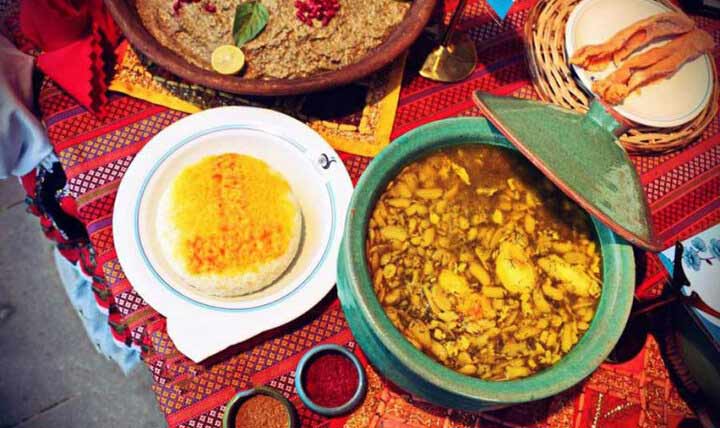
- As part of the process of having Rasht designated as a UNESCO Creative City of Gastronomy, the “Local Foods Festival” was held on Saturday, 21 February 2015 , through the efforts of the Sustainable Development Headquarters of Rasht Municipality, with the participation of Dr. Saeedabadi, Secretary-General of the National Commission for UNESCO in Iran, and Esther Kisch Laroche, UNESCO Regional Director in Tehran (UNESCO representative in Iran), at Golestan Hall in Rasht. The main objectives of the festival were to highlight local cultural heritage and transmit its values, while also supporting domestic producers, creating employment, reducing poverty and supporting vulnerable groups in society in pursuit of sustainable development through this creative industry.
- The training workshop “Sustainable Development, Social Development and Women’s Empowerment”, organised with the participation of the Gilan House of Non-Governmental Organisations, was held on 22 February 2015 at the Khatam al-Anbiya Conference Hall in Rasht.

Contact Information
Address
Rasht, Gil Square, Rasht Municipality Central Building
Phone Number
01333669980