The Attack on Golestan Palace: A Violation of International Humanitarian Law and Cultural Heritage Protection Conventions
| The Secretary-General of the Iranian National Commission for UNESCO emphasized the entirely civilian nature of the area surrounding Golestan Palace, describing the recent American–Israeli attack on this World Heritage Site as a violation of international law and the conventions governing the protection of cultural heritage during armed conflicts. He also reported significant damage to the decorative elements of this historic complex. |
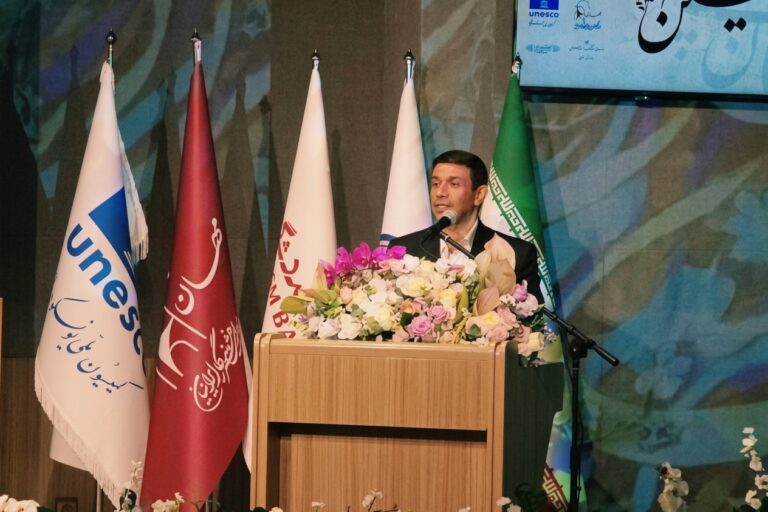
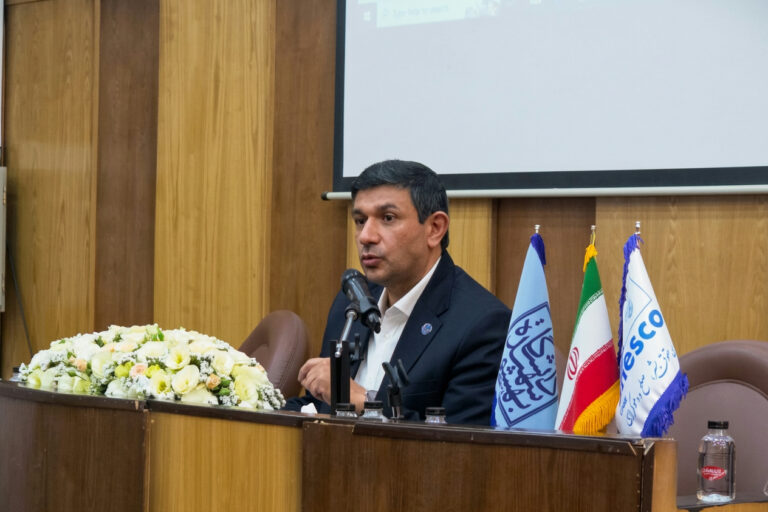
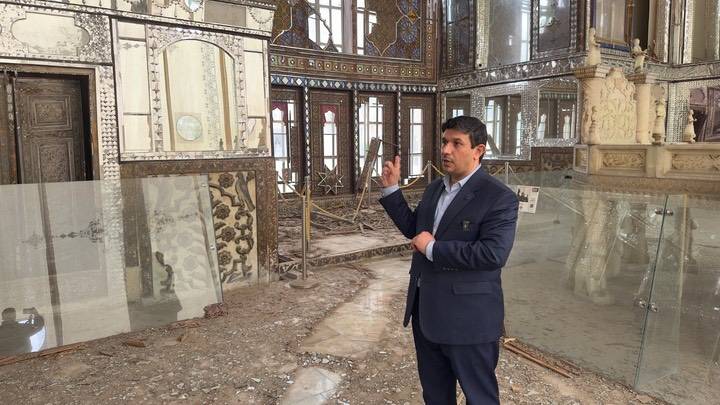
Dr. Hassan Fartousi, Secretary-General of the Iranian National Commission for UNESCO, spoke to the press on Monday afternoon, 23 March 2026, during a visit to Golestan Palace, which had been targeted in recent American–Israeli attacks. Explaining the significance of the incident, he stated that Golestan Palace, the only property in Tehran inscribed on UNESCO’s World Heritage List, is located within an area designated entirely as a cultural heritage protection zone, with no military or unconventional use.
Emphasizing the civilian and legal nature of the buildings surrounding the complex, he added that even the adjacent courthouse, which was struck, is approximately a century old and has served exclusively judicial functions since its establishment. Therefore, any claim that these premises were used for military purposes lacks legitimacy and any factual basis.
Clear Violation of the Hague Convention and Direct Contravention of the Principles of International Humanitarian Law
Dr. Fartousi stressed that the incident constitutes not only a clear and serious violation of the Hague Convention for the Protection of Cultural Property in the Event of Armed Conflict, particularly its Second Protocol, but also a direct contravention of the fundamental principles of international humanitarian law, which emphasize the protection of civilian sites, especially cultural heritage.
Between 40 and 50 Percent of Decorative Features Damaged; Blast Waves Have Affected Delicate Elements
Referring to the extent of the damage to the historic complex, the Secretary-General of the Iranian National Commission for UNESCO stated that, according to preliminary expert assessments, between 40 and 50 percent of the palace’s artistic decorative features had been damaged. Although the main structure of the building remains standing, the blast waves have caused serious and concerning damage to the delicate and valuable elements of this heritage site.
The Marble Throne: A Symbol of Historical Identity and National and International Responsibility
Referring to the significance of the complex’s prominent features, he stated that the Marble Throne, which dates back more than 220 years, is part of the World Heritage that Iran has presented to the international community. It symbolizes the historical and cultural identity of the country, and safeguarding it constitutes a national and international responsibility.
Dr. Fartousi expressed his appreciation for the efforts of the Ministry of Cultural Heritage, Tourism and Handicrafts and professionals working in the field under these difficult circumstances. He noted that he had gathered at Golestan Palace with colleagues from the cultural heritage sector and the Iranian National Commission for UNESCO to assess the situation and express gratitude to the heritage custodians who, despite risks to their lives, had stood firm in protecting Iran’s cultural assets.
Intergenerational Responsibility: Safeguarding the Heritage of Our Ancestors
Concluding his remarks, Dr. Fartousi emphasized the intergenerational responsibility to protect cultural heritage, stating that the legacy of our ancestors is a trust entrusted to us, which we must pass on to future generations intact and in worthy condition. Fulfilling this responsibility requires firm commitment, national solidarity, and renewed attention to safeguarding the country’s historical and civilizational identity.