

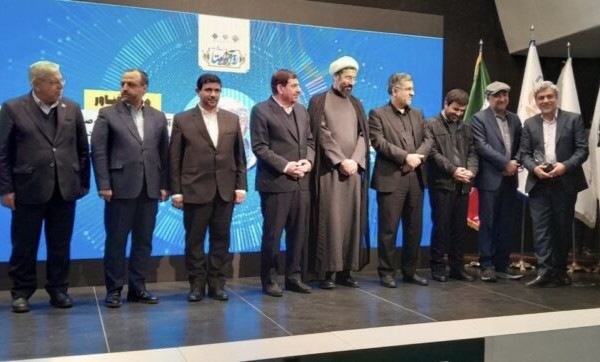
The ceremony for the inaugural Rostazadeh Technology and Governance Award was held with the participation of the Secretary-General of the Iranian National Commission for UNESCO
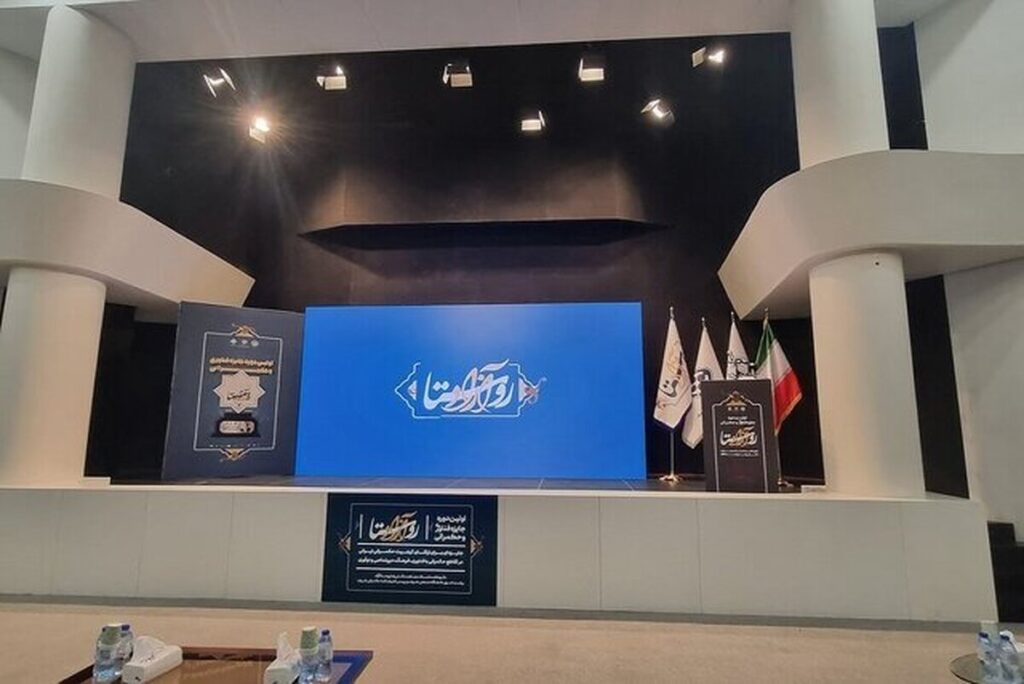
The ceremony for the inaugural Rostazadeh Technology and Governance Award was held on Monday, 2 December 2024, coinciding with the second anniversary commemoration of the late Dr. Reza Rostazadeh. The ceremony was attended by an Adviser and Assistant to the Supreme Leader, the Vice President for Science, Technology and Knowledge-Based Economy, the Secretary-General of the Iranian National Commission for UNESCO, and a number of national officials, and took place at Dr. Rabiei Hall of Sharif University of Technology. |
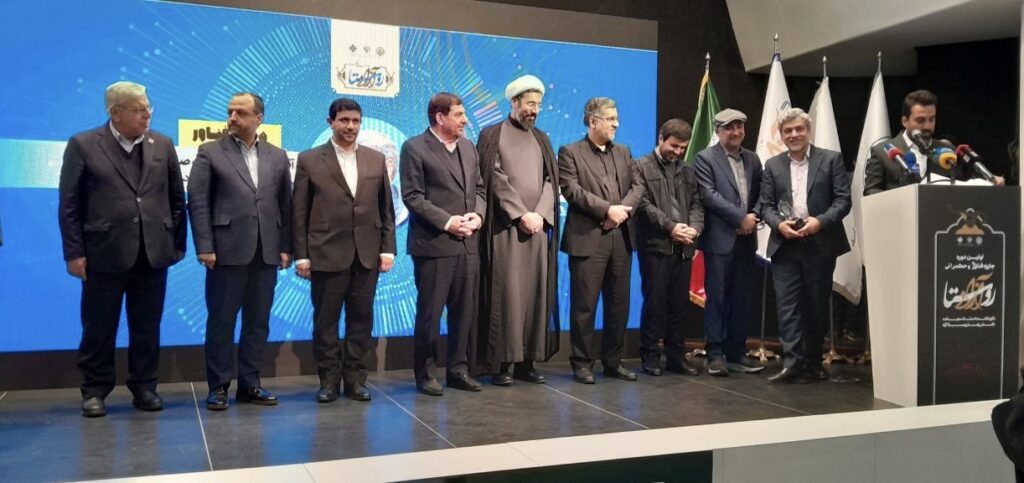
The Rostazadeh Award is designed to enhance the quality of governance in Iran at the intersection of governance with technology, culture, diplomacy and innovation. It aims to encourage and guide the country’s leading talents towards improving the quality of governance. Following a year-long evaluation of submissions by the scientific committee and specialized councils, and after the selection of the leading individuals and works, the inaugural edition of the award was held in December 2024.
At the award ceremony, Hossein Afshin, Vice President for Science, Technology and Knowledge-Based Economy, referring to the late Dr. Reza Rostazadeh’s understanding of governance, said that Dr. Rostazadeh viewed governance as an area of research and that greater attention should therefore be given to this important field and the necessary measures should be put in place.
He continued: “The indicators of good governance include an effective government, an accountable government, a government free from corruption, the rule of law and the development of public participation. Privatization is also another indicator of good governance, and its realization is possible only through the use of technology. Accordingly, the Rostazadeh Governance Award can be regarded as an award for technology-driven governance.”
The Vice President for Science, Technology and Knowledge-Based Economy emphasized that each university president seeks to expand activities under a particular title, whereas the work of the late Dr. Rostazadeh can be characterized by the development and deepening of technology.
Afshin added that one of Dr. Rostazadeh’s achievements was training students who remain appreciative of his efforts and seek to continue the intellectual and professional movement he initiated, describing this as highly valuable.
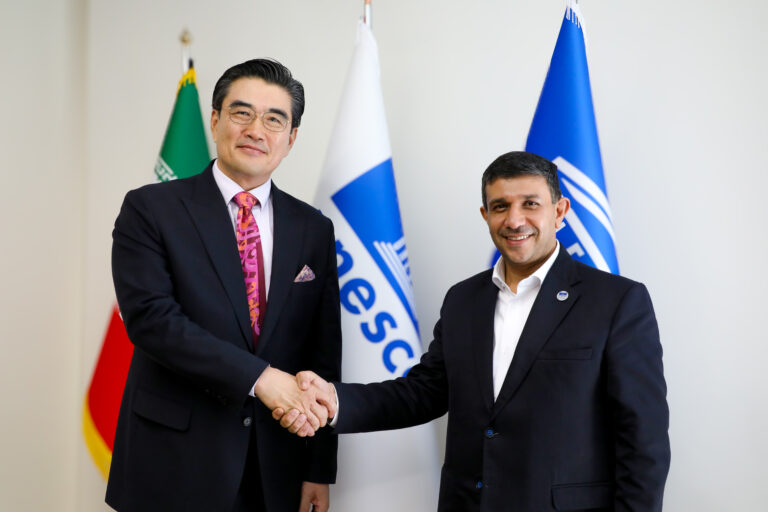
During the ceremony, the winners of this edition of the Rostazadeh Award were introduced and recognized in four categories: “Governance Technology”, “Elite Diplomacy”, “Policy Innovation” and “Governance Culture” in the presence of Hossein Afshin, Vice President for Science, Technology and Knowledge-Based Economy, and Hassan Fartousi, Secretary-General of the Iranian National Commission for UNESCO. Based on the jury’s decisions, the six award recipients were as follows:
- Governance Technology: The “Shaparak” system, jointly awarded for its contribution to strengthening the country’s monetary and banking governance, and Zistab Company, for the Iranian Water Market system and its contribution to water governance in the country.
- Elite Diplomacy: Seyed Mohammad Marandi.
- Governance Culture: The television series “Mr. Judge” (Aghaye Ghazi) and the game “Amirza”, recognized for contributing to the development of Persian-language identity in Persian-speaking countries.
- Policy Innovation: Dr. Mohammad Sahebkar.
It is worth noting that the Rostazadeh Technology and Governance Award was approved in December 2023 by the Vice Presidency for Science, Technology and Knowledge-Based Economy, in honour of the memory and legacy of Dr. Reza Rostazadeh, former President of Sharif University of Technology and the Sharif Governance Think Tank.
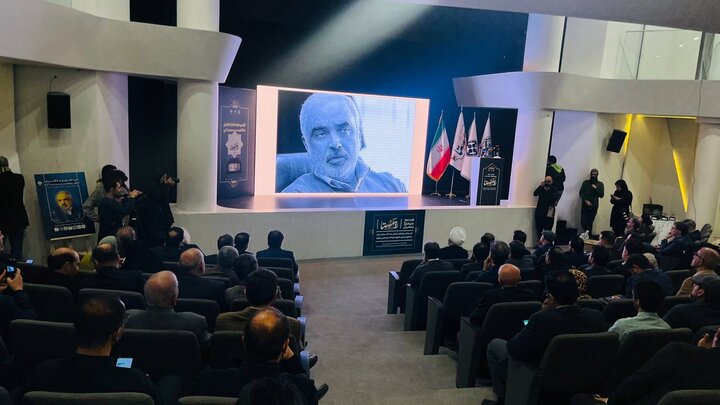
The evaluation criteria for the works submitted to this edition of the award included transparency and accountability; extensive public service delivery; legitimacy and social consensus; international influence and competitiveness; institutional sustainability and consolidation; cost reduction and increased productivity; innovation, creativity and transformative impact; public participation and engagement; strengthening national capacity and authority; effectiveness and efficiency; a focus on justice; and the Iranian-Islamic model.
Other objectives of the award include creating the conditions for and contributing to the improvement of the quality of governance by establishing frameworks and providing direction for the activities of academics, research centres, knowledge-based companies, cultural and media institutions, international actors, policy research centres and think tanks across the country. The award also seeks to encourage and highlight technology-driven, innovative, cultural, media and diplomatic works and activities related to governance, as well as to recognize and establish the standing of individuals and institutions active in governance technologies, policy innovations, the promotion of a culture of governance and diplomacy.
The event was attended by Mohammad Mokhber, Adviser and Assistant to the Supreme Leader; Hojjatoleslam Mohammad Ghommi, Head of the Islamic Propaganda Organization; Ali-Akbar Motkan, former Secretary-General of the Iranian National Commission for UNESCO; Seyed Abbas Mousavi, President of Sharif University of Technology; Rouhollah Dehghani, former Vice President for Science; as well as Sahar Ahmadizadeh, Head of the Science Sector; Hossein Mir-Rezi, Head of the Social and Human Sciences Sector; and Ali Falakpour, Head of the Publications Sector of the Iranian National Commission for UNESCO, together with a number of faculty members of Sharif University of Technology.