The Second Meeting of the Governing Council of the International Center for Integrated Watershed Management and Bio-Resources in Arid and Semi-Arid Regions Was Held
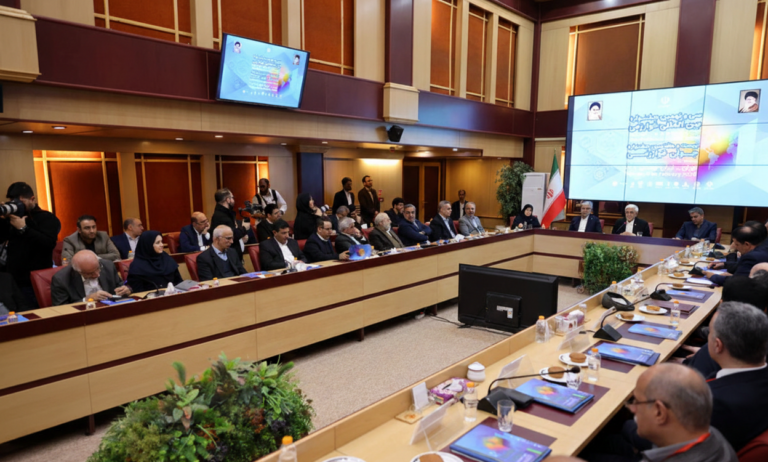
The second meeting of the Governing Council of the International Center for Integrated Watershed Management and Bio-Resources in Arid and Semi-Arid Regions was held on Saturday, 8 September 2025, at the Natural Resources and Watershed Management Organization. The meeting was attended by the Minister of Agriculture Jihad, the Head of the Natural Resources and Watershed Management Organization, the Secretary-General of the Iranian National Commission for UNESCO, the Chair of the Parliament’s Agriculture Committee, the Director of the UNESCO Office in Tehran, and ambassadors from more than 10 foreign countries. |
Dr. Gholamreza Nouri Ghezeljeh, Minister of Agriculture Jihad, highlighted Iran’s prominent position in natural resource management in arid regions, stating, “Today, the protection of biological resources is no longer a choice, but an unavoidable necessity.” He described watersheds as the lifelines of countries and emphasized the need for comprehensive planning to protect them. Dr. Nouri added that the Center should become a regional scientific and operational hub for combating desertification and sustainably managing water and soil resources.
The Deputy Minister of Agriculture Jihad and Head of the Natural Resources and Watershed Management Organization also highlighted the pivotal role of international cooperation, noting that climate change, biodiversity loss, and rangeland degradation are challenges that transcend national borders. Dr. Reza Aflahtouni added that no country can address these crises alone and underscored the fundamental need for a transnational and synergistic approach. He described the International Center as a bridge between UNESCO’s global aspirations and practical action at the national and regional levels, emphasizing that its success depends entirely on collective commitment and cooperation.
During the meeting, the Secretary-General of the Iranian National Commission for UNESCO expressed appreciation for the valuable efforts of the Center’s director and staff, noting that the Islamic Republic of Iran hosts eight regional and international centers under UNESCO’s auspices and plays a significant role in advancing UNESCO’s activities across various fields. Dr. Fartousi stressed that, as the world faces serious challenges arising from climate change, declining water resources, and soil degradation, the Center has a particularly important role to play in developing informed policies, providing specialized training, and facilitating knowledge exchange among countries. He reaffirmed the Iranian National Commission for UNESCO’s support for the Center and its readiness to cooperate in advancing its objectives and programs. He also expressed hope that effective strategic and practical decisions would be adopted to pave the way for more sustainable and efficient management in the future. Finally, he called on the Ministry of Agriculture Jihad and the Natural Resources and Watershed Management Organization to continue supporting the International Center for Integrated Watershed Management and Bio-Resources in Arid and Semi-Arid Regions.
Mohammad Javad Asgari, Chair of the Parliament’s Agriculture Committee and another speaker at the meeting, stated that the establishment in Iran of an international center under UNESCO’s auspices for integrated watershed management reflects the international community’s confidence in Iran’s experience, scientific capacity, indigenous knowledge, and culture of water and soil conservation. He referred to the valuable experience of the country’s Natural Resources and Watershed Management Organization in international initiatives, including carbon sequestration and social forestry in the Zagros region. He emphasized that, through initiatives such as the plan to plant one billion saplings and the expansion of watershed and aquifer management across diverse ecological zones—from the Hyrcanian forests in the north to the southern shores of the Persian Gulf—the Organization has demonstrated the country’s national capacity and determination to protect, restore, and sustainably utilize its natural resources.
Abou Amani, Director of the Water Sciences Division and Secretary of UNESCO’s Intergovernmental Hydrological Program, who addressed the meeting online, noted that water scarcity is a major issue requiring attention and that cooperation among countries in this area must be strengthened. He emphasized the need to encourage governments to support the implementation of the Center’s programs. He added that UNESCO would remain a reliable partner in the coming years in advancing objectives and programs related to water resource and watershed management.
In his address, Dr. Hamid Nouri, Director of the Center, referred to the delivery of more than 56 training courses and international workshops, the organization of 45 scientific meetings, and the implementation of several strategic projects to restore water and soil resources in various parts of the country. He identified the development of a strategic document on integrated watershed management, health-oriented climate change adaptation projects, and capacity-building programs for local communities among the initiatives implemented.
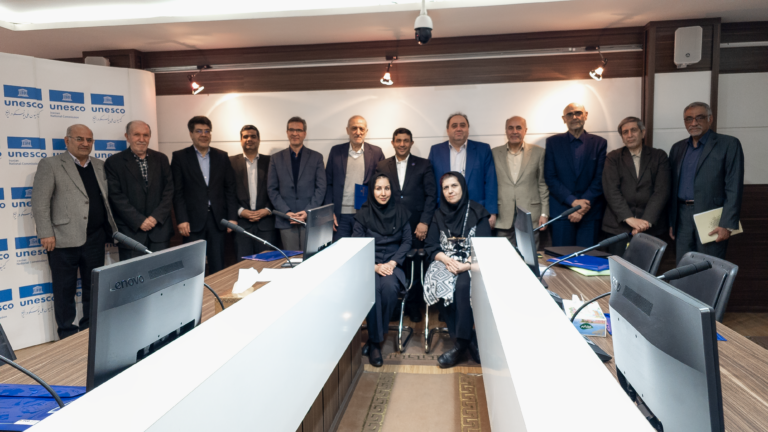
At the conclusion of the meeting, the members of the Governing Council reviewed the Center’s achievements over the past two years and discussed its future plans.