

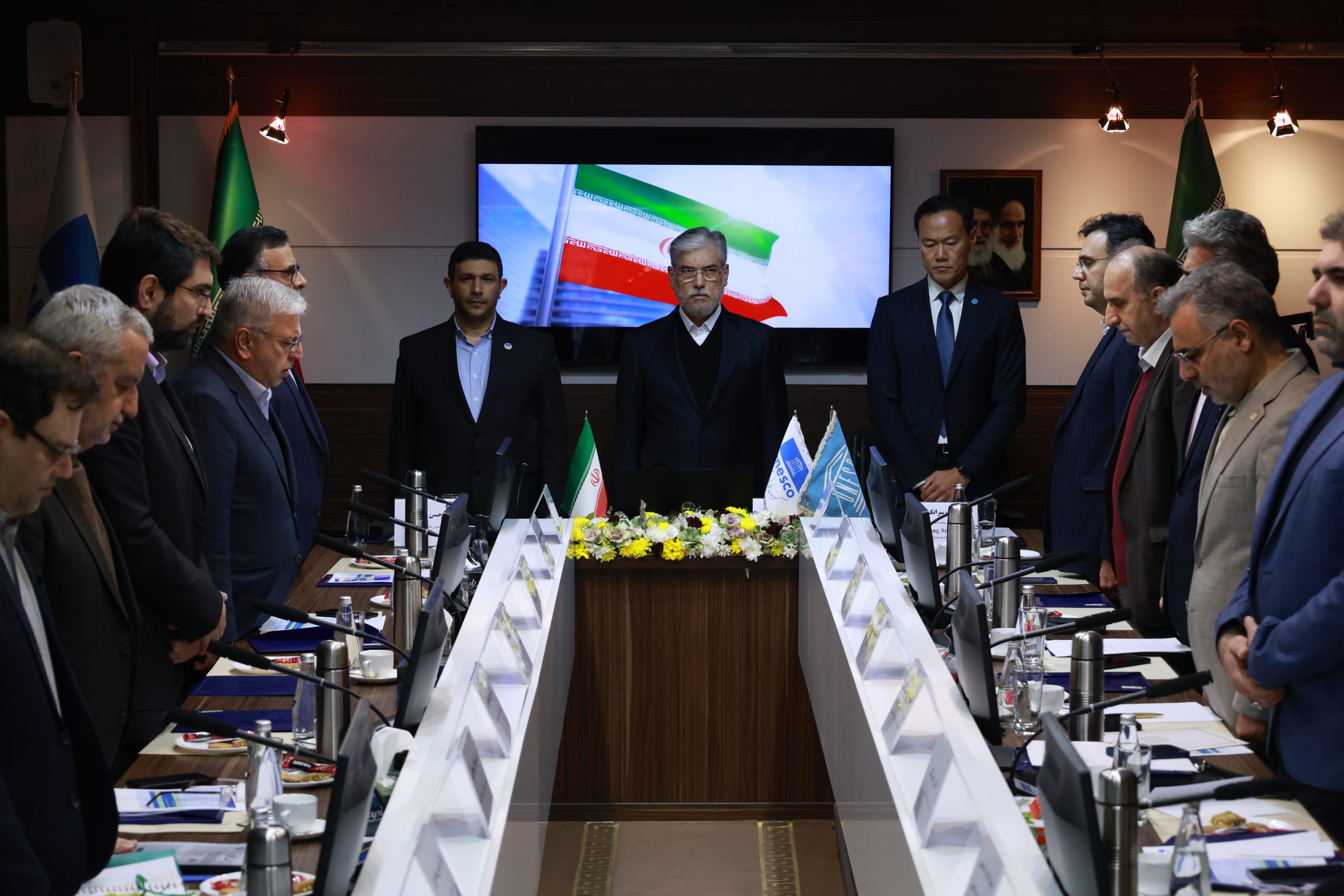
Minister of Science Emphasizes the Role of UNESCO Chairs in Iran’s Scientific Development and Science Diplomacy
The Minister of Science, Research and Technology and President of the Iranian National Commission for UNESCO emphasized the importance of UNESCO Chairs in scientific exchange, science diplomacy and sustainable development at the opening of the Meeting of UNESCO Chairs in Iran. He also called for increased domestic support for UNESCO Chairs, expanded scientific exchange, and the establishment of new Chairs, particularly in the field of culture. |

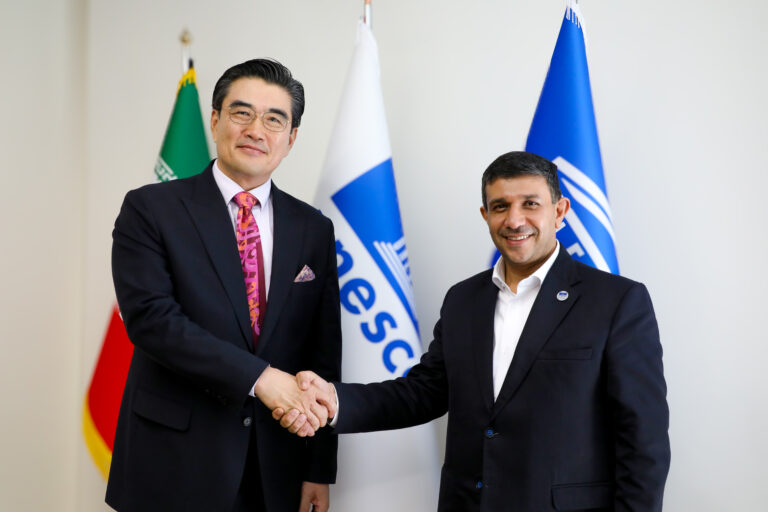
The Meeting of UNESCO Chairs in Iran was held in the presence of Dr Hossein Simaei-Sarraf, Minister of Science, Research and Technology; Dr Hasan Fartousi, Secretary-General of the Iranian National Commission for UNESCO; Mr Yang Shiyong, Head of the UNESCO Office in Tehran; Dr Ahmad Pakatchi, Ambassador and Permanent Representative of the Islamic Republic of Iran to UNESCO; and Ms. Maya Prince, UNESCO Chairs Program Specialist in Paris (online), along with the directors of the specialized departments of the Iranian National Commission for UNESCO, scientific officials, heads of host universities, Chairholders and representatives of UNESCO in Tehran. During the meeting, the Minister of Science, Research and Technology highlighted the importance of UNESCO Chairs in strengthening international scientific cooperation and discussed the opportunities and challenges facing these Chairs in Iran.
Role of UNESCO Chairs in Scientific Development and Science Diplomacy
Dr Hossein Simaei-Sarraf, Minister of Science, Research and Technology, stated that UNESCO has always provided a suitable platform for the exchange of scientific knowledge and experience. He said: “UNESCO Chairs not only contribute to the advancement of education and research, but also play an effective role in fostering critical thinking and strengthening the spirit of research.” He also emphasized the role of these Chairs in science diplomacy, noting that, in today’s world, scientific communication can help reduce tensions and promote global peace.
Need to Support UNESCO Chairs in Iran
Referring to existing challenges, including financial constraints and sanctions, the Minister of Science emphasized the need for greater support from scientific institutions for UNESCO Chairs. He called on universities and relevant ministries to provide the necessary financial resources, adding: “The effective results delivered by these Chairs and their contribution to addressing the country’s challenges are the best incentives for attracting financial support.”
Expanding UNESCO Chairs and Focusing on New Areas
Simaei-Sarraf also called for the expansion of UNESCO Chairs in Iran, particularly in the field of culture, emphasizing that these Chairs should not be limited to universities in Tehran. He proposed establishing an extensive network of Chairs at universities across the country to strengthen scientific cooperation at both national and international levels.
He further referred to Iran’s scientific achievements in fields such as nanotechnology, biotechnology and artificial intelligence, and stated that, despite sanctions, Iran remains one of the leading countries in scientific production in the region. However, international restrictions have affected the country’s scientific exchanges.
The President of the Iranian National Commission for UNESCO expressed the Islamic Republic of Iran’s readiness to expand scientific and research cooperation with other countries and actively participate in UNESCO programs. He called on the international organization to develop multilateral research projects in areas such as climate change, bioethics, artificial intelligence and green education. He emphasized that UNESCO Chairs can provide a valuable opportunity to strengthen Iran’s scientific standing internationally.
Role of UNESCO in Global Scientific and Cultural Development
At the beginning of his remarks, Dr. Hasan Fartousi, Secretary-General of the Iranian National Commission for UNESCO, congratulated participants on the auspicious occasions of Sha’ban and the Ten-Day Fajr celebrations, commemorated the 75th anniversary of the establishment of the Iranian National Commission for UNESCO, and expressed his appreciation for the presence of scientific and academic officials at the meeting.
Referring to UNESCO’s mission in the fields of education, science and culture, he stated: “Since its establishment in 1945, UNESCO has consistently worked to promote peace and sustainable development through education, science and culture. Through its programs, the Organization has had a positive impact on communities around the world.”
The Secretary-General of the Iranian National Commission for UNESCO emphasized that UNESCO Chairs in Member States, including Iran, can contribute to the achievement of the Organization’s objectives by fostering scientific and research synergies at the national, regional and international levels. He added: “Iran has 18 UNESCO Chairs in various fields of education, natural sciences, social and human sciences, and communication and information, hosted by universities and research institutions across the country. These Chairs play an important role in strengthening education, research and scientific development in the country and the region.”
Challenges Facing UNESCO Chairs in Iran
Referring to Iran’s scientific capacities, Fartousi outlined some of the challenges facing UNESCO Chairs and stated: “Iran is a country with a rich history and civilization that is still developing and can benefit from the UNESCO Chairs network to enhance the quality of education and scientific research. However, challenges such as financial constraints, sanctions and certain political and economic issues have prevented the full realization of these capacities.”
He added: “One of the main challenges facing UNESCO Chairs is securing financial resources for the implementation of various projects and programs. In this regard, the role of host institutions is vital. University and scientific institution leaders should honor their commitments to UNESCO Chairs and help advance their objectives through cooperation with various organizations and by securing support from relevant ministries.”
The Secretary-General of the Iranian National Commission for UNESCO further warned that, without adequate support, some UNESCO Chairs may be discontinued. He emphasized: “Chairs established through the efforts and commitment of universities and research institutions will not be able to continue their activities without support. This will not only undermine the country’s scientific activities, but also result in the loss of an opportunity that has been created through considerable effort.”
Need for Reporting and Strengthening Scientific Cooperation
Dr. Fartousi further emphasized the importance of accurate reporting on the performance of UNESCO Chairs and stated: “An important aspect of evaluating the performance of Chairs is the submission of detailed reports on their activities, challenges and future plans. These reports are essential not only for UNESCO’s decisions regarding the renewal of Chairs, but also for the Iranian National Commission for UNESCO to better monitor their performance and take steps to strengthen them.”
He added: “Transparent reporting not only increases the effectiveness of the Chairs’ activities, but also creates opportunities to strengthen international cooperation and, in some cases, attract financial resources. In addition, cross-sectoral activities and coordination among universities and scientific institutions can improve the performance of UNESCO Chairs and help achieve their objectives.”
Future Plans for the Development of UNESCO Chairs in Iran
Referring to the institution’s future plans to strengthen UNESCO Chairs in the country, the Secretary-General of the Iranian National Commission for UNESCO stated: “The Iranian National Commission for UNESCO has effectively fulfilled its role in establishing and renewing Chairs. However, in the new period, we plan to expand our advisory, monitoring and support roles in addition to these responsibilities. Our goal is for UNESCO Chairs to play a more active role in the global network of UNESCO Chairs and have a greater impact.”
He continued: “One of our priorities is decentralization and the equitable distribution of opportunities for establishing new Chairs at educational and research institutions outside Tehran that have significant scientific capacities. Given the importance of culture, we also intend to establish a UNESCO Chair in this field.”
Dr. Fartousi emphasized the importance of interaction between UNESCO Chairs and the scientific and civil society communities, stating: “We expect UNESCO Chairs, in addition to their educational and research activities and the organization of meetings and conferences, to play a role in scientific and cultural policymaking. These Chairs should strengthen their links with civil society and play a more effective role in scientific and cultural decision-making.”
Conclusion and Outlook of the Meeting of UNESCO Chairs
Concluding his remarks, he referred to the importance of the specialized meeting and stated: “Today’s meeting is a valuable opportunity to examine the opportunities and challenges facing UNESCO Chairs in the country. The presence of the Minister of Science, Research and Technology and university presidents at this meeting demonstrates the high importance attached to this issue. We hope that, through the cooperation of all stakeholders, we can identify appropriate solutions to enhance the performance of UNESCO Chairs and improve the conditions under which they operate.”
The Secretary-General of the Iranian National Commission for UNESCO emphasized: “At the Iranian National Commission for UNESCO, we will make even greater efforts to strengthen international relations, create new opportunities for scientific cooperation and expand the activities of UNESCO Chairs, thereby enhancing the role of these institutions in advancing the country’s sustainable development and scientific objectives.”
UNESCO Chairs: A Bridge between Research and Policymaking
Mr. Yang Shiyong, Head of the UNESCO Office in Tehran, described UNESCO Chairs in his speech as more than university-based research centres and stated: “These Chairs serve as institutions for examining emerging challenges, proposing innovative solutions and developing practical policies at the national and international levels.” He also highlighted their role in fostering synergies among researchers, policymakers and civil society.
UNESCO’s Scientific Cooperation with Iran
The Head of the UNESCO Office in Tehran, Yang Shiyong, referred to UNESCO’s extensive engagement with scientific Chairs in Iran and added: “In recent years, we have had effective cooperation with the UNESCO Chair on Popularization of Science and the Natural Disaster Research Institute in the areas of traditional knowledge and sustainable water resources management.” Emphasizing the need to strengthen international cooperation, Yang Shiyong stated: “The UNESCO Office in Tehran is committed to connecting UNESCO Chairs with funding organizations and global research institutions in order to expand their impact.”
The Head of the UNESCO Office in Tehran emphasized the importance of expanding the activities of UNESCO Chairs and stated: “We are seeking to identify new areas for regional and international partnerships so that the Chairs can play a greater role in interdisciplinary fields.” He also stressed the need to strengthen cooperation between UNESCO Chairs and relevant research centres, adding: “Through cooperation with the Iranian National Commission for UNESCO, we can expand platforms for knowledge exchange and strengthen scientific synergies.”
Yang Shiyong also expressed his appreciation for the role of Iran’s Ministry of Science, Research and Technology in supporting UNESCO programs and stated: “Under the leadership of Dr. Simaei, this cooperation will be further expanded.”
Sahar Ahmadizadeh, Director of the Natural Sciences Department of the Iranian National Commission for UNESCO, also described UNESCO Chairs as a platform for scientific development and international cooperation, stating: “The UNESCO Chairs Program, which began in 1992, is one of the most important structures for international scientific cooperation and plays a key role in knowledge exchange, the development of education and interdisciplinary research. In Iran, these Chairs are also active in various fields of science, education, social sciences and communication.”
She continued: “UNESCO Chairs around the world serve as scientific think tanks and play an important role in connecting universities with civil society, policymaking institutions and local communities. With their high degree of flexibility, these Chairs respond to economic, social and technological changes and work to address emerging challenges in education and research.”
Ahmadizadeh also explained the responsibilities of host institutions and Chairholders, stating: “UNESCO Chairs operate under the supervision of their host institutions, which are responsible for providing research facilities, financial support, participating in UNESCO’s international programs and facilitating scientific exchange. The Chairholder is also responsible for renewing the agreement, securing financial support and disseminating scientific findings.”
UNESCO Chairs in Iran: From Education to Social Sciences
The Director of the Natural Sciences Department of the Iranian National Commission for UNESCO added: “UNESCO Chairs operate in various fields, including education, science, social and human sciences, and communication. Some of the country’s major active Chairs include the UNESCO Chair on E-Learning and Teaching, the UNESCO Chair in Management, Planning and Quality Assurance in Higher Education, the UNESCO Chair in Entrepreneurship, the UNESCO Chair on Interdisciplinary Research in Diabetes, the UNESCO Chair on Natural Disasters Management, the UNESCO Chair on Popularization of Science, the UNESCO Chair on Bioethics Studies, the UNESCO Chair on Social Health and Development, the UNESCO Chair for Human Rights, Peace and Democracy, and the UNESCO Chair on Cyberspace and Culture.”
She concluded by emphasizing the importance of UNESCO Chairs in scientific sustainable development and policymaking: “Strengthening international cooperation and supporting these Chairs can be an important step towards enhancing Iran’s scientific standing at the global level.”
New Outlook for UNESCO Chairs towards Sustainable Development and Interdisciplinary Partnerships
Ms. Maya Prince, UNESCO Chairs Program Manager, also addressed the importance of interdisciplinary cooperation and the free exchange of knowledge in her opening remarks at the Meeting of UNESCO Chairs in Iran. She noted that the future of these Chairs will be shaped around three principles: “interdisciplinary,” “open” and “impactful.”
Need for Global Cooperation and the Social Impact of UNESCO Chairs
Prince emphasized the need for global interaction and cooperation, particularly through South-South cooperation models. She also highlighted the importance of the social impact of UNESCO Chairs beyond education and research and called for more active participation by the Chairs in global projects.
In another part of her remarks, Prince referred to the role and commitments of host institutions and called on university presidents to actively support UNESCO Chairs. She also stressed the need to strengthen communication and the visibility of the Chairs through the development of websites and regular updates.
At the conclusion, Maya Prince thanked the Iranian National Commission for UNESCO for organizing the meeting and facilitating knowledge-sharing among Chairs and host institutions, and expressed her hope for further partnerships in support of sustainable development and positive global change.
Science: A Bridge between Nations and Civilizations
Dr. Ahmad Pakatchi, Ambassador and Permanent Representative of the Islamic Republic of Iran to UNESCO, also stated at the meeting on the opportunities and challenges facing UNESCO Chairs in Iran: “Science has always been the result of dialogue, interaction and the exchange of ideas. From antiquity and the Silk Roads to the Renaissance and the modern era, scientific progress has resulted from transnational cooperation, and political borders have never prevented the free flow of knowledge. Today, major scientific achievements such as quantum mechanics, the discovery of DNA and the development of artificial intelligence are likewise the result of cooperation among scientists from around the world.”
Role of UNESCO Chairs in Knowledge Exchange
He added: “The UNESCO Chairs Program, launched in 1992, provides a valuable platform for international scientific and educational cooperation. These Chairs facilitate connections among researchers, universities and scientific institutions and create networks that transcend geographical borders and contribute to the expansion of global knowledge.”
Pakatchi emphasized: “UNESCO Chairs provide Iranian scientists with a unique opportunity to engage with the global scientific community. Given Iran’s rich scientific heritage, from Avicenna and Al-Biruni to Al-Khwarizmi, these Chairs can pave the way for international cooperation, joint publications and cross-border research projects. Such interactions not only increase the international visibility of Iran’s scientific achievements, but also provide opportunities to benefit from the latest scientific advances worldwide.”
Iran’s Commitment to Expanding UNESCO Chairs
The Ambassador and Permanent Representative of the Islamic Republic of Iran to UNESCO stated that he was ready to support the activities of existing scientific Chairs and develop the network of new Chairs in the country. This would aim to strengthen scientific cooperation, knowledge exchange and the realization of UNESCO’s aspirations for the advancement of science and education.
Fartousi, Secretary-General of the Iranian National Commission for UNESCO, also expressed hope that, through interaction and cooperation among the Ministry of Science, Research and Technology, universities and UNESCO Chairholders, effective steps would be taken to develop and strengthen these Chairs.
In the second part of the specialized meeting, university presidents discussed and exchanged views on the challenges and opportunities facing UNESCO Chairs in Iran.
The first gathering of UNESCO Chairs in Iran was held with the aim of enhancing scientific cooperation, facilitating knowledge exchange and developing evidence-based policies. Participants emphasized the need to strengthen these interactions, support the free exchange of knowledge, establish international research networks and ensure Iran’s active participation in this process. Science flourishes when it develops in an open environment free from unnecessary restrictions, and the UNESCO Chairs Program is an example of this global and inclusive approach.