

Promoting Environmental Education: A Fundamental Path to Achieving Sustainable Development
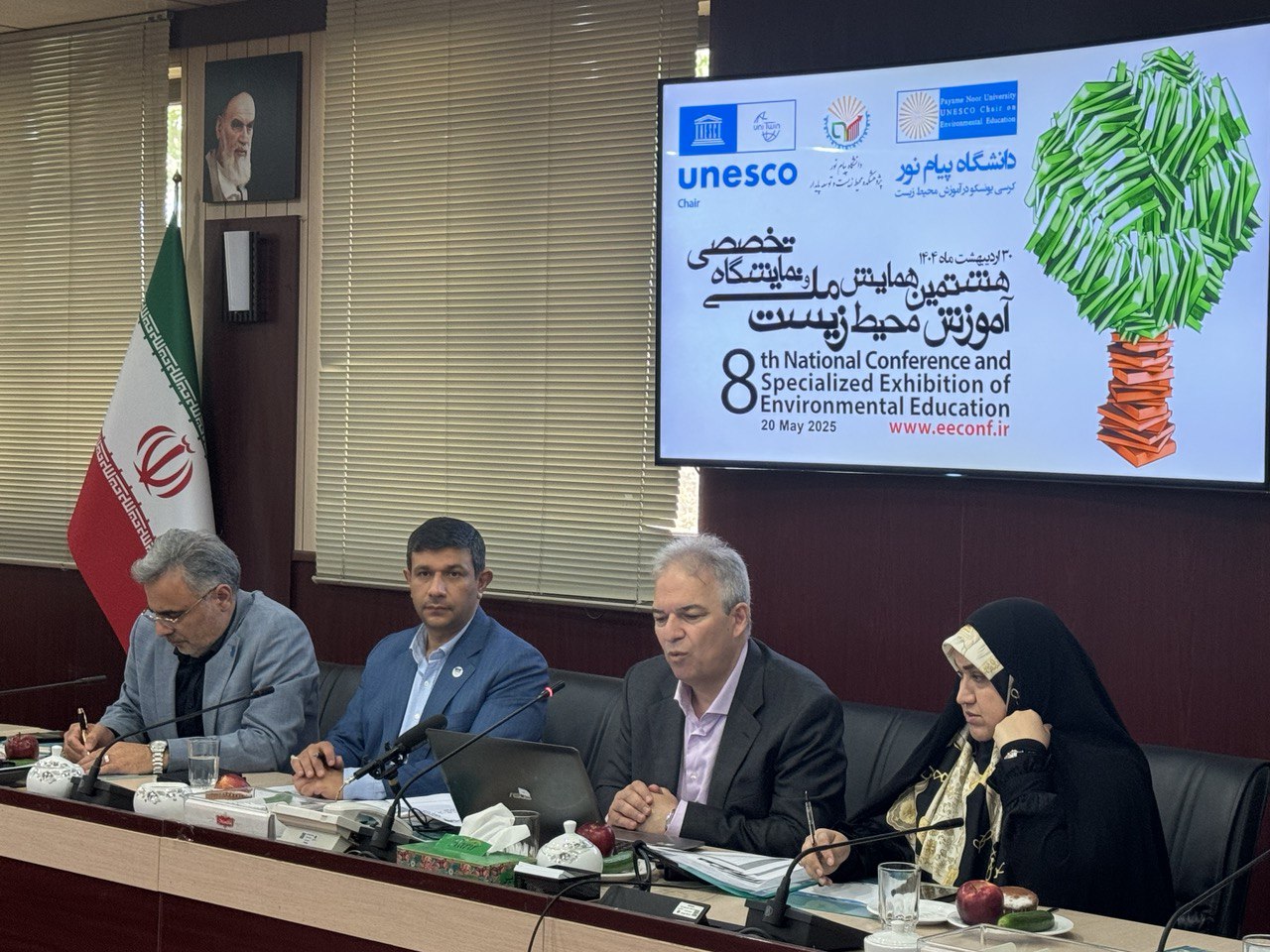
Dr. Hasan Fartousi, Secretary-General of the Iranian National Commission for UNESCO, emphasized the need to institutionalize environmental education and expand international cooperation in this field at the opening ceremony of the 8th National Conference and Specialized Exhibition on Environmental Education. |
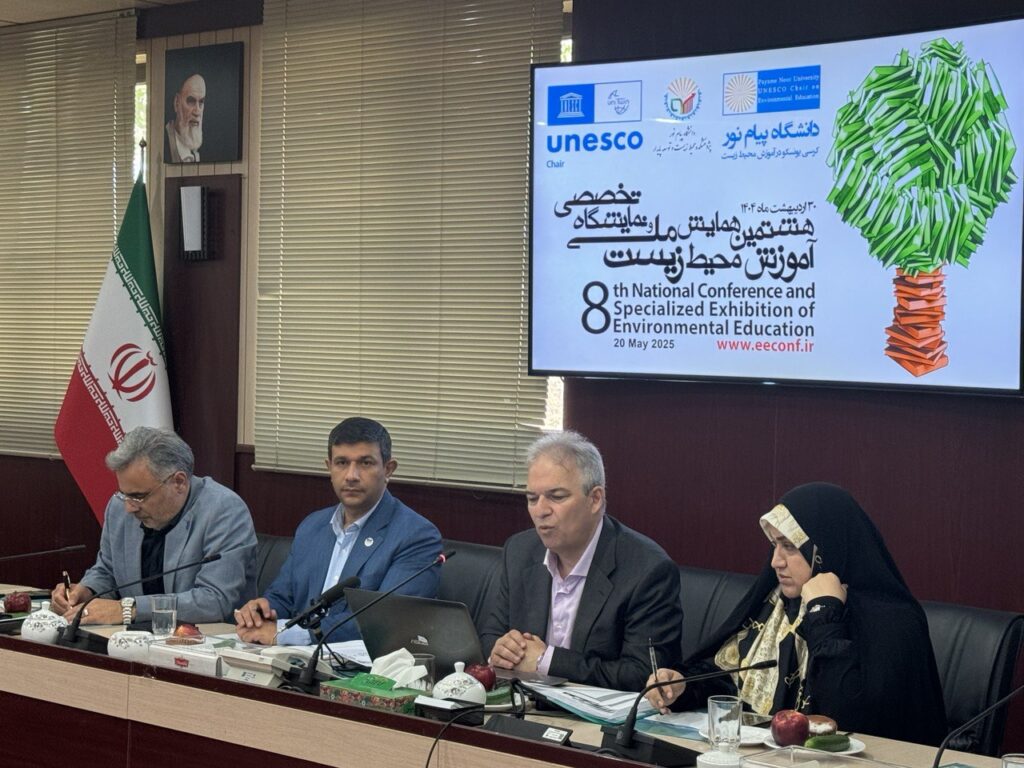
The 8th National Conference and Specialized Exhibition on Environmental Education, hosted by Payam-e Noor University with the support of the UNESCO Chair on Environmental Education, was held on 20 May 2025 at the university’s central headquarters, with the participation of Dr. Hasan Fartousi, Secretary-General of the Iranian National Commission for UNESCO; Dr. Somayeh Rafiei, Chair of the Environmental Protection Faction of the Islamic Consultative Assembly; Dr. Askar Jalalian, Deputy Minister for Human Rights and International Affairs at the Ministry of Justice; Dr. Maryam Bahadari, Director-General of the Office of the President of the Vice Presidency for Women and Family Affairs; and a number of policymakers, managers and activists in the fields of education and the environment. The event was organized with the aim of exchanging scientific experiences, presenting innovative educational solutions, and enhancing environmental literacy in society.
At the beginning of his remarks, Dr. Fartousi expressed his appreciation to the organizers of the event, Dr. Amin Naji, President of Payam-e Noor University, and Dr. Shobeiri, holder of the UNESCO Chair on Environmental Education. He then referred to UNESCO’s approach to environmental education, stating that, from UNESCO’s perspective, environmental education is a process of acquiring awareness and becoming familiar with knowledge, skills, values, experiences and objectives that lead to the development of appropriate solutions to environmental problems.
Fartousi added that, from UNESCO’s perspective, the four main components of environmental education are raising public awareness, developing a deep understanding of environmental challenges, creating motivation to improve the state of the environment, and actively participating in addressing environmental issues.
Major Environmental Challenges: From Biodiversity to Climate Change
The Secretary-General of the Iranian National Commission for UNESCO, emphasizing the broad range of environmental issues, stated that challenges such as biodiversity and species conservation, water pollution, deforestation and its natural consequences, human- and animal-related pollution, and climate change are among the major environmental problems facing the world today.
He noted that these challenges require a scientific, participatory and global approach, and that education is the key to effective engagement in this field.
UNESCO’s Pivotal Role in Advancing Environmental Education
Fartousi stated that UNESCO, as the educational, scientific and cultural organization of the United Nations, plays a key role in advancing environmental education. Through the provision of strategic and informational documents, the Organization helps countries develop and implement effective programs in this field.
He added that, through programs such as Man and the Biosphere, the International Hydrological Program, Earth sciences and geoparks, the basic sciences, and the Intergovernmental Oceanographic Commission, UNESCO seeks to protect the environment through education.
Referring to UNESCO’s incentive programs, Fartousi said that awards such as the Sultan Qaboos Prize, the Young Scientist Award, the Michel Batisse Award, and the UNESCO-Japan Prize on Education for Sustainable Development are examples of initiatives that support innovative activities for environmental protection.
Climate Change Education as Part of the Global ESD Program
The Secretary-General of the Iranian National Commission for UNESCO also emphasized that “through the Education for Sustainable Development (ESD) program, UNESCO has made climate change education one of the main components of addressing the climate crisis. In this program, promoting a responsible approach to water resources also holds a special place.”
The Greening Education Partnership: A Global Alliance for a Green Economy
Referring to the global Greening Education Partnership initiative, Fartousi stated that this international partnership, with more than 81 members and 1,000 organizations, including governmental and intergovernmental bodies, civil society, academia, the private sector and young people, works to equip communities with the knowledge and skills needed to address climate change and move towards a green economy.
He added that the Iranian National Commission for UNESCO supports UNESCO Chairs, particularly the UNESCO Chair on Environmental Education, as part of its core responsibilities.
At the conclusion of his remarks, Fartousi expressed hope that the 8th National Conference on Environmental Education, as in previous editions, would play an effective role in promoting awareness and practical action for environmental protection. “We need such awareness more than ever,” he said. He concluded by expressing his hope for the success of this valuable conference, stating, “We believe that expanding environmental education is one of the key foundations for achieving sustainable development.”