

Kermanshah Festival as the Cultural Capital of Asian Cities Held with the Participation of Domestic and International Guests
With the arrival of domestic and international guests in Kermanshah, the three-day international “Kermanshah, Cultural Capital of Asian Cities” Festival was held under the auspices of Kermanshah Municipality. |
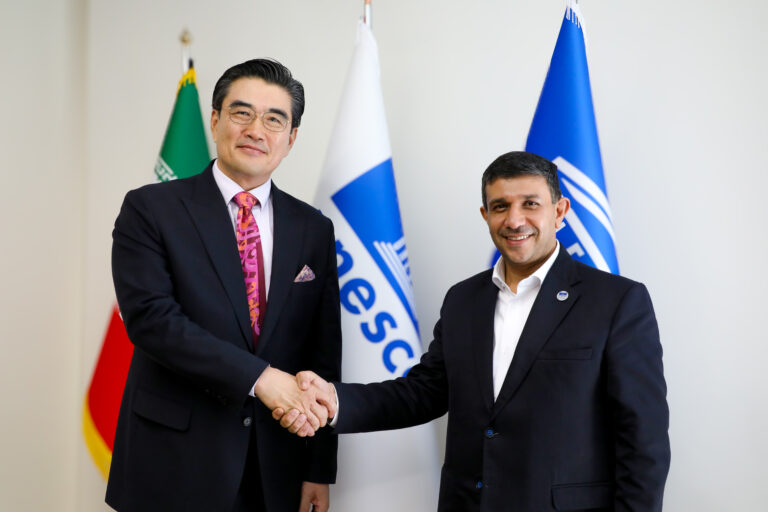
The festival began on Sunday, 8 June 2025, with an official welcome ceremony at Shahid Ashrafi Esfahani International Airport. The ceremony was attended by ambassadors of Malaysia, Brunei, Uzbekistan and Bangladesh, the Consul General of Mongolia, cultural counsellors of Tajikistan and Sri Lanka, senior representatives of the Economic Cooperation Organization (ECO), UNESCO and the Asian Mayors Forum, cultural officials from domestic municipalities, including Isfahan, as well as a delegation from the Iranian National Commission for UNESCO.
During the festival, a variety of programs were held, including visits to Kermanshah’s historical and tourist sites, participation in cultural traditions such as Ta’zieh, Naqqali and Zurkhaneh sports, the Kermanshah Cultural Night, specialized meetings with provincial officials, and opportunities to explore the city’s tourism and culinary capacities.
During a meeting with the international guests, Dr. Manouchehr Habibi, Governor-General of Kermanshah Province, referring to the province’s strategic position in the economic, security and cultural spheres, emphasized: “Kermanshah is the country’s second-largest transit border and Iran’s third petrochemical hub. With its extensive capacities in tourism, agriculture and ethnic diversity, it can serve as a centre for cultural and economic exchanges among Asian cities.” Referring to Kermanshah’s accession to the UNESCO Creative Cities Network in the field of Gastronomy, he called for the establishment of an Asian tourism route centred on Kermanshah and the creation of a joint think tank among Asian cities.
Municipalities: Pioneers of Cultural Diplomacy
Hamidreza Gholamzadeh, Secretary-General of the Asian Mayors Forum, expressed his appreciation for the cultural activities of Kermanshah Municipality at the meeting and described the city’s selection as the 2025 Cultural Capital of Asia as the result of a strong proposal. He added: “Our vision for this festival goes beyond culture alone. Culture is a gateway to international cooperation in the economic and urban spheres.”
Referring to the capacity of municipalities to advance urban diplomacy, he emphasized: “By establishing international exchanges, Kermanshah Municipality has created a platform for introducing the province’s capacities to other countries and can assist the government and the private sector in expanding interactions.”
Kermanshah: Ready for Regional Cooperation
Nader Norouzi, Mayor of Kermanshah, also referred to the city’s historical, cultural and natural heritage and stated: “With more than 4,200 historical sites, four-season nature, ethnic diversity and its accession to the UNESCO Creative Cities Network, Kermanshah is now ready to play a role in cultural and economic exchanges with Asian cities.”
Emphasizing the role of urban diplomacy in strengthening regional cooperation, he noted: “Kermanshah can serve as a bridge among Asian countries in various fields, including culinary tourism.”
Commemoration of National Shahnameh Day with a Naqqali Performance by Master Davoud Fathi in Kermanshah in the Presence of Representatives of the Iranian National Commission for UNESCO
On the occasion of National Persian Language Day and the commemoration of the great Persian poet Hakim Abol-Qasem Ferdowsi, a program centred on Naqqali and Shahnameh recitation was held in Kermanshah, featuring a performance by Master Davoud Fathi. This cultural ceremony, held in one of the city’s historic sites and within its historic fabric, was warmly received by literature enthusiasts, artists, researchers and admirers of Persian literature.
During the program, the representatives engaged in discussions with attendees and emphasized the importance of preserving and revitalizing the art of Naqqali as part of the country’s intangible cultural heritage. They also emphasized the role of such events in strengthening cultural identity, promoting classical Persian literature and connecting generations through the epic narratives of the Shahnameh.
Master Davoud Fathi, one of the country’s renowned Naqqals, created an inspiring atmosphere among the audience by narrating sections of the Shahnameh, particularly the battles of the Iranian heroes. His performance was enthusiastically received by the audience and showcased the grandeur of Iran’s oral artistic heritage within Kermanshah’s vibrant cultural setting.
During the visit of the delegation from the Iranian National Commission for UNESCO to Kermanshah Province, they also visited a joint Iran–China wood exhibition. The exhibition was organized to showcase aspects of the art, skills and creativity of Iranian and Chinese artists and presented handicraft works from the two ancient cultures side by side in a traditional setting.
Strengthening Cultural Diplomacy on the Second Day of the Kermanshah Festival: Cultural Capital of Asian Cities
On the second day of the international “Kermanshah: Cultural Capital of Asian Cities” Festival, held on 9 June 2025, the city hosted diplomatic meetings, artistic and cultural programs, and cultural visits attended by senior representatives of Asian countries, international organizations and representatives of the Iranian National Commission for UNESCO. These programs were held in line with UNESCO’s objectives of promoting peace, mutual understanding among peoples and strengthening cultural identity.
On Monday, 9 June, Dr. Nader Norouzi, Mayor of Kermanshah, met and held discussions on the sidelines of the festival with ambassadors of Asian countries, including Malaysia, Sri Lanka and Mongolia, as well as the Deputy Secretary-General of the Economic Cooperation Organization (ECO). The meetings addressed ways to expand cultural and economic interactions with Asian cities, with both sides emphasizing the importance of urban diplomacy in deepening relations among peoples.
During these meetings, the parties exchanged cultural gifts and referred to Kermanshah’s historical, tourism and handicraft capacities as an appropriate platform for expanding cultural relations. The meetings were particularly welcomed by representatives of ECO member countries and cultural representatives of embassies.
Proposal for Sister-City Relations with Dushanbe, Tajikistan
One of the key events on the second day of the festival was a meeting between the Mayor of Kermanshah and the Deputy Mayor of Dushanbe, the capital of Tajikistan. During the meeting, attended by the Head of Cultural Affairs of Dushanbe Municipality and the Cultural Counsellor of the Embassy of Tajikistan, the two sides referred to the cultural, literary and artistic commonalities between the two cities and emphasized the expansion of bilateral cooperation.
Referring to Kermanshah’s rich heritage in epic literature and Shahnameh recitation, the Mayor of Kermanshah called for the signing of a sister-city agreement between the two cities. The Deputy Mayor of Dushanbe, in turn, formally invited the Mayor of Kermanshah to attend the International Investors’ Conference in Tajikistan and announced the city’s readiness to host joint cultural programs.
Kermanshah Cultural Night at Taq-e Bostan: A Reflection of National Identity and Intangible Heritage
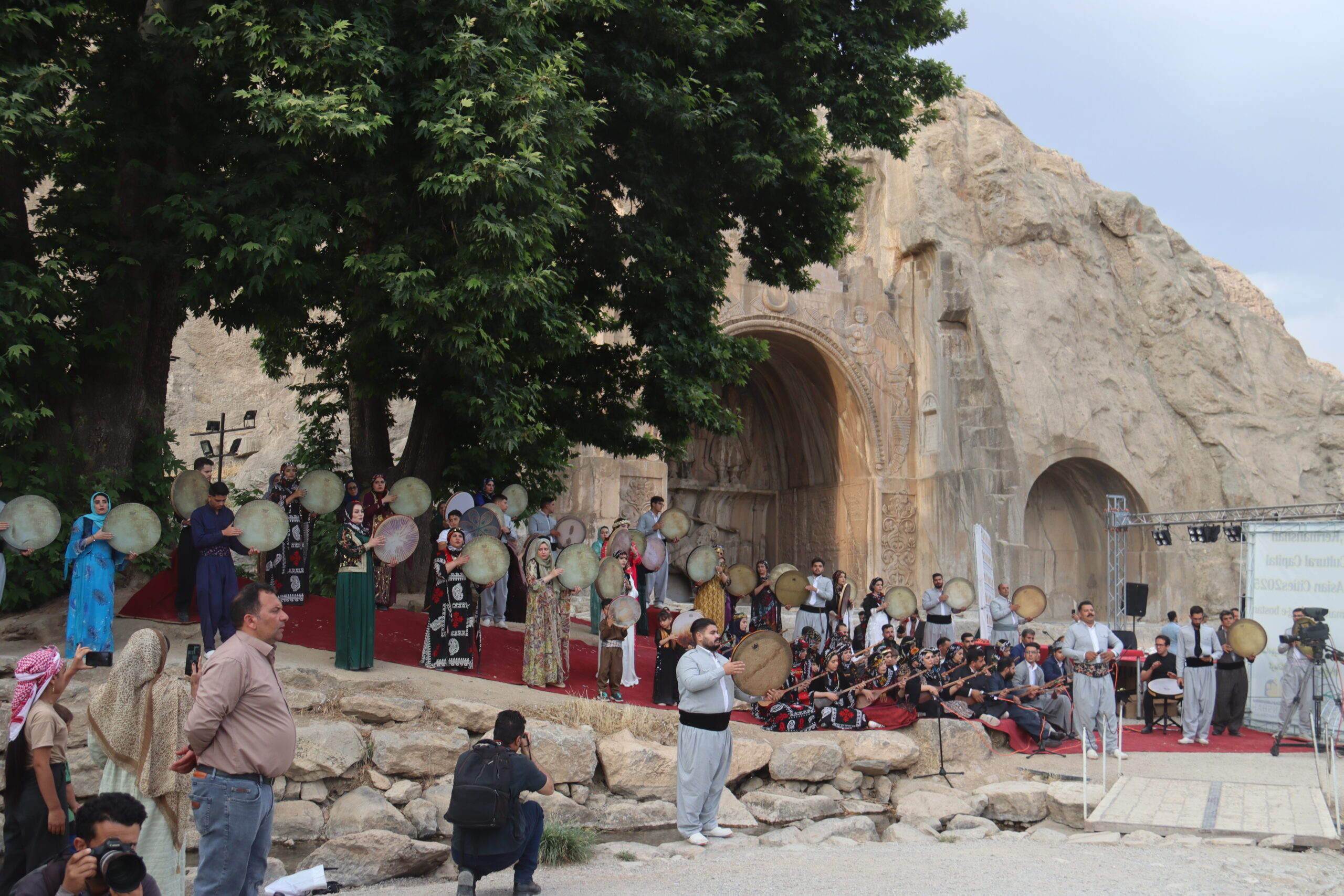
One of the highlights of the second day of the festival was the Kermanshah Cultural Night, held at the historic Taq-e Bostan site, where the tangible and intangible heritage of Kermanshah’s culture was showcased in the presence of guests from 10 Asian countries. The cultural night was warmly welcomed by local residents and foreign guests and featured programs including Shahnameh recitation, Naqqali, local music, the Halparke ritual dance and the traditional Hawrami vocal style of Horeh.
In his remarks, the Mayor of Kermanshah referred to the importance of the festival in introducing the city’s cultural capacities and stated: “Drawing on its historical and cultural identity, Kermanshah is ready to engage and cooperate with other Asian cities. This event is not merely a festival; it is a pathway towards mutual understanding among peoples and strengthening lasting peace through culture, an objective at the heart of UNESCO’s mission.”
The cultural program also highlighted the diversity of Kermanshah’s traditional cuisine. Nomadic tents were set up and a variety of local foods, including soups, stews, breads and traditional sweets, were served. This initiative not only introduced Kermanshah as a Creative City of Gastronomy, but also highlighted the region’s tourism capacities. Alongside the event, artists enriched the cultural atmosphere by displaying their works in painting and sculpture.
Kermanshah: A Model for Cultural Development in the Asian Context
Hamidreza Gholamzadeh, Secretary-General of the Asian Mayors Forum, also attended the cultural night and stated: “Of more than 130 cities that are members of this forum, only three cities are selected each year as the Cultural, Environmental and Tourism Capitals of Asia. With its rich cultural and artistic heritage, Kermanshah succeeded in securing the title of Cultural Capital of Asia for 2025 in competition with several other cities.”
Emphasizing UNESCO’s role in promoting the cultural identity of peoples, he added: “In a city such as Kermanshah, cultural identity is distinctly preserved and promoted. For this reason, the city can serve as a model for other Asian cities in the field of cultural diplomacy.”
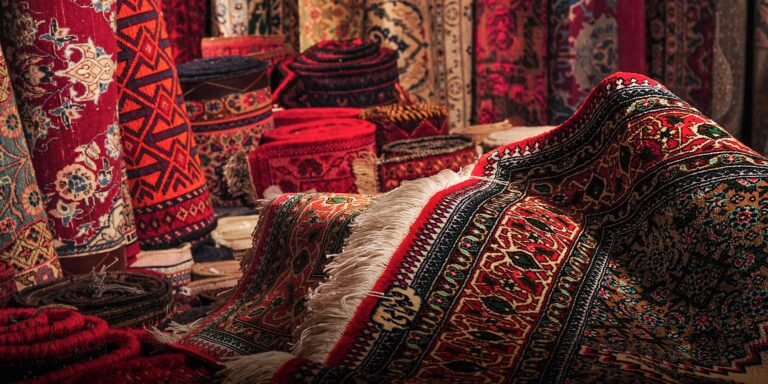
On the third day of the festival, the delegation of the Iranian National Commission for UNESCO also visited Kermanshah’s traditional bazaar. With its long history and important role in the local economy, indigenous culture and social interactions of the region, the bazaar is one of the living manifestations of the city’s cultural heritage.
UNESCO and Its Role in Shaping Urban Identity
The “Kermanshah, Cultural Capital of Asian Cities” Festival was held in close connection with UNESCO’s objectives of promoting peace through culture and preserving tangible and intangible cultural heritage. With its emphasis on cultural diplomacy and urban cooperation, the event marked an important milestone in introducing Kermanshah internationally as a city with a distinctive cultural identity.
Tags