

UNESCO Director-General Emphasizes the Role of Mathematics in Fostering Hope and Human Development
| In a message marking the International Day of Mathematics (14 March 2026), the Director-General of UNESCO described mathematics as a powerful language for understanding the world and a key tool for strengthening cooperation, innovation, and hope in the face of global challenges. |
In his message marking the International Day of Mathematics (14 March 2026), Mr. Khaled El-Enany, Director-General of UNESCO, stated:
“Mathematics is one of humanity’s most powerful languages. Under the theme ‘Mathematics and Hope,’ this year’s International Day of Mathematics explores mathematics as a global force that fosters understanding, cooperation, and optimism in the face of the common challenges confronting humanity.
Behind many of the advances that shape our daily lives lies mathematical thinking. Mathematics enables us to understand patterns, anticipate risks, and turn knowledge into action. It is at work when we model climate systems, decode genetic sequences, design medical imaging technologies, secure digital communications, or explore outer space. It is also a source of inspiration for architects, musicians, and artists, demonstrating that mathematics is both rigorous and creative.
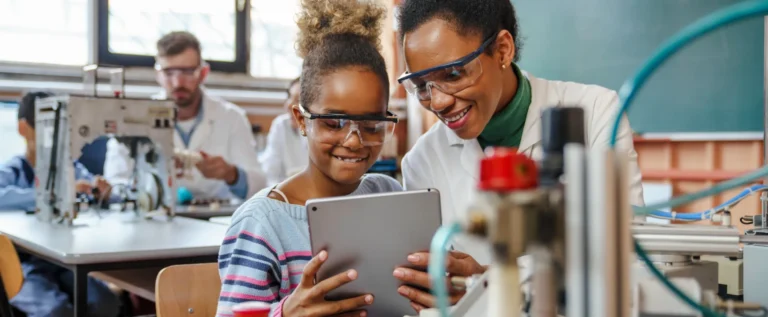
At UNESCO, we believe that mathematics is as vital to education and human development as it is to scientific progress. Yet millions of children and young people, particularly girls, learners in underserved settings, and those affected by crises, are still denied their right to develop strong foundational skills, including in mathematics. Access to university-level studies and research in this field also remains deeply unequal. This is not merely an educational gap; it is a development gap.
That is why STEM education and research, including in mathematics, are at the heart of UNESCO’s work, particularly in Africa, in small island developing States, and in advancing gender equality. With China’s support, UNESCO is promoting quality STEM education in Mali, Samoa, the Solomon Islands, and Uganda through a USD 3 million program. We work with countries to promote innovative teaching methods that spark curiosity, strengthen analytical skills, and empower people to solve complex problems and contribute to sustainable development.
As women remain significantly underrepresented in mathematics and account for only one-third of STEM graduates, UNESCO is actively supporting nearly 20 countries in addressing gender gaps in STEM education and careers through mentoring programs, workshops, teacher training, and greater access to female role models.
On this International Day, let us remember that mathematics is about more than logic and precision: it is a source of creative insight and hope, provided that it is taught inclusively and placed at the service of people and the planet.”