UNESCO Unveils Global Guide for Families on Media and Information Literacy
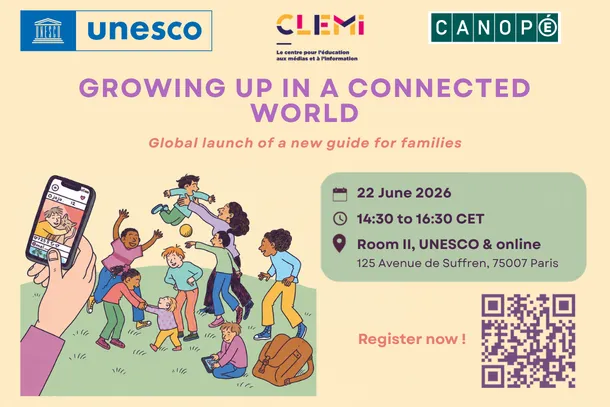
Empowering Parents to Guide Children in the Age of Artificial Intelligence and Social Media On 22 July 2026, UNESCO unveiled the handbook Growing Up and Thriving in an Interconnected World: A Global Guide for Families on Media and Information Literacy, highlighting the importance of empowering parents to guide children in the age of artificial intelligence and social media. Developed with contributions from 37 experts and specialists from around the world, this comprehensive guide aims to empower families to support children as they navigate the opportunities and challenges of the digital environment, social media, and artificial intelligence. |
At the launch ceremony for the handbook, Dr. Khaled El-Enany, Director-General of UNESCO, highlighted the contributions of the 37 experts and specialists involved in developing the guide. He stated that digital technologies had created unprecedented opportunities to establish and deepen connections, facilitate learning, and expand access to knowledge. At the same time, however, they had exposed the most vulnerable members of society, particularly children, to psychological, physical, and cognitive risks. According to him, data showed that parents felt insufficiently equipped to guide their children through such a complex environment.
He added that UNESCO had developed the guide to bridge this gap. Its purpose is to empower parents through media and information literacy so that they can establish a reasonable balance in the use of emerging technologies, manage harmful and damaging content, develop a deeper understanding of social media and artificial intelligence, and foster critical thinking among different segments of society.
The UNESCO Director-General also noted that more than 25 countries around the world were currently considering introducing age restrictions on children’s and adolescents’ access to social media. He expressed hope that the publication of the handbook would help strengthen families’ confidence rather than their fears.
During the event, which included presentations, a panel discussion, an interactive workshop held both in person and online, and a concluding session, the various sections of the handbook were introduced and discussed.
The guide has been published in English and French. The English edition comprises 114 pages and includes a foreword, an introduction, a preamble, five chapters, and an afterword featuring recommended resources on media and information literacy.
The opening sections of the handbook emphasize the importance of education in the digital age. In the introduction, the UNESCO Director-General writes that the guide is the result of collaboration among experts from around the world and an examination of families’ lived experiences. It was developed to strengthen media and information literacy across all age groups and is intended for teachers, policymakers, and parents.
The methodology section explains that 37 experts were invited to examine the most important issues in this field. These included screen time, artificial intelligence, misinformation, online violence, social media, and parenting styles.
Chapter One: How to Support Children in the New Media Ecosystem
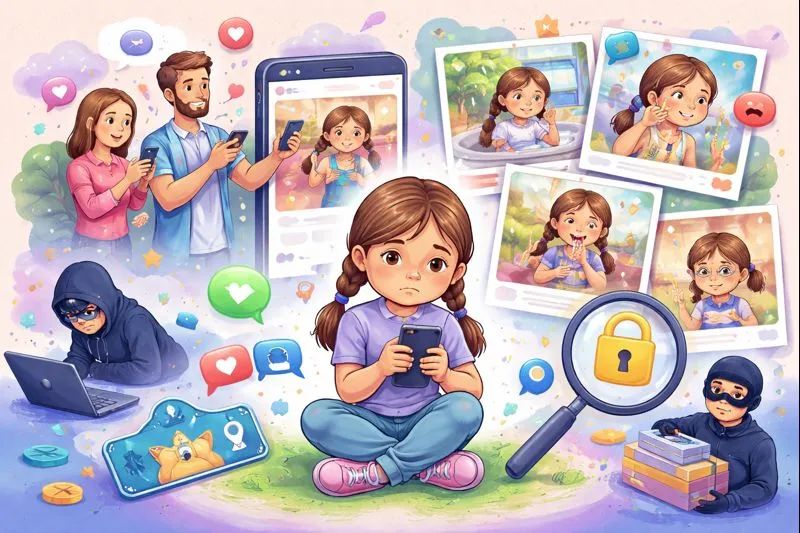
The first chapter of the handbook explores the emergence of a new media ecosystem in today’s digital world, noting that children now live simultaneously in two environments: the physical and the virtual.
Alongside explaining the consequences of excessive and unbalanced use of digital spaces—including sleep disorders, physical inactivity, weight gain, and language, speech, and social difficulties—the chapter also highlights some of their positive functions, such as entertaining children, helping them relax, and keeping them occupied.
Nevertheless, the guide emphasizes the need to establish a balance in children’s use of digital spaces. It stresses the importance of physical activity, sufficient sleep, and replacing endless online browsing with creative activities.
The chapter further highlights the role of parents as behavioral role models and emphasizes the importance of setting clear rules for screen use. It offers three key recommendations:
- Prohibit the use of mobile phones and other screens during meals;
- Prohibit the use of digital devices during the hour before bedtime;
- Prohibit the use of mobile phones during the early morning hours before children go to school.
The handbook also makes positive recommendations, encouraging families to watch entertaining content, including films and television series, together. It advises parents to discuss the content with their children afterward, creating opportunities for analysis, learning, and the development of critical thinking.
Chapter Two: Teaching Critical Thinking in the Face of Information Overload and False News
The second chapter, entitled “Learning, Information Seeking and the Development of Critical Thinking,” examines the circumstances in which children are constantly exposed to a vast range of content, trending topics, viral posts, manipulated images and information, and distressing news, often without sufficient guidance on how to analyze and interpret such material.
This chapter helps parents develop a more accurate understanding of how children access news, familiarize themselves with the ways false images and information are disseminated, and understand why emotional manipulation can be so influential.
It also examines issues such as social media addiction; the effects of excessive use of digital spaces on children’s physical and mental health; the need to rethink the concept of children’s privacy in the digital age; and the challenges arising from the expansion of artificial intelligence. These include how algorithms operate, the risks of inappropriate content, the formation of echo chambers, everyday online manipulation, and the spread of misinformation.
At the end of the second chapter, the guide recommends that three fundamental principles be prioritized according to children’s ages: developing critical thinking, managing emotions, and behaving responsibly in digital environments.
Chapter Three: Teaching Children to Use Artificial Intelligence Wisely
The third chapter of the handbook focuses on the central topic of “Children and Artificial Intelligence” and emphasizes the need for informed and responsible use of AI-powered technologies.
The chapter recommends that parents teach children the skills required to use AI tools appropriately. Accordingly, children should learn to:
- Identify the sources of information;
- Assess the credibility of information and its sources;
- Obtain information from several reliable sources rather than relying on a single source;
- Consistently verify information using trustworthy sources.
The chapter concludes by reaffirming the central importance of media and digital literacy in today’s world, identifying these two skills as essential tools for empowering children in the age of artificial intelligence.
Chapter Four: Combating Cyberviolence Requires Cooperation Among Families, Governments and Platforms
The fourth chapter of the handbook addresses one of the most significant issues in children’s education and upbringing: cyberbullying and cyberviolence.
This section identifies various forms of digital violence, including online bullying, the distribution of children’s private images, sexual abuse, threats, intimidation, and rumor-spreading. It then provides practical strategies to help parents and children protect themselves against these emerging threats.
The guide also emphasizes that digital platforms and governments should take the following measures to address such harms:
- Prioritize the immediate removal of content that harms children, ensuring that they are not forced to endure the shame and social harm associated with the dissemination of such material;
- Expand systematic and ongoing cooperation with trusted developers and programmers to prevent and address these threats.
The chapter concludes by stressing that the harmful consequences of digital violence cannot be addressed through individual action alone. Collective initiatives and activities to combat cyberviolence must therefore be incorporated into the agendas of communities, institutions, and diverse groups.

Chapter Five: Now It Is the Parents’ Turn
The final chapter of the handbook, entitled “Now It Is Your Turn, Parents,” emphasizes the importance of providing informed support for children in the digital age and offers families a set of practical recommendations.
Parents are encouraged to:
- Determine an appropriate age for giving their children their first smartphone;
- Clearly establish and enforce rules governing mobile phone use;
- Designate specific periods of the day as “phone-free hours” and make them part of the family’s daily routine;
- Strengthen ongoing cooperation between home and school to address the risks of digital environments;
- Make conversations about children’s feelings, experiences, and online activities an integral part of everyday family life.
UNESCO’s Key Recommendations for Parents in the Digital World
The handbook goes on to offer additional recommendations, urging parents to take the following steps in today’s fast-paced digital world:
- Equip themselves with digital skills and actively pursue lifelong learning;
- Increase communication with their children and, as far as possible, move away from approaches based solely on restrictions and prohibitions;
- Learn alongside their children and share the learning experience with them;
- Draw on the support of potential allies, particularly teachers, to educate and support children;
- Focus on the creative production and consumption of content rather than passively consuming material in digital spaces.
This section also emphasizes that, rather than resorting to constant monitoring and excessive control, parents should focus on building mutual trust and creating a safe environment in which children can grow and learn.
The handbook concludes by introducing a range of practical educational resources and tools, including posters, educational scenarios, and materials used in training workshops. These resources can help parents, teachers, and educators strengthen media and information literacy.
UNESCO Emphasizes Strengthening Institutional Support and Cooperation Between Families and Schools
In the final session of the event, Maria Gabriel, UNESCO Assistant Director-General for Communication and Information, emphasized the need to strengthen institutional support, expand continuous learning opportunities, and deepen cooperation between families and schools.
She expressed hope that the handbook would play a meaningful role in creating a safe environment for children in today’s interconnected world.
It is worth recalling that the handbook was developed with contributions from 37 experts from different countries to strengthen media and information literacy among families. It provides practical strategies for managing children’s engagement with digital environments, promoting the responsible use of artificial intelligence, combating misinformation and cyberviolence, and strengthening cooperation between families and schools.