A Ceremony Marking the Unveiling of the Inscription Plaque for the Art of Mirror Work in Iranian Architecture on the World Heritage List Was Held
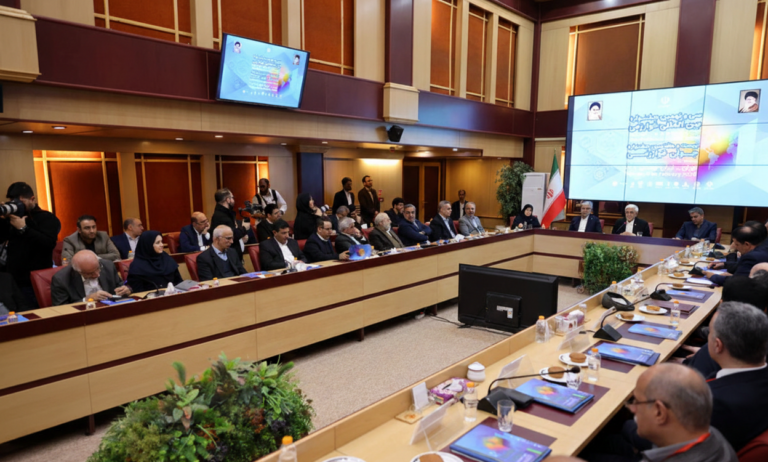
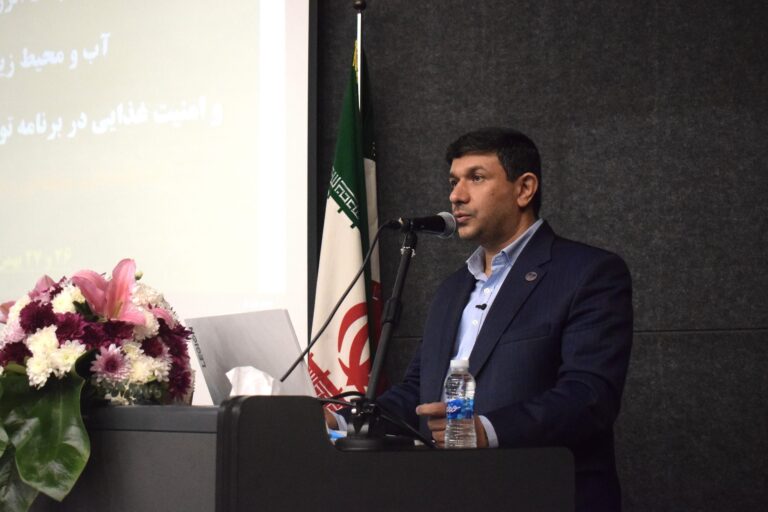
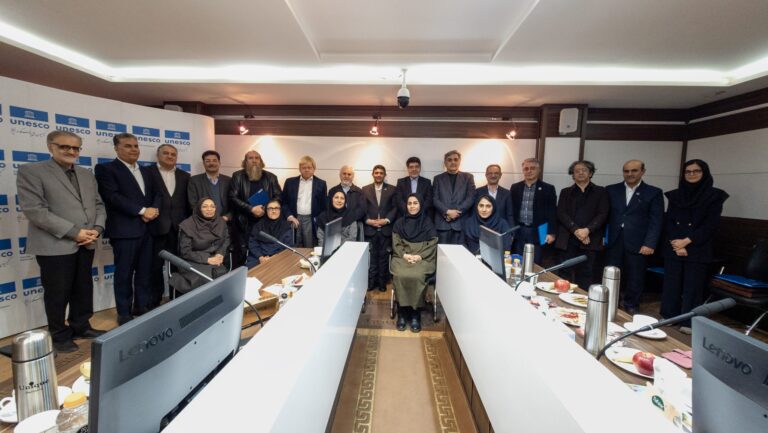
The ceremony marking the unveiling of the inscription plaque recognizing the art of mirror work in Iranian architecture on the World Heritage List was held on January 7, 2026, with the participation of Dr. Ali Darabi, Deputy Minister and Deputy Head of the Ministry of Cultural Heritage, Tourism and Handicrafts; Dr. Hassan Fartousi, Secretary-General of the Iranian National Commission for UNESCO; Dr. Maryam Jalali, Deputy Minister for Handicrafts and Traditional Arts at the Ministry of Cultural Heritage, Tourism and Handicrafts; Dr. Alireza Izadi, Director-General for the Registration and Protection Zones of Monuments and the Preservation and Revitalization of Intangible and Natural Heritage at the Ministry of Cultural Heritage, Tourism and Handicrafts; and Professor Mahmoud Ghalabchi, President of Pars University of Art and Architecture. |
Speakers at the meeting emphasized Iran’s prominent place on the world’s heritage and civilization map.
Dr. Ali Darabi, Deputy Minister and Deputy for Cultural Heritage at the Ministry of Cultural Heritage, Tourism and Handicrafts, expressed regret over the 24-year period during which Iran submitted no nomination for inscription on the World Heritage List. Referring to the difficult political circumstances and Iran’s 12-day war, he stated that the country had overcome these challenges in the cultural sphere and, despite the difficult conditions, succeeded in inscribing Iranian caravanserais and the prehistoric sites of Khorramabad Valley on the World Heritage List.
Darabi also noted that, following the inscription of the art of mirror work, important steps for the Ministry of Cultural Heritage would include making this art commercially viable and developing its practical applications, as well as establishing professional associations in the field.
Dr. Hassan Fartousi, Secretary-General of the Iranian National Commission for UNESCO, described Iran’s rich cultural heritage as a source of envy for many countries. Referring to the role of intangible heritage in consolidating Iranians’ cultural and collective identity and strengthening dialogue and cultural diversity, he described Iran’s rich intangible heritage as a source of vitality and the repeated renewal of Iranian culture throughout history.
Emphasizing the role of master artisans as bearers of this heritage, Fartousi highlighted the need to safeguard, document, and transmit this intangible heritage to future generations. He also underscored the importance of ensuring the continued practice of mirror work in modern architecture and transferring master artisans’ experience into educational programs, including those at Pars University of Art and Architecture. Noting that a mirror can reflect the identity and essence of each of us, he continued: “Few concepts in our literature address the importance of self-reflection, self-knowledge, and self-criticism, rather than blaming others, as profoundly as the concept of mirroring.” To illustrate this point, the Secretary-General of the Iranian National Commission for UNESCO recited a couplet by the great Iranian poet Nezami Ganjavi:
“Since the mirror has shown your true image, Blame yourself; to break the mirror is wrong.”
The Secretary-General also invited master artisans to document the art of mirror work, which has largely been transmitted orally from one generation to the next.
Dr. Maryam Jalali described this inscription as a small showcase of Iranian art, stating: “The art of mirror work is the art of breaking in order to reach fulfillment—a breaking that leads to the transmission of meaning.” She added that, in Iranian culture, breaking marks the beginning of manifestation, and that the master artisans of this art transform knowledge into capability. Connecting this art to future development and progress, she noted, is the task of the younger generation, which serves as a bridge between the past and the future.
Dr. Alireza Izadi described the inclusion of Iranian architecture in the mirror-work nomination as a historical document attesting to Iranian identity, heritage, and civilization, adding that the nomination had helped revive Iranian identity.
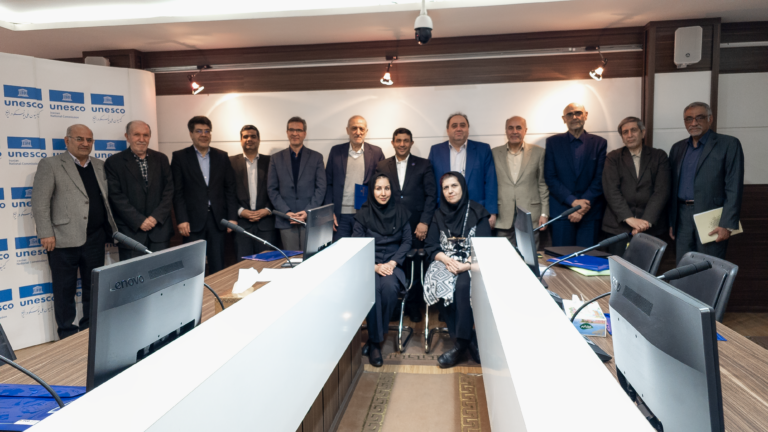
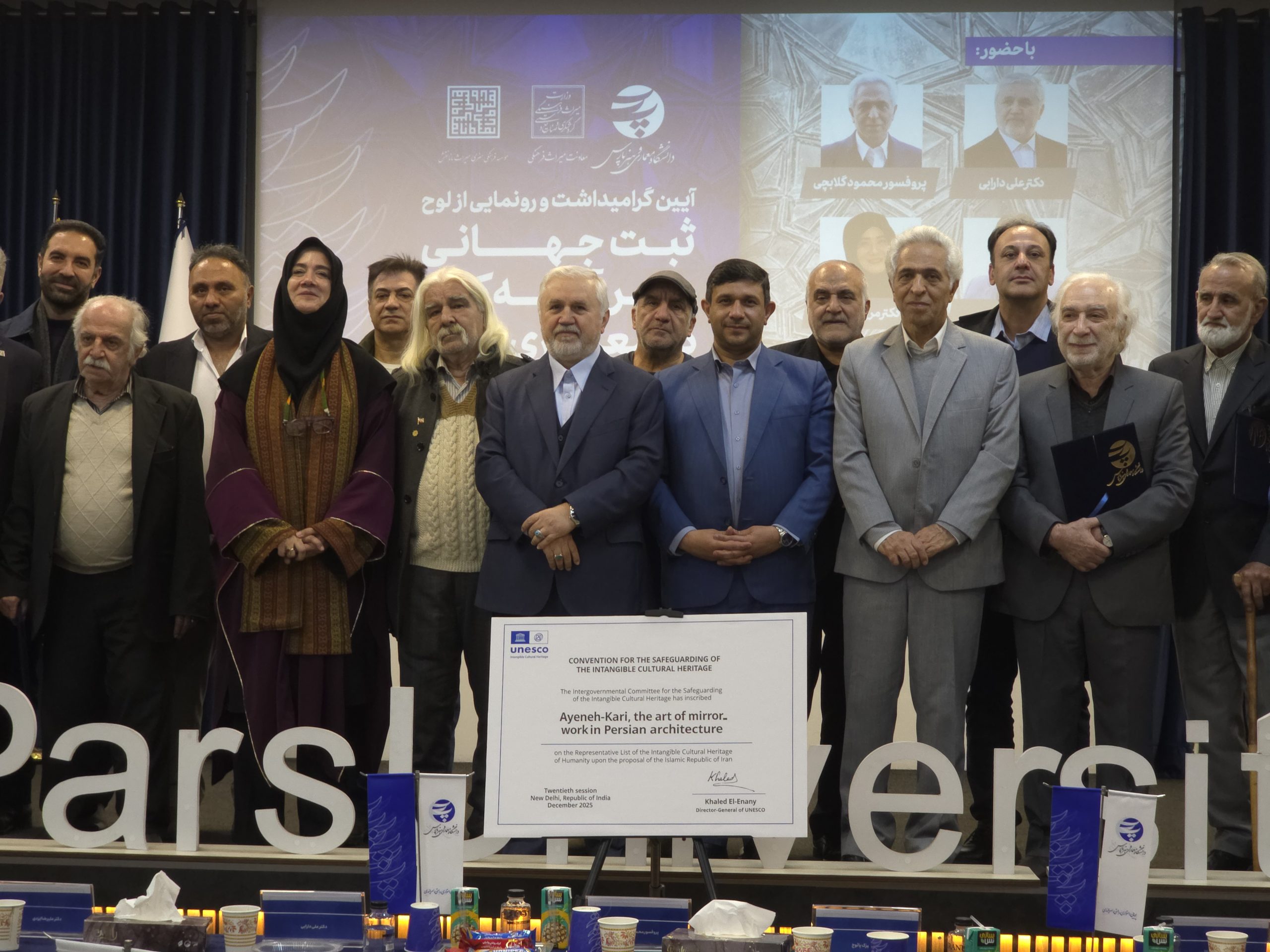
At the conclusion of the ceremony, the inscription plaque for “The Art of Mirror Work in Iranian Architecture” on UNESCO’s Intangible Cultural Heritage List was unveiled by the distinguished speakers, and the master artisans of this art were honored.
To watch the video report, click here.