Publication of AI Educational Resources and Skills Guides to Empower Teachers and Students
UNESCO’s Chair on E-Learning, with the aim of enhancing technological literacy and developing AI skills within the education system, has published Persian translations of two specialized UNESCO guides for teachers and students. |
In line with efforts to strengthen scientific capacity and benefit from the latest knowledge in the pursuit of technological advancement, the UNESCO Chair on E-Learning has made Persian translations of two UNESCO educational and scientific guides available to the country’s academic and cultural communities. These educational resources, developed to share global knowledge and experience, are now accessible to researchers, faculty members, and educators through the website of the Iranian National Commission for UNESCO.
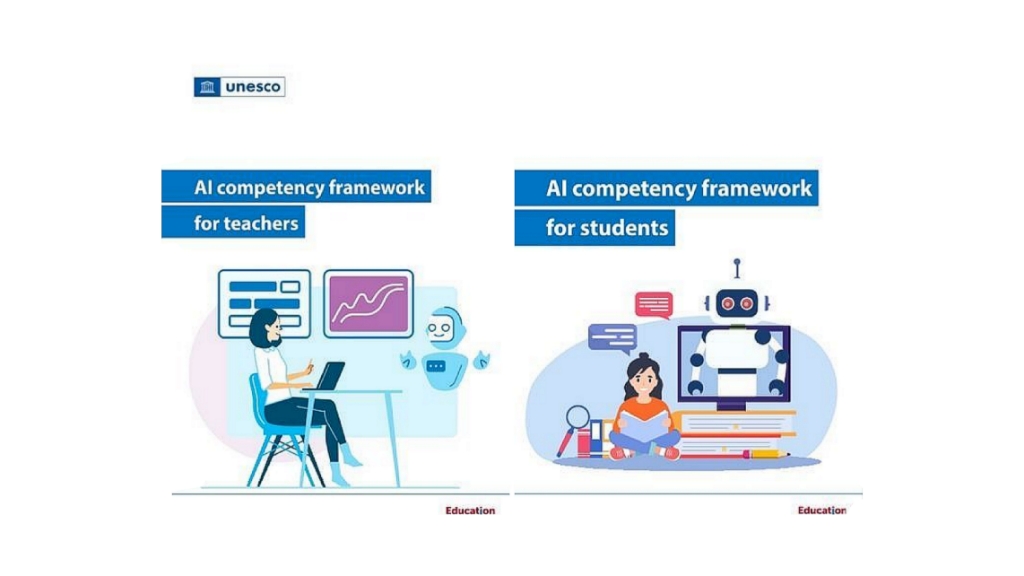
The two specialized guides are the AI Competency Framework for Teachers and the AI Competency Framework for Students. Taking a scientific and practical approach, they outline the skills and competencies required in an era of digital transformation.
The AI Competency Framework for Teachers emphasizes the skills teachers need to enrich teaching and learning in today’s technology-driven environment. Focusing on teacher empowerment, this educational resource seeks to promote the intelligent, ethical, and effective use of emerging tools to improve the quality of education, while preserving the central role of teachers in the educational process.
The AI Competency Framework for Students, meanwhile, serves as a reference resource focused on enhancing the digital literacy of younger generations. Its primary objective is to nurture informed, creative, and capable students who can move beyond the role of passive technology consumers, develop a sound understanding of and engagement with emerging technologies, and harness the potential of artificial intelligence to advance their academic knowledge and skills.
These two guides have been designed to address not only tools and technical skills but also the ethical and social dimensions of technology. By publishing Persian translations of these resources, the UNESCO Chair on E-Learning is creating an opportunity for policymakers, curriculum planners, and education professionals to draw on international experience and models in developing and expanding locally adapted programs and approaches aimed at reducing the digital divide and strengthening educational equity.
The Iranian National Commission for UNESCO has invited faculty members, academics, teachers, and all those committed to education to study these resources. It has expressed hope that the publication of these scientific works will represent an effective step towards technological advancement and maintaining the dynamism of the country’s education system.
Access to the specialized guides: