UNESCO Calls for Global Action Against Climate Disinformation Ahead of COP31
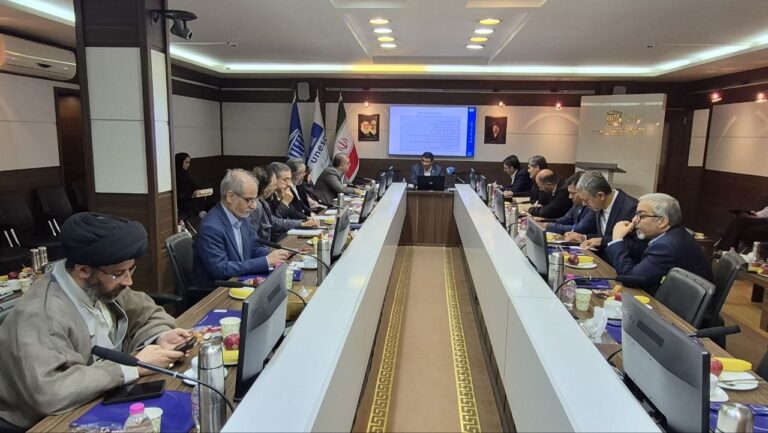
The meeting entitled “Strengthening Information Accuracy and Integrity on Climate Change,” initiated by UNESCO, was held in Bonn, Germany. Representatives of governments, international organizations, media outlets and research institutions emphasized the need to combat climate disinformation, support independent media, enhance media literacy and improve transparency in the digital advertising system as prerequisites for the success of climate policies. |
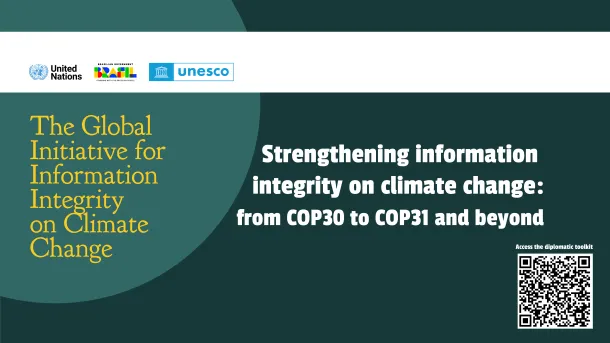
UNESCO held the meeting entitled “Strengthening Information Integrity on Climate Change” in Bonn, Germany, on 15 July 2026. The meeting was part of UNESCO’s and the Government of Brazil’s ongoing efforts to combat the spread of false and misleading information about climate change. It was organized within the framework of an initiative launched following the adoption of the “Declaration on Strengthening Information Integrity on Climate Change” and in the lead-up to COP30 (the 30th United Nations Climate Change Conference).
The Declaration aims to strengthen public access to reliable scientific information, support independent journalism, enhance media and climate literacy, increase transparency among digital platforms, and combat the spread of climate disinformation. The Bonn meeting also provided an opportunity to present reports on countries’ national actions, review progress in implementing the commitments set out in the Declaration, and exchange experiences among governments, international organizations, civil society, media outlets and research institutions ahead of the development of implementation plans related to COP31 (the 31st United Nations Climate Change Conference).
Climate Disinformation: A Challenge for Governance and Policymaking
Participants emphasized that false and misleading information about climate change has become a major challenge for climate governance. They noted that while such information previously focused largely on denying the existence of climate change, it is now increasingly disseminated to undermine public trust in climate policies, exaggerate the costs of climate action, deepen social divisions and delay the implementation of measures to address climate change.
In this context, information integrity was highlighted as a fundamental prerequisite for evidence-based decision-making, meaningful public participation and the success of climate policies.
Representatives of Armenia, France, Brazil, Germany, Belgium and Australia presented reports on their measures and initiatives to implement the recommendations set out in the Declaration, as well as the experiences they had gained in this area.
Discussions emphasized support for global initiatives to strengthen the integrity of climate-related information, improve information transparency, ensure open access to information and promote public participation in climate policymaking. Participants also examined countries’ experiences in adopting climate legislation and establishing climate change councils comprising representatives of governments, universities, civil society organizations and local authorities. They further stressed the importance of expanding multi-stakeholder dialogue and facilitating the exchange of experiences among countries.
Germany: Cooperation Among Scientists, Media and Policymakers Must Be Strengthened
Germany outlined its priorities for combating climate disinformation at the meeting. These included strengthening cooperation among scientists, journalists, fact-checkers, civil society organizations and climate policymakers; enhancing the capacity of media regulators to identify and effectively counter climate disinformation; paying closer attention to the social and economic dimensions of the climate transition; and addressing misleading narratives about employment, well-being and the costs of transitioning to a low-carbon economy.
A key theme of the meeting was the importance of inclusive participation by all stakeholders in combating climate disinformation. Representatives stressed that governments cannot address this challenge alone and that cooperation among media organizations, universities, researchers, non-governmental organizations, local communities, the private sector and international organizations is essential to safeguarding information integrity.
Particular emphasis was placed on the role of environmental journalists and independent media in disseminating reliable, evidence-based scientific information.
The Attention Economy and the Role of Digital Platforms in Spreading Disinformation
One of the key topics discussed at the meeting was the role of the economic structures of digital platforms in spreading climate disinformation. Participants noted that the business models of many such platforms are based on the “attention economy,” in which emotionally charged, controversial and provocative content generates greater engagement and, consequently, higher advertising revenues.
Accordingly, part of the widespread dissemination of climate disinformation stems from the economic mechanisms of digital advertising, which make the production and distribution of such content profitable. This session examined and critically assessed examples of climate change denial content, attacks on renewable energy, and narratives opposing climate policies that generate revenue through online advertising.
Digital Advertising Accountability Charter in the Pipeline
The “Digital Advertising Accountability Charter” was introduced during another session of the meeting. The Charter aims to increase transparency across the digital advertising supply chain, clarify the flow of advertising funds, prevent the financing of misleading content and climate disinformation, and enable brands and advertisers to make informed decisions about where their advertisements appear.
According to the organizers, the Charter is expected to be finalized before COP31 and made available to Member States for implementation at the national level.
At the conclusion of the meeting, participants stressed that combating climate disinformation is not merely a media issue but an integral part of climate governance and the achievement of global climate action goals. They therefore identified safeguarding information integrity, strengthening independent media, supporting journalists, enhancing media and climate literacy, increasing transparency in the digital advertising system, and expanding multi-stakeholder cooperation at the national and international levels as key requirements for the success of climate policies in the years ahead.