

UNESCO Director-General’s Message on the International Day for the Conservation of the Mangrove Ecosystem: Protecting Mangroves Is an Investment in Earth’s Future
In his message marking the International Day for the Conservation of the Mangrove Ecosystem (July 26), UNESCO Director-General Dr. Khaled El-Enany emphasized the vital role of these ecosystems in preserving biodiversity, combating climate change, and supporting the livelihoods of billions of people. He called for stronger international cooperation, the application of scientific knowledge, and the engagement of local communities to protect and restore mangrove ecosystems.
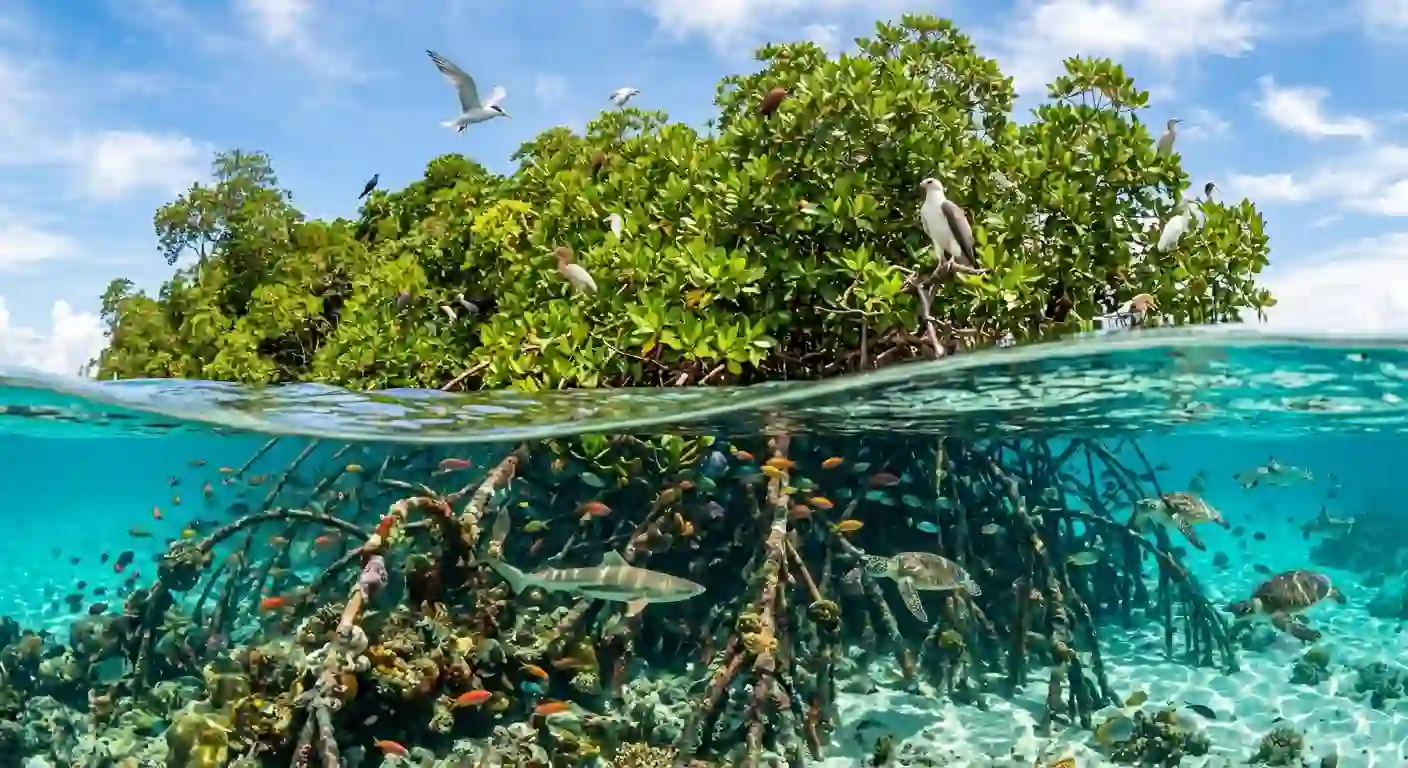
Mangrove ecosystems are found in more than 120 countries worldwide and are essential to the preservation of biodiversity. Although they account for only around one percent of the world’s tropical forests, they support the livelihoods of more than two billion people and provide habitats for over 1,500 plant and animal species. In addition, mangroves play a vital role in mitigating the impacts of climate change by protecting coastlines and absorbing and storing carbon.
However, accelerating environmental changes have led to the loss of approximately 11,000 square kilometers of mangrove forests between 1996 and 2020, while 15 percent of species dependent on these ecosystems are now at risk of extinction. This trend is a serious warning sign, underscoring the urgent need for coordinated action.
In this regard, UNESCO currently supports 180 sites containing mangrove ecosystems that are included in its lists and cover a total area of more than 22,000 square kilometers. Assessments indicate that approximately 70 percent of these areas, which have experienced a decline in mangrove cover, have significant restoration potential. This demonstrates that by drawing on scientific knowledge, engaging local communities, and implementing effective conservation programs, it is possible to halt and even reverse ecosystem degradation while enhancing resilience to climate change.
In Latin America and the Caribbean, UNESCO’s MangRes initiative has been implementing mangrove restoration programs in seven countries since 2022, leveraging biosphere reserves. Meanwhile, in the Asia-Pacific region, the “Sustaining Our Oceans” program has improved the management of these ecosystems in Indonesia, Thailand, and Viet Nam by integrating Indigenous knowledge with scientific findings.
The International Day for the Conservation of the Mangrove Ecosystem is an opportunity to renew our commitment to protecting these valuable ecosystems and accelerate our efforts.
Protecting mangroves means safeguarding biodiversity, strengthening resilience to climate change, supporting sustainable livelihoods, and preserving the future of coastal communities around the world.