21 February: International Mother Language Day / UNESCO Designated This Day to Celebrate the World’s Linguistic and Cultural Diversity
| 21 February commemorates a historic movement for the recognition of mother languages and offers a global opportunity to emphasize the role of languages in preserving identity, transmitting knowledge, and safeguarding humanity’s intangible cultural heritage. This occasion has been officially celebrated worldwide since 2000. |
The Historical Roots of a Global Observance
On 21 February 1952, widespread protests took place in East Pakistan (present-day Bangladesh) in support of recognizing Bangla alongside Urdu. During these protests, Salam, Barkat, Rafiq, Jabbar, and Shafiq lost their lives.
Their sacrifice was not in vain. In May 1954, Bangla was recognized as one of the official languages of the former Pakistan.
Years later, in an effort to promote and protect all languages, the UNESCO General Conference adopted 21 February as International Mother Language Day in 1999. The occasion has been officially celebrated worldwide since 2000, highlighting the importance of linguistic and cultural diversity and the role of languages in preserving identity, transmitting knowledge, and safeguarding humanity’s intangible cultural heritage.
The Importance of International Mother Language Day
A mother language is more than a means of communication; it carries the history, collective memory, literature, indigenous knowledge, and ways of life of communities.
From an educational policy perspective, attention to mother languages is closely linked to concepts such as quality education and educational equity. UNESCO research and documents indicate that when education in the early years of schooling is based on a language more familiar to children, it can contribute to a deeper understanding of concepts and help reduce school dropout rates.
However, linguistic diversity is increasingly under threat. Globally, approximately 40% of the population does not have access to education in a language they understand best, while an increasing number of languages are at risk of disappearing.
UNESCO’s Activities on This Day
On International Mother Language Day, UNESCO focuses on safeguarding endangered languages, promoting multilingualism, and emphasizing the importance of multilingual education. In its official documents on “Languages in Education,” the Organization underscores the need for policies that reflect the linguistic realities of communities and for the development of multilingual learning resources.
Through the publication of reports, the organization of expert meetings, and the implementation of international programs, UNESCO examines and disseminates information on achievements and challenges in this field.
Observing the Day in Iran
International Mother Language Day reminds us of our shared responsibility to preserve and strengthen languages, from the home and school to the media and digital spaces.
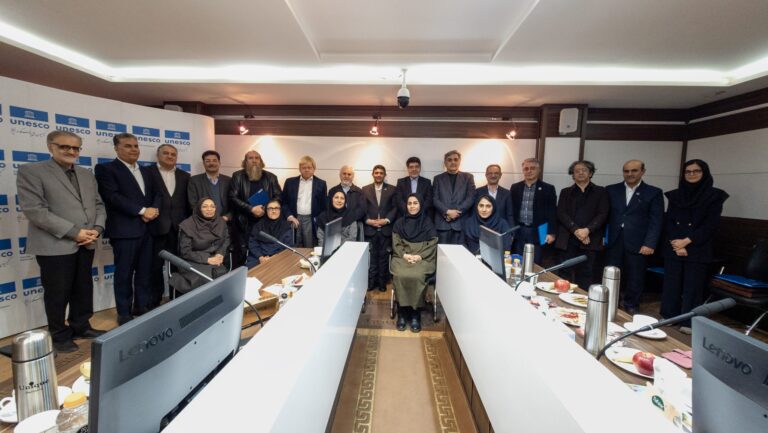
In Iran, the UNESCO Tehran Office, partner institutions, and the Iranian National Commission for UNESCO have also marked this day through cultural and analytical programs and by publishing materials highlighting the importance of safeguarding mother languages.
Last year, Dr. Hassan Fartousi, Secretary-General of the Iranian National Commission for UNESCO, stated in an interview with Spotting:
“One of the manifestations of the richness and diversity of the culture of Iran is precisely its linguistic plurality… The cultural realm of Iran has been, and continues to be, home to numerous languages and cultures. Within Iranian culture, while the beautiful Persian language has served as a unifying bond, other languages and dialects have interacted with Persian as bridges, enriching and illuminating it. Therefore, if we attach importance to the Persian language, it is essential to recognize that safeguarding Persian can truly be achieved when Iranian citizens, like global citizens, first grow through their mother language. When they are able to find harmony in this peace, linguistic diversity becomes a skill that enriches us; not merely as a language of communication, but also as a language of thought and reflection.”