

Mehregan Festival and Rubab Inscribed on UNESCO’s Intangible Cultural Heritage Lists
| The Rubab and Mehregan Festival have been inscribed as elements of Iran’s Intangible Cultural Heritage at the UNESCO Intergovernmental Committee for the Safeguarding of the Intangible Cultural Heritage in Paraguay. |
The Mehregan Festival, a joint nomination of Iran and Tajikistan, was inscribed as Iran’s 25th element of Intangible Cultural Heritage on 3 December, while the “Skills of Making and Playing the Rubab”, as Iran’s 26th element of Intangible Cultural Heritage and a joint nomination of Iran, Afghanistan, Tajikistan and Uzbekistan, was inscribed on 4 December, at the 19th session of the UNESCO Intergovernmental Committee for the Safeguarding of the Intangible Cultural Heritage in Paraguay.
The “Mehregan Festival” nomination was inscribed at the current session of the Intergovernmental Committee for the Safeguarding of the Intangible Cultural Heritage following several rounds of review and referral. The nomination had previously been submitted in 2022 but was not included in UNESCO’s Intangible Cultural Heritage List and was referred back. The “Mehregan Festival” nomination had also been submitted to UNESCO for inscription in 2020, but was likewise referred back at that session. UNESCO experts had raised questions regarding the observance of the festival in Iran and noted that the festival was celebrated on a larger scale in Tajikistan than in Iran. The nomination has now been inscribed jointly in the names of Iran and Tajikistan, with both countries sharing responsibility for safeguarding this heritage.
Mehregan is one of the ancient Iranian festivals, traditionally celebrated as a festival of affection and fraternity.
According to the nomination file, Mehregan, or the Festival of Mehr, is one of Iran’s traditional celebrations associated with the autumnal equinox and observed in the early days of autumn.
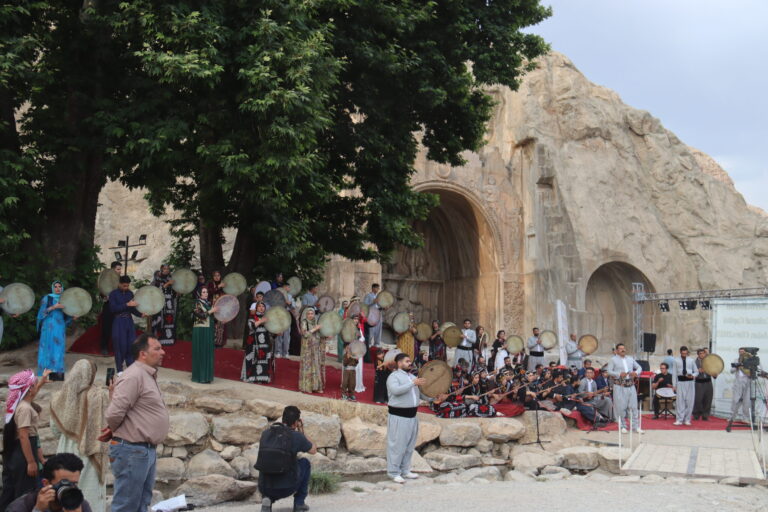
During Mehregan, people visit one another, prepare special foods and exchange gifts. In some areas, musical performances are also held as part of the celebrations. Mehregan is also frequently referenced in Persian literature, reflecting the festival’s significance in the culture and history of Iran. Iranians celebrate Mehregan as a cultural festival through a range of traditional ceremonies and practices.
After millennia, the Mehregan tradition has come to represent, in addition to gratitude for the blessings bestowed by the Creator, a symbol and enduring legacy of national solidarity among Iranians in the pursuit of goodness and righteousness.
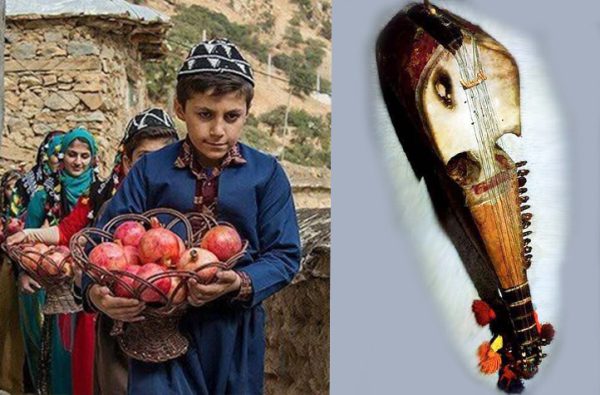
The customs and practices observed during the festival are shaped by the beliefs of the communities in each particular area, while local climatic conditions determine the foods placed on the Mehregan table, including pomegranates, watermelons, pears, sour lemons, grapes, dried fruits and nuts, apples, rice and wheat.
Muslims and Zoroastrians alike participate in the preparation of the traditional festival table. Both communities prepare and serve a variety of foods, including nuts, sweets and special beverages. They play music and sing, while both men and women take part in the ceremonies.
Participants include men and women, the elderly and young people, as well as children. The celebrations are also accompanied by traditional local sports competitions, including wrestling, and performances. The celebrations take place in various locations.
The geographical distribution of this element has also been identified as including rural areas of northern Iran, particularly the provinces of Gilan, Mazandaran and Golestan, as well as Zoroastrian communities in the provinces of Tehran, Yazd, Fars, Kerman, Sistan and Baluchestan, Alborz and Khuzestan.
“Skills of Making and Playing the Rubab” Inscribed
The “Skills of Making and Playing the Rubab” was also inscribed as Iran’s 26th element of Intangible Cultural Heritage at the 19th session of the UNESCO Intergovernmental Committee for the Safeguarding of the Intangible Cultural Heritage in Paraguay. The nomination was jointly submitted by Iran, Afghanistan, Tajikistan and Uzbekistan.
The Rubab is a distinctive musical instrument in Iranian musical culture and plays an important role in preserving and promoting musical traditions in Iran. The instrument forms part of the cultural identity and history of the region and dates back approximately one thousand years. Its Persian name is “Ravadeh”, and it is traditionally found in Khorasan and Afghanistan.
According to the nomination file for the “Art of Making and Playing the Rubab”, the Rubab is a distinctive instrument in Iranian musical culture that plays an important role in preserving and promoting musical traditions in Iran. It forms part of the cultural and historical identity of Iranian society, carrying traditional practices and bringing diverse communities together through music, festivals and rituals.
As a unifying element, the instrument strengthens solidarity, reinforces social ties and promotes cultural exchange.
The body of the instrument is traditionally made from seedless mulberry wood and is hollow inside, while its soundboard is covered with goatskin. In the past, its strings were made of gut, or “zé”. Master Mohammad Omar, a Rubab player from Kabul, introduced modifications to the instrument’s frets and strings and replaced the traditional gut strings with nylon strings.
It is also worth noting that, during the session, Mongolia’s proposed addition to the previously inscribed multinational nomination of Nowruz is also scheduled to be put to a vote.