The Assassination of Academics Violates International Law and World Peace, Yet Iran’s Scientific Endeavors Will Remain Dynamic / The Iranian National Commission for UNESCO: The Voice of Iran’s Scientific Community
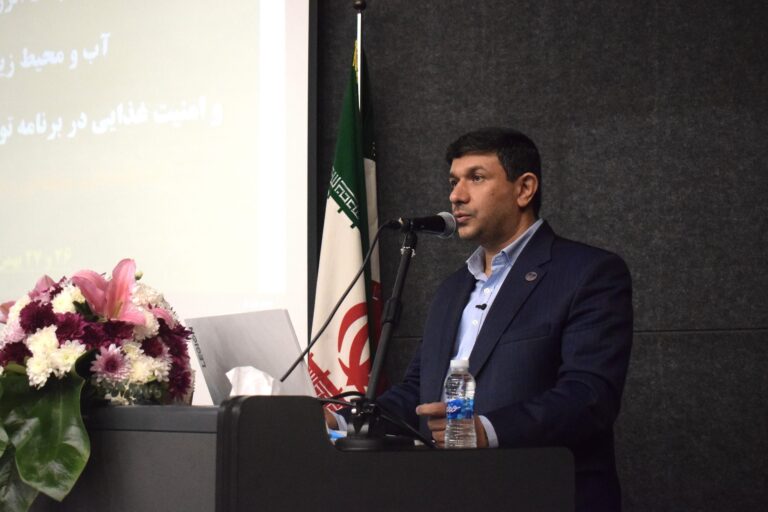
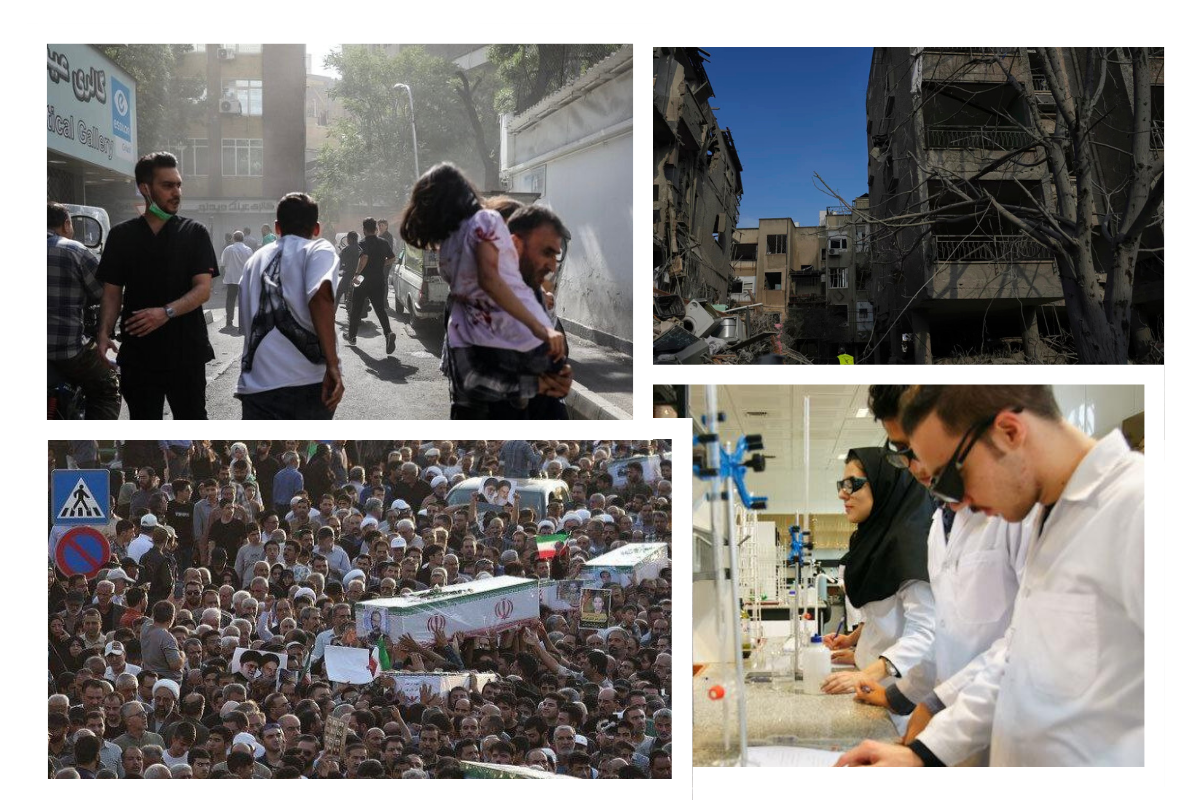
| Following the recent assassinations of scientists by the Israeli regime deep inside Iranian territory, Dr. Hassan Fartousi, Secretary-General of the Iranian National Commission for UNESCO, spoke in an interview with Radio Monte Carlo France about the consequences of the deliberate targeting of scientists and university professors. Referring to the killing of at least 32 prominent members of Iran’s scientific community through targeted assassinations or various bombings, he described this pattern as a threat to “rationality, science and peace” and as a violation of international law and UNESCO’s peace-oriented values.Dr. Fartousi warned that these attacks target not only scientific security, but also the psychological well-being of families, children and students. He described the loss of scientists as an immense blow to Iran’s scientific community and to the world. Nevertheless, he noted that these tragedies have failed to break the resolve of Iran’s scientific community; instead, they have strengthened national solidarity and determination to continue pursuing scientific progress. He emphasized the responsibility of the international community and international organizations to take immediate and effective action, uphold the relevant conventions designed to safeguard science and guarantee scientists’ freedom and safety, and protect them against targeted violence in order to prevent such tragedies from recurring. |
Full Transcript of the Interview with Dr. Hassan Fartousi, Secretary-General of the Iranian National Commission for UNESCO, by a Reporter from Radio Monte Carlo
Reporter: In the recent Israeli attacks targeting deep inside Iranian territory, the bombings were not limited to military sites or nuclear facilities. According to numerous reports, scientific and academic figures who were not necessarily connected to Iran’s nuclear defense programs were also targeted. The list of victims and injured individuals includes prominent scientists and university professors from various disciplines, raising questions about the nature and scope of these targeting operations. This is not the first incident of its kind. In recent years, a series of assassinations targeting Iranian scientists, particularly in the nuclear field, has taken place. What is new, however, is that “scientific reason” itself appears to have become a target. What lies behind this recurring pattern, and how have these attacks affected scientific research and Iran’s cultural and scientific environment? To answer these questions, we are joined by Dr. Hassan Fartousi, Secretary-General of the Iranian National Commission for UNESCO. Welcome.
Secretary-General of the Iranian National Commission for UNESCO: Greetings and respect to you.
Reporter: Dr. Fartousi, today we are discussing the widespread targeting of scientists and university professors. First, I would like to ask whether these individuals’ areas of expertise were directly related to Iran’s nuclear program.
Secretary-General of the Iranian National Commission for UNESCO: Hello. First, I would like to take this opportunity to welcome you and your esteemed listeners and thank you for this initiative. It provides an opportunity for the voices of scientists and UNESCO—particularly the Iranian National Commission for UNESCO—as well as Iran’s scientific community, to be heard.
As you mentioned, sometimes the connection is direct and sometimes indirect. Scientists specializing in fields such as physics, artificial intelligence and laser technology, and possibly experts in other disciplines as well, have been targeted. Some were professors who had studied at universities inside or outside the country.
I must also emphasize that these operations are not limited to eliminating nuclear scientists. Specialists from a wide range of disciplines have also been targeted, creating fear and concern among them and even among people who cooperate with official or scientific institutions. Clearly, this issue is not confined to one particular group. All the targeted professors were fully academic professionals affiliated with reputable universities, particularly national universities such as Shahid Beheshti University and Islamic Azad University. Some were university, faculty or department heads.
Recently, I met with an official from one of these universities. I swear to God that, with a voice full of emotion, he said: “One of my greatest challenges is that I do not know how to revive this Department of Physics without the professors who have been killed.” This was a department that had once been among the strongest centres for scientific and physics research in Iran and even across the region. He was deeply concerned about the future of the students who had chosen that university as their academic destination, especially since not only the professors themselves, but also their family members, had been killed in a single night, whether while asleep or in their own homes.
Reporter: If we look at the published list of targeted professors, we see that some areas of specialization have no connection to the nuclear program. For example, Dr. Marzieh Asgari, an assistant professor of neonatology at the University of Tehran, was targeted. In your view, what is the position of international law regarding such operations?
Secretary-General of the Iranian National Commission for UNESCO: Thank you. Here, I would like to emphasize not only international law but also UNESCO’s fundamental objective: the “preservation of peace.” Humanity needs this principle today more than ever. From UNESCO’s perspective, education, culture, science, communication and even the media—which is your field—all serve as instruments for achieving peace.
I must also point out that international law offers no justification for targeting scientists on the grounds that they might pose risks through their involvement in peaceful nuclear projects, let alone for targeting their families and children.
One professor in Tehran who had survived an assassination attempt went to the beautiful, green province of Gilan. Yet 16 members of his family were killed in a single night! What connection could these innocent people possibly have had with the nuclear program?
International law—as you know, this is my own academic and professional field—protects even military personnel during peacetime if they are at home or not on duty, just as it protects civilians. So where is the implementation of the United Nations resolutions requiring military action to be authorized by international bodies?
Reporter: Dr. Fartousi, following this series of assassinations, do scientists and university professors feel that they themselves may be directly targeted? Has an atmosphere of fear taken hold of Iran’s scientific community?
Secretary-General of the Iranian National Commission for UNESCO: To be honest, the families of these individuals are more fearful than the scientists themselves, because the danger is no longer limited to the scientist as an individual; it also threatens those around them. Look at Iraq and Syria: even after changes of government, scientists continued to be targeted. It is science itself that is under threat.
At UNESCO, we have clear programs designed to protect the freedom and safety of scientists, but these principles have been violated in a horrific manner. Nevertheless, these assassinations have strengthened the spirit of resistance and solidarity among scientists and the public. The primary aim was to sow fear and disrupt scientific activities, although, from a human perspective, the impact of this fear has been far more severe on families, children and students.
Reporter: How has the targeting of more than 14 scientists and university professors in the recent attacks affected Iran’s scientific and cultural environment?
Secretary-General of the Iranian National Commission for UNESCO: Thank you for this timely question. Please note that I have a list in front of me that I submitted to UNESCO, recording at least 32 scientists, professors and students—not just 14.
Reporter: Were all 32 directly targeted, or did they lose their lives?
Secretary-General of the Iranian National Commission for UNESCO: Both direct and indirect cases are included. The situation has become so complex that it is difficult to determine whether those targeted were killed by planted explosives or through other means, such as missiles or drones. This is not my area of expertise. For us, last week was a week of mourning for the scientific community.
These were distinguished professors, many of them senior academics and often full professors who had studied at the world’s leading universities. You know how much effort and experience it takes to reach such a level. Do you know how many years it takes to train a highly accomplished scientist?
The loss has undoubtedly had a negative impact on Iran’s scientific community, because losing even a single scientist is equivalent to losing a great treasure. Fortunately, however, Iran is home to many brilliant scholars and intellectuals who shine not only nationally, but also across the region and throughout the world. In my view, these events have only strengthened these scientists’ national resolve.
Reporter: Are there domestic discussions about ways to protect scientific talent from these targeting operations?
Secretary-General of the Iranian National Commission for UNESCO: First, these events have led to greater solidarity among scientists and have prompted the drafting of numerous statements addressed to international organizations, including UNESCO.
Last week, I witnessed efforts to highlight the importance of establishing international treaties to protect scientists around the world, because, unfortunately, scientists are targeted in every part of the world.
Regrettably, we are witnessing blatantly evident double standards in this regard. There is an Arabic saying: “Your ‘B’ is accepted, but ours is not?” meaning that your actions are accepted but ours are not?
Today, if the United States or Israel develops a missile, it is considered normal; but if a Syrian, Iraqi or Iranian enters the scientific arena, they are condemned. This is unacceptable.
Self-defense is the right of every country, and this is clearly established in international law. But is a scientist targeted simply because they might have played a role in developing a bomb? Just as they claimed to have found weapons of mass destruction in Iraq, one day they will supposedly find a bomb in Iran, too! All of this is nothing more than a game built on lies and deception.
Reporter: Finally, Dr. Fartousi, regarding the universities where these scientists taught: has education been suspended? Are replacements available? Please briefly explain the situation.
Secretary-General of the Iranian National Commission for UNESCO: Fortunately, we are currently in the summer holidays, although these events led to the universities closing earlier than scheduled. Shahid Beheshti University was the principal university targeted.
As it happens, my cousin’s daughter, an outstanding physics student, studies there. Her family lives in Ahvaz, while she lives in the university dormitory in Tehran. Her family spoke with me and expressed great concern.
Naturally, this situation has caused considerable anxiety among families; even more than among the students and professors themselves. It has also had negative effects on the professors. Nevertheless, God willing, life will go on, and science will continue to advance as well.
Reporter: Dr. Fartousi, Secretary-General of the Iranian National Commission for UNESCO, thank you for your explanations and for accepting our invitation.
To access the full interview in English, Arabic and French, please click the relevant links.
To access the full interview on Radio Monte Carlo, click here.
To watch the interview video, click here.