Secretary-General of the Iranian National Commission for UNESCO: The Time Has Come for an Islamic–Arab Cultural Alliance
Tehran — At a time when regional tensions are escalating and the threat of war is targeting educational and cultural institutions, the United Nations Educational, Scientific and Cultural Organization (UNESCO), as an international organization, plays a pivotal role in safeguarding humanity’s heritage and promoting the values of peace and understanding among nations. |
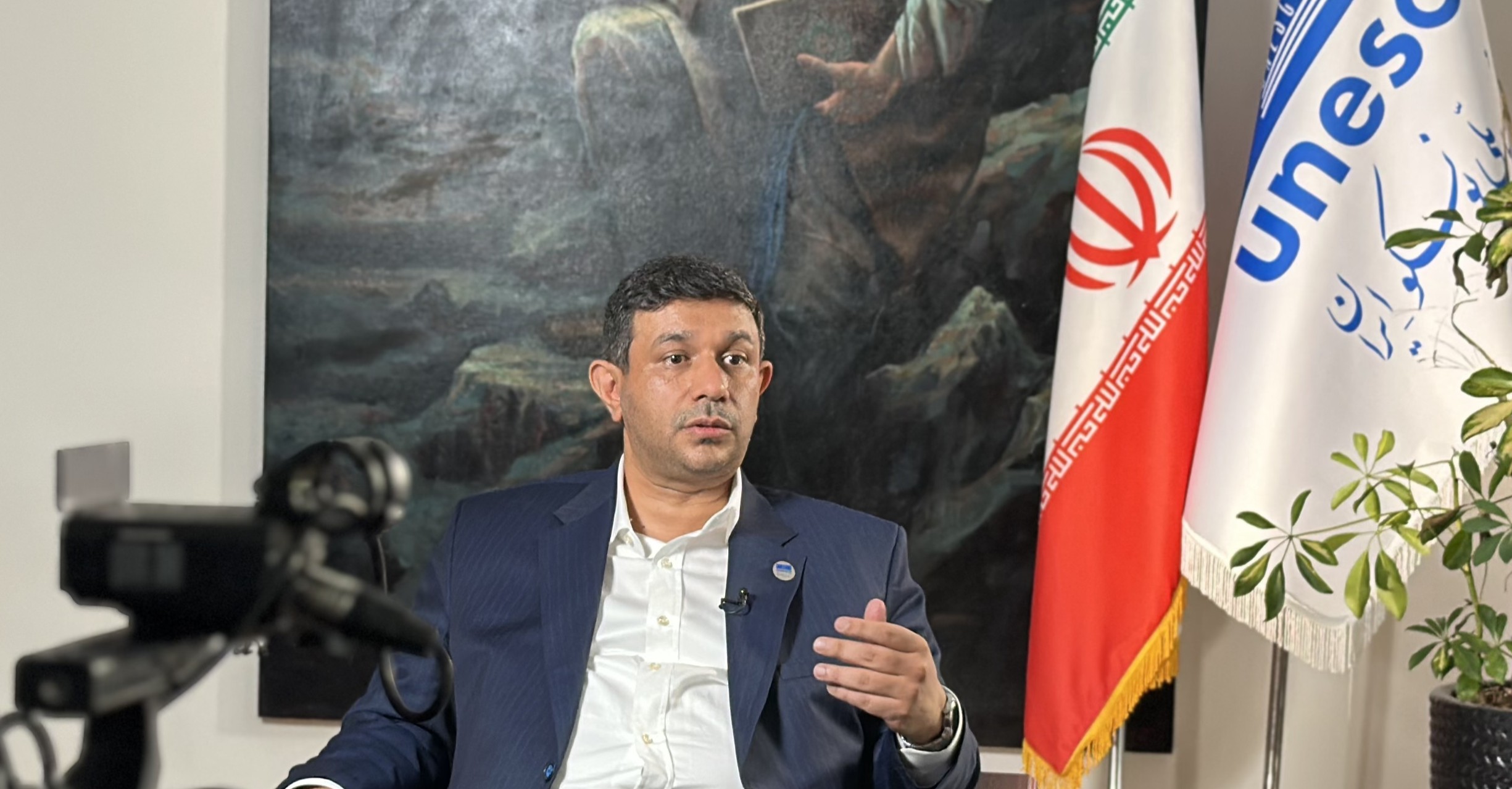
Hassan Fartousi, Secretary-General of the Iranian National Commission for UNESCO, spoke to Al Jazeera Net about the organization’s efforts to address threats to cultural heritage and the details of coordination between the Iranian National Commission and UNESCO during Israel’s recent aggression against Iran.
He also discussed the potential implications of the United States’ repeated withdrawals from UNESCO, stressing that while this creates financial and administrative challenges for the Organization, it also presents opportunities for developing and Islamic countries to strengthen their presence and influence within UNESCO and form powerful alliances to preserve the Organization’s role as a global platform for peace and culture.
Fartousi also highlighted the importance of cooperation between Iran and UNESCO in building bridges for dialogue and peace. He added that, amid widespread tensions and conflicts in the region, UNESCO must remain an effective framework for strengthening cultural, educational and scientific understanding among nations; an effort that could help reduce conflicts and build a stable and peaceful future in crisis-stricken regions.
The full interview follows:
Given Israel’s aggression against Iran over the past two months, what role can UNESCO play in protecting educational and cultural institutions during wartime?
As the United Nations agency for education, science and culture, UNESCO plays an important role in safeguarding cultural heritage and historic monuments and implements a range of programs, including one aimed at protecting the freedom and security of scientists. As expected, the Organization has fulfilled its responsibilities not only by issuing important statements, but also by reminding countries of their responsibility to protect cultural and educational heritage and support science and education, particularly in countries affected by war.
Did the Iranian National Commission maintain contact with UNESCO or other international organizations during Israel’s recent aggression?
Yes. During Israel’s 12-day aggression, the National Commission fulfilled its responsibilities and sent 13 letters to UNESCO’s Director-General and various departments of the Organization. These communications were undertaken not only by the Commission itself, but also in coordination with other entities, including UNESCO Chairs, Category 2 Centres, Creative Cities and Learning Cities.
Letters were also sent by Iran’s Minister of Science and Minister of Cultural Heritage through the Permanent Delegation of the Islamic Republic of Iran to UNESCO, in cooperation with the National Commission. In addition, we received support and solidarity from the national commissions of neighbouring countries, Islamic countries and other countries around the world, demonstrating global concern for the security of countries and scientists.
In your view, how has the United States’ withdrawal affected UNESCO’s ability to implement its programs and safeguard World Heritage?
This is not the first time the United States has withdrawn from UNESCO. The country has left the Organization three times: in 1984, 2018 and 2025. One of the main reasons cited by Washington was what it described as “UNESCO’s bias in favour of Palestine,” alongside claims such as the need for structural reform within the Organization. UNESCO Director-General Audrey Azoulay responded to these criticisms in an official statement.
In terms of programs, the withdrawal has affected more than UNESCO alone, since the United States also has UNESCO Chairs, Creative Cities and Learning Cities, and some of its cultural and historic sites require inscription on UNESCO lists. Financially, the United States had previously contributed approximately 40 per cent of UNESCO’s budget. Following its withdrawal, this share fell to around 8 per cent. Although this represented a loss, it also created an incentive to reform the administrative structure, improve human resources and increase the efficiency of programs.
Our main concern is that other countries may follow Washington’s example and also withdraw from UNESCO. In my view, the US withdrawal carries symbolic significance and threatens UNESCO’s fundamental objective of strengthening global peace, particularly as Washington has openly raised its differences with China. UNESCO’s mission, however, is to bring countries closer together, especially through culture, and foster mutual understanding, including political understanding.
What steps is the Iranian National Commission taking to address the gap created by the withdrawal of some influential countries from UNESCO?
The Islamic Republic of Iran and the Iranian National Commission for UNESCO view these withdrawals as a valuable opportunity for developing countries, including Islamic, Arab and neighbouring countries, to build powerful alliances within the Organization. If the United States’ stated reason for withdrawing is “UNESCO’s bias in favour of Palestine,” why should these countries not take action to fill the resulting gap?
We are working to strengthen cooperation among the national commissions of these countries so that UNESCO remains an inclusive and effective organization. However, care must be taken to ensure that this process does not encourage other countries to withdraw. We hope that Dr. Khaled El-Enany of Egypt will win the upcoming UNESCO Director-General election.
Amid regional tensions, how can Iran and UNESCO turn culture and education into bridges for dialogue and peace among nations?
When parties are unable to resolve their problems through dialogue, conflicts begin. This is where our responsibility to build bridges of understanding, rather than allow crises to accumulate, becomes particularly important. We must pursue multilateralism, because a multipolar world can help resolve many issues that bilateral relations alone are unable to address.
The United States’ withdrawal from UNESCO on the grounds of China’s growing influence runs counter to the very purpose of international organizations, which is to improve relations among countries. UNESCO must therefore make every effort to foster understanding among peoples and governments. This can contribute to the development of culture, education, science and communication, while also having a positive impact on political and diplomatic relations, both bilateral and multilateral.
Source: Al Jazeera