

Culture, the Main Instrument of Public Diplomacy / A Person Detached from Cultural Heritage Is Artificial and Devoid of Emotion and Aspiration
The Deputy Minister and Vice Minister for Cultural Heritage stated: “Intangible cultural heritage is an important part of a community’s assets, passed down from one generation to the next and from one era to another.” |
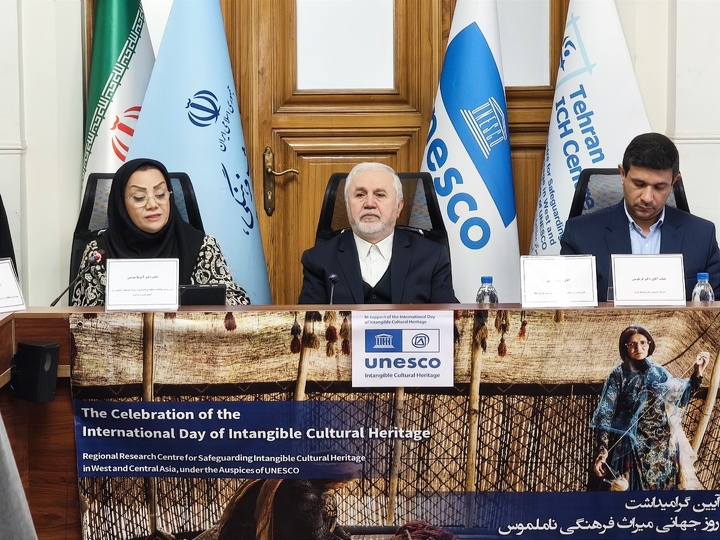
Dr. Ali Darabi, Deputy Minister and Vice Minister for Cultural Heritage, stated at the ceremony commemorating World Intangible Cultural Heritage Day, held on 22 December 2024 at the Tehran Intangible Cultural Heritage Centre: “Intangible cultural heritage is an important part of a community’s assets, passed down from one generation to the next and from one era to another.”
Darabi stated that, in the field of intangible cultural heritage, Iran had risen from seventh to fourth place globally over the past four years and ranked first in terms of the registration of multinational nominations.
He emphasized the importance of transforming heritage literacy into a component of public culture and stated: “Cultural heritage must be tangible and meaningful to everyone.”
He also highlighted the important role of cultural heritage in strengthening public diplomacy, adding: “The main objective of public diplomacy is to influence public opinion, and its principal instruments include cultural exchanges such as exhibitions, festivals and twinning programs.”
Darabi stressed the importance of networking and coordination both within the country and internationally, adding that there are effective institutions in the country that should all contribute to this field.
He added: “Cultural heritage does not belong to a single institution; it belongs to all institutions and all members of society. It requires short-, medium- and long-term planning. We must also have a strong presence at the international level. At the Cultural Heritage Office, our efforts are focused on enhancing heritage literacy in society. Organizing three editions of the Cultural Heritage Icons program and honoring leading figures in this field, holding three editions of the International Festival of Cultural Heritage Multimedia Productions, and organizing cultural and artistic events in historic buildings are among the important steps taken towards achieving this objective.”
“Training and the transfer of experience, the preparation of joint nominations, empowering local communities and NGOs, and the role of the media” were among the areas highlighted by the Deputy Minister and Vice Minister for Cultural Heritage in the context of capacity-building and developing models.
A Person Detached from Cultural Heritage Is Artificial and Devoid of Emotion and Aspiration
Dr. Hassan Fartousi, Secretary-General of the Iranian National Commission for UNESCO, stated at the ceremony: “The journey of humanity is like an interconnected and continuous thread of traditions, experiences, ideas, identity, worldviews and concerns about identity, manifested through a thread known as intangible cultural heritage. A person detached from cultural heritage becomes artificial and devoid of emotion and aspiration. Such a person poses a serious concern for humanity, because love, affection, acceptance of others, kindness, peace and tolerance become entirely devoid of value and meaning.”
Fartousi added: “The establishment of the Regional Research Centre for Safeguarding Intangible Cultural Heritage in Western and Central Asia under the auspices of UNESCO is a valuable and commendable initiative for safeguarding, raising awareness of, promoting and continuously documenting the intangible cultural heritage of the 24 countries of Western and Central Asia. Through such initiatives, the foundations for the intergenerational transmission of living cultural expressions among Member States can be further strengthened, thereby promoting cultural rapprochement, peace, dialogue and tolerance among countries.”
Full Text of the Speech by the Secretary-General of the Iranian National Commission for UNESCO
“The journey of humanity is like an interconnected and continuous thread of traditions, experiences, ideas, identity, worldviews and concerns about identity, manifested through a thread known as intangible cultural heritage.
The fundamental conception of this heritage differs from one nation to another. More broadly, it may be understood that every nation, across the geographical space in which it manifests itself, develops sources and origins that correspond to the spirit and body of its people and their ancestry. Each of these sources, like flowing rivers of tangible and intangible cultural heritage, ultimately contributes to an ocean known as world heritage.
The beauty and richness of this ocean depend on the diversity of its biocultural heritage. This cultural ecosystem emerges from a colourful and interconnected geography of diverse cultural tastes and subcultures of peoples, ultimately giving rise to national and global cultural and civilizational heritage.
Thus, in the terminology of UNESCO, cultural heritage is regarded as a human treasure that has continued its development and evolution through time and space, inherited from past generations and handed down to present-day communities. This invaluable wealth must in turn be passed on to future generations of every nation so that it may endure and safeguard the identity of nations, both nationally and internationally, within the global community.
Any damage to or disruption in the safeguarding of intangible cultural heritage exposes present and future generations to a rupture with their individual, ancestral and collective unconscious, turning them into alienated, distressed and rootless beings confronted by a profound loss of identity.
A person detached from cultural heritage is artificial and devoid of emotion and aspiration. Such a person poses a serious danger to humanity, because love, affection, acceptance of others, kindness, peace and tolerance become entirely devoid of value and meaning.
Such a person, having been severed from their cultural and identity-based roots, develops a remarkable capacity for bloodshed and conflict and preserves their harsh and predatory nature. As the esteemed Sheikh Saadi says:
‘If this predatory nature dies within you,
May you live forever in the spirit of humanity.’
To safeguard and promote this interconnected heritage, we must think about its sustainability and continuity and prevent every threat that could cause its rupture or interruption.
UNESCO describes tangible and intangible cultural heritage as ‘fragile wealth’. From UNESCO’s perspective, the non-renewable nature of cultural heritage amid contemporary challenges and threats facing human societies; including climate change, natural disasters, lack of education, migration, expanding urbanization and the phenomenon of informal settlements, inadequate health, deep economic inequality, gender inequality, violence and extremism has rendered cultural heritage highly vulnerable.
At the same time, tangible and intangible cultural heritage embody the identity of a nation and play an undeniable role in generating sustainable wealth.
Cultural heritage becomes fragile wealth when it is marginalized from the social capital of a community. More explicitly, the broad range of rituals, skills, traditions and customs, notable figures and creative industries associated with intangible heritage, as well as historic urban areas, buildings and archaeological sites that constitute tangible and material heritage, are gradually being forgotten under the rapid pace of technological change and modern life. This results in the silent disappearance of the cultural and identity-based achievements of a nation that have been transmitted to humanity today over thousands of years, from one generation to the next.
Ladies and gentlemen,
In light of the foregoing, the establishment of the Regional Research Centre for Safeguarding Intangible Cultural Heritage in Western and Central Asia under the auspices of UNESCO is a valuable and commendable initiative for safeguarding, raising awareness of, promoting and continuously documenting the intangible cultural heritage of the 24 countries of Western and Central Asia. Through such initiatives, the foundations for the intergenerational transmission of living cultural expressions among Member States can be further strengthened, thereby promoting cultural rapprochement, peace, dialogue and tolerance among countries. Accordingly, I believe that, after at least 14 years since the establishment of the Centre, it would be appropriate to reassess and review its vision and mission, identify the vulnerable and challenging aspects of its activities, and work towards addressing them.
What gives this distinguished position even greater value, however, is the scholarly and prudent effort devoted specifically to safeguarding the shared intangible cultural heritage of the region. Undoubtedly, one of the essential tools for achieving this objective is an understanding of the legal and regulatory frameworks of Member States for safeguarding shared heritage.
As you are well aware, law, within the cultural context of each society, is responsible for regulating and organizing relations among its members. The safeguarding of humanity’s shared intangible heritage is no exception to this principle. It is therefore essential first to develop a common understanding and identify the necessary foundations for safeguarding this heritage so that this important responsibility can be fulfilled effectively.
The common basis that should be taken into consideration in this regard is the 2003 UNESCO Convention for the Safeguarding of the Intangible Cultural Heritage. Like other international instruments, this Convention represents a broad consensus among States Parties from different cultures and backgrounds in pursuit of a common objective. It provides a common framework that, while respecting the legal foundations and laws of each State Party, facilitates and guides the implementation of the Convention and other related instruments. This is because, under international instruments, States Parties are committed to implementing them within the framework of their domestic laws.
It is therefore expected that the Centre, in its studies on safeguarding intangible cultural heritage, will give due consideration to comparative studies of the laws and regulations of Member States. Such studies would significantly contribute to a better understanding among Member States of safeguarding practices and would enable them to identify and address their legal gaps. Undoubtedly, the establishment of such a Centre in Iran, which throughout its long history has served as a crossroads of civilizations and of cultural exchange between East and West and North and South, is a valuable opportunity to once again reflect on UNESCO’s strategies and mandates entrusted to this Centre and, by addressing past constraints and shortcomings, contribute to creating a dynamic and promising vision for its activities.
‘Take from the world nothing but good name, culture and justice;
The world is but a legacy, and we are destined to depart;
Nothing remains in this world but humanity.’
Thank you.”
Momeni: Intangible Heritage Can Safeguard a Brighter Future
Dr. Atousa Momeni, Head of the Intangible Cultural Heritage Centre, stated at the ceremony: “Intangible heritage teaches us how to shape a better future through the experience and wisdom of previous generations. Today, we believe that we must look to the future more than ever.”
She added: “Through its ethical and human teachings, intangible heritage can safeguard a brighter future and establish a bond between us and different countries.”
Momeni continued: “We hope to serve as a worthy model for other countries and that this gathering on World Intangible Cultural Heritage Day will help pave the way for safeguarding intangible heritage.”
Jalali: Women Play a Prominent Role in Intangible Heritage
Dr. Maryam Jalali, Deputy Minister for Handicrafts at the Ministry of Cultural Heritage, Tourism and Handicrafts, congratulated those present on the birth anniversary of Hazrat Fatima Zahra (peace be upon her) and Mother’s Day. She stated: “Today, we are addressing three issues: Intangible Heritage Day, which has become embodied in rituals and customs; creativity and innovation in this field; and, third, women’s day.”
Regarding the role of women in safeguarding intangible heritage, she stated: “Mothers and women have always revived the traditions and customs of their communities. Women have always been creators and producers and have played a prominent role in creating intangible heritage. Women and mothers also contribute to cultural achievements through their resourcefulness, making the best possible use of things that might otherwise be discarded. In the field of aesthetics, when women prepare a table, they decorate it, and with the help of men and their families, they make this beauty enduring.”
Jalali continued: “Our intangible heritage is one of our valuable treasures. If it becomes connected to cultural exchange, it can play an unparalleled role in today’s world, where soft power is needed. Our handicrafts are part of our living identity, rooted in our historical intelligence and longstanding talent. Safeguarding this heritage requires a multifaceted and comprehensive approach and can encompass a range of responsibilities.”
The Deputy Minister for Handicrafts added: “I hope that we will succeed in discovering, safeguarding, modernizing and updating our intangible heritage and that we will appreciate the efforts of our valued colleagues.”
Dr. Alireza Izadi, Director-General of the Office for the Registration and Protection of Cultural, Natural and Spiritual Heritage, stated: “A competition has emerged to defend our identity, and I hope that, with the presence of our colleagues and the Minister of Cultural Heritage, Tourism and Handicrafts, we can find ways to strengthen solidarity and cooperation.”
He continued: “I hope that, with the assistance of the Iranian National Commission for UNESCO and the Ministry of Foreign Affairs, we can achieve a stronger and more meaningful presence in international forums.”
Dr. Hamid Mostafavi, Director of Cultural Exchanges and International Organizations at the Islamic Culture and Relations Organization, stated that documents related to cultural programs, as higher-level policy documents, involve a lengthy process, taking more than two years before a document becomes law and all institutions are required to implement it.
He continued: “These meetings should continue so that we can make optimal use of the capacities of these documents and organize our relations. We have 26 international organizations in the cultural field and pay more than five million euros in annual membership fees.”
Mr. Akbar Rezaei, UNESCO Affairs Officer at the Ministry of Foreign Affairs, expressed appreciation for the efforts of Dr. Ahmad Jalali, former Ambassador of Iran to UNESCO, who served as President of the UNESCO General Conference from 2001 to 2003 and played a significant role in the preparation and drafting of the 2003 Convention for the Safeguarding of the Intangible Cultural Heritage. He stated that the Ministry of Foreign Affairs appreciates the efforts of those working in the field of tangible and intangible cultural heritage inscription, noting that every inscription, whether tangible or intangible, has public diplomacy dimensions in addition to its historical, heritage, identity and cultural dimensions, and can play an important role in serving national interests and even national security.
He continued that, at a time when negative perceptions of Iran have unfortunately become widespread, every World Heritage inscription serves as a window into the country, drawing global attention to realities within Iran and encouraging many tourists to visit the country. He therefore stated that the Ministry of Foreign Affairs, particularly its department responsible for UNESCO affairs, remains ready to assist colleagues at the Ministry of Cultural Heritage, Tourism and Handicrafts, the Tehran Intangible Cultural Heritage Centre and the Iranian National Commission for UNESCO, to the extent of its capabilities, on all UNESCO-related matters, particularly in the field of cultural heritage.
Mr. Behrouz Vajdani, a distinguished figure in cultural heritage and a member of the National Intangible Cultural Heritage Registration Council, was another speaker at the ceremony. He stated that Iran had achieved major accomplishments at both the national and international levels over the years, but that these achievements had not been sustained. He added that, although he had retired after 18 years, neither he nor the cultural heritage community had accepted his retirement, and he continued to work in the field of cultural heritage.
Regarding the role of women in cultural heritage, Vajdani stated that one of the first ways mothers transmit cultural heritage to their children is through singing lullabies.
Dr. Shahram Gilabadi, a member of the National Intangible Cultural Heritage Registration Council, stated at the World Intangible Cultural Heritage Day commemoration ceremony: “At a time when numerous constraints have emerged in the country and artists are travelling abroad at their own expense, intangible heritage generates narratives, and in the battle of narratives, the narrative that embodies creativity prevails.”
He continued: “Intangible heritage has six cognitive characteristics: sensory, emotional, affective, logical, philosophical and symbolic. Therefore, it does not require a specific organization for its development. Intangible heritage lays the foundation for the formation of tangible heritage. It contains knowledge and understanding that encompass various aspects of the formation of a country’s strategies. By drawing upon this knowledge, we can take effective steps.”
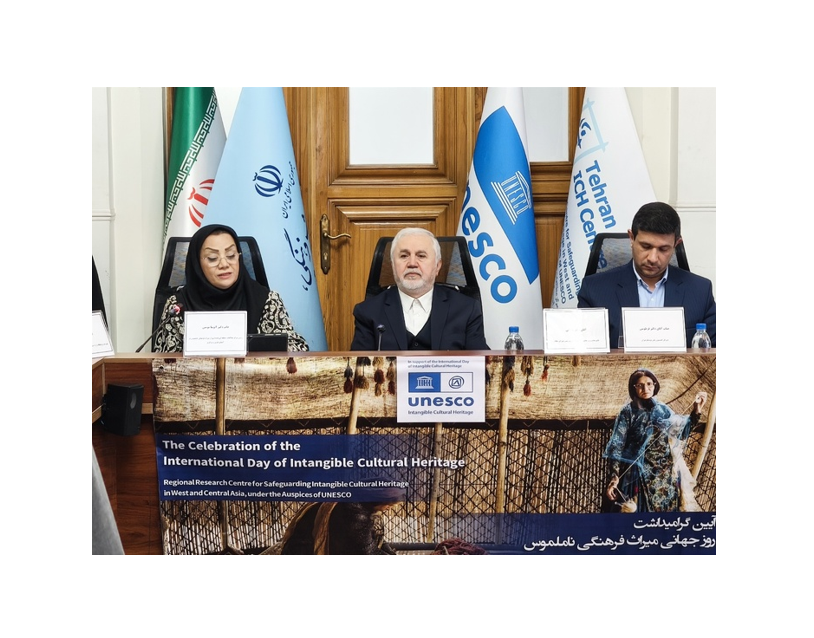
It is worth noting that the program was held with the aim of fostering dialogue, exchanging views and planning cultural activities related to the implementation of the Convention for the Safeguarding of the Intangible Cultural Heritage at the permanent headquarters of the Centre in Tehran.
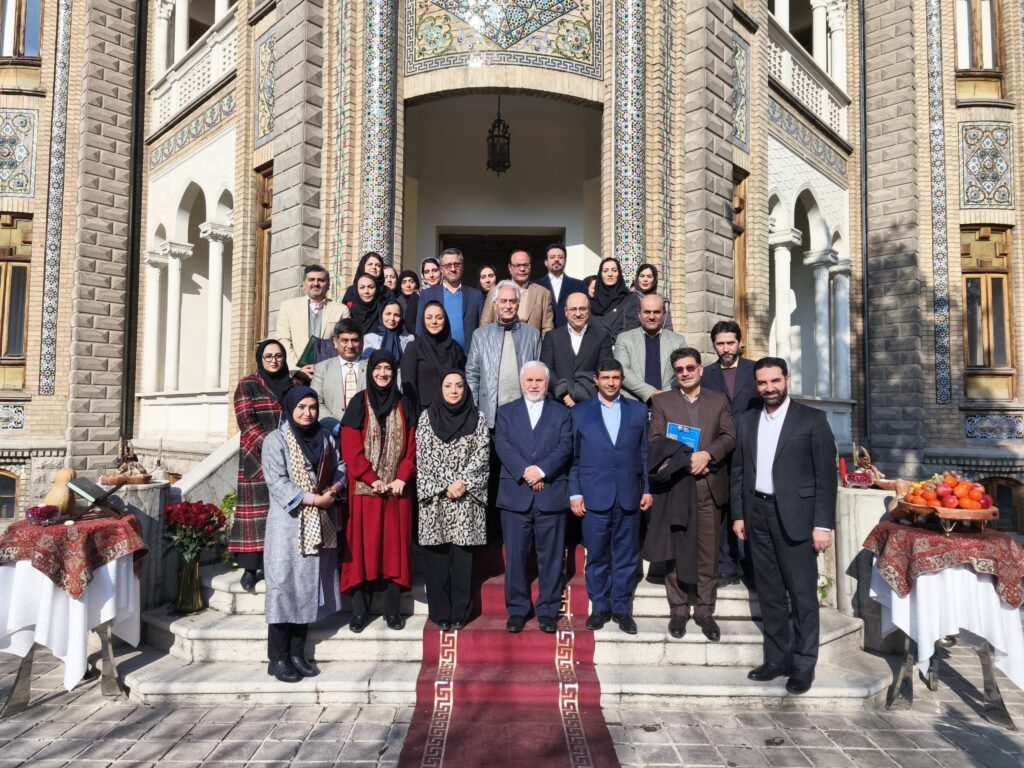
The event was attended by Ali Darabi, Deputy Minister and Vice Minister for Cultural Heritage; Hassan Fartousi, Secretary-General; Abdolmahdi Mostakin, Adviser to the Secretary-General of the Iranian National Commission for UNESCO; Atousa Momeni, Chairperson of the Governing Council of the Regional Research Centre for Safeguarding Intangible Cultural Heritage; Maryam Jalali, Deputy Minister for Handicrafts at the Ministry of Cultural Heritage, Tourism and Handicrafts; Alireza Izadi, Director-General of the Office for the Registration and Protection of Cultural, Natural and Spiritual Heritage; Hamid Mostafavi, Director of Cultural Exchanges and International Organizations at the Islamic Culture and Relations Organization; Akbar Rezaei, UNESCO Affairs Officer at the Ministry of Foreign Affairs; Shahram Gilabadi, member of the National Intangible Cultural Heritage Registration Council; and Behrouz Vajdani, a distinguished figure in cultural heritage and member of the National Intangible Cultural Heritage Registration Council.
The Tehran Intangible Cultural Heritage Centre covers the countries of Western and Central Asia and has 24 Member States. Following several years of suspension, the Centre resumed its activities in 2022. The Governing Council of the Centre is chaired by Iran’s Deputy Minister and Vice Minister for Cultural Heritage.