Press Conference of the Iranian National Commission for UNESCO Was Held
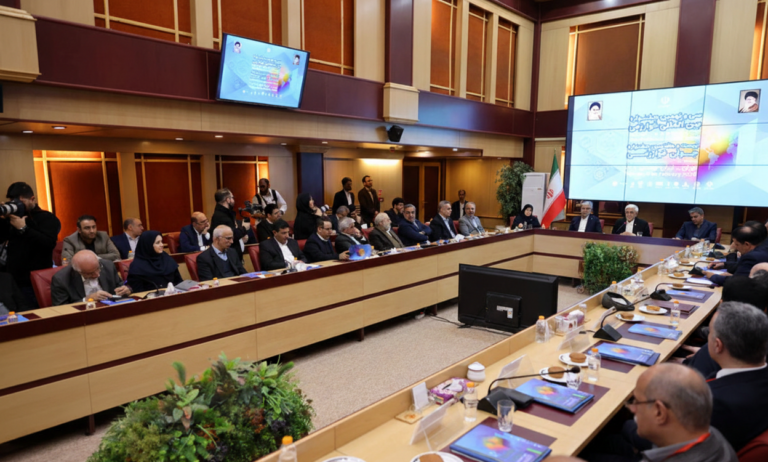
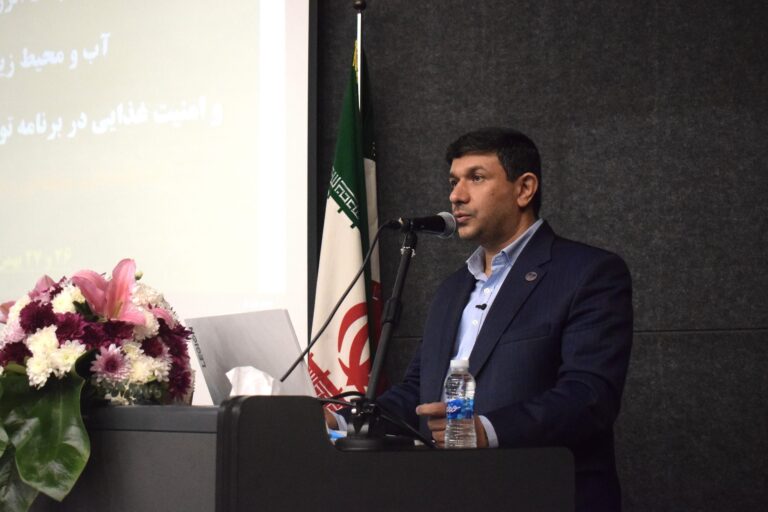
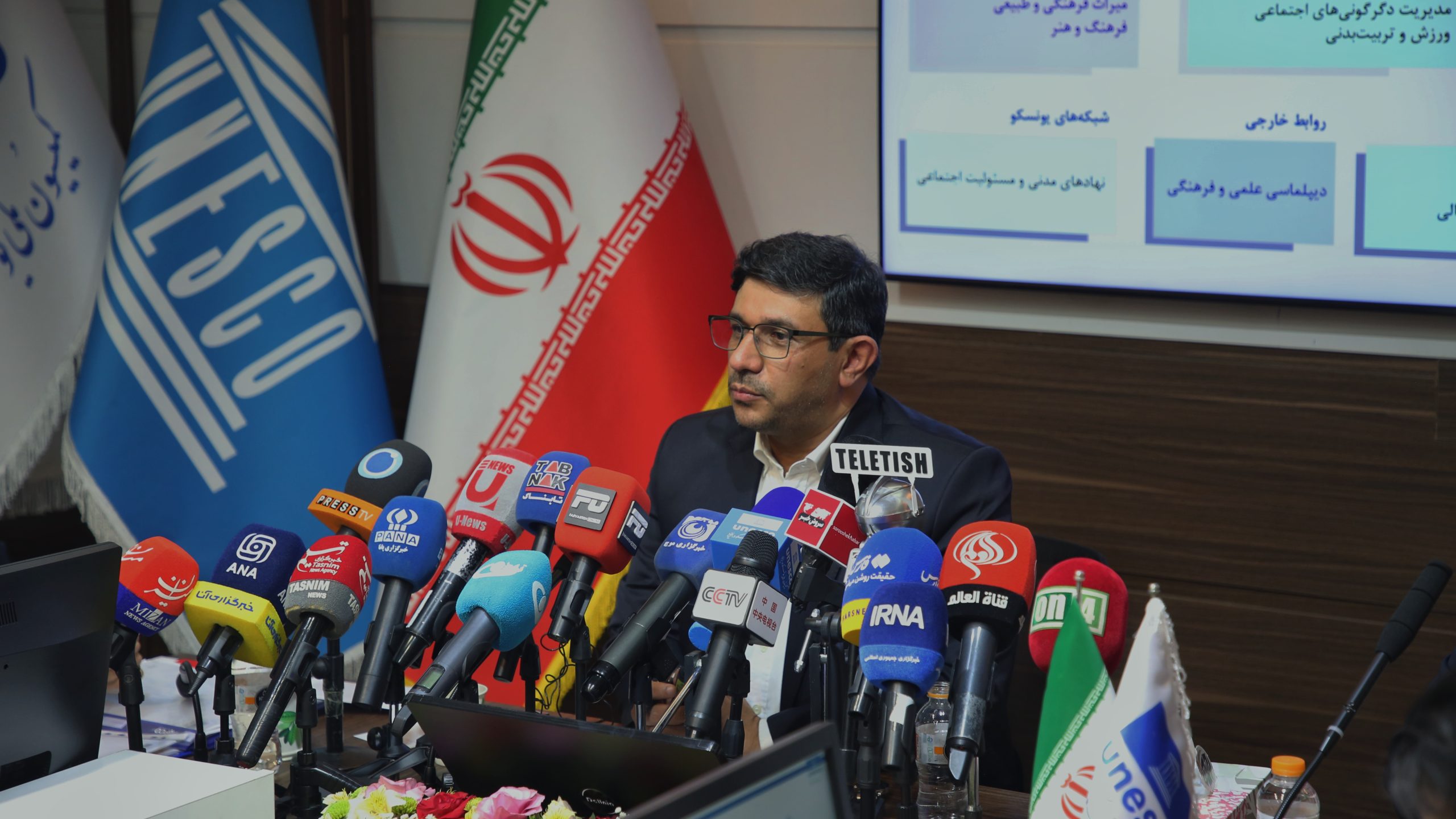
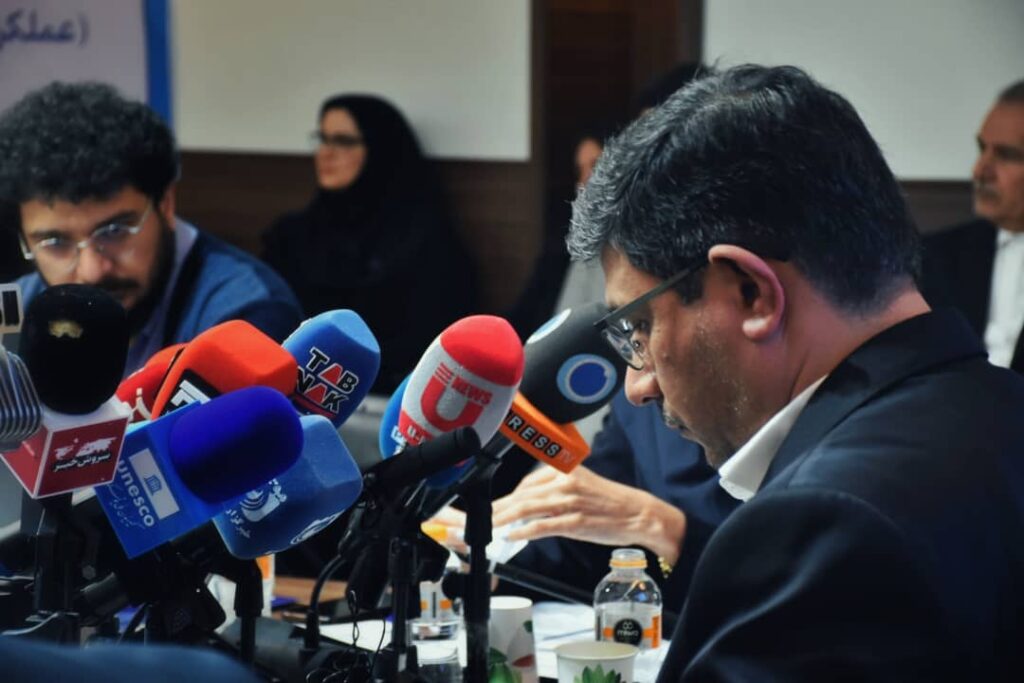
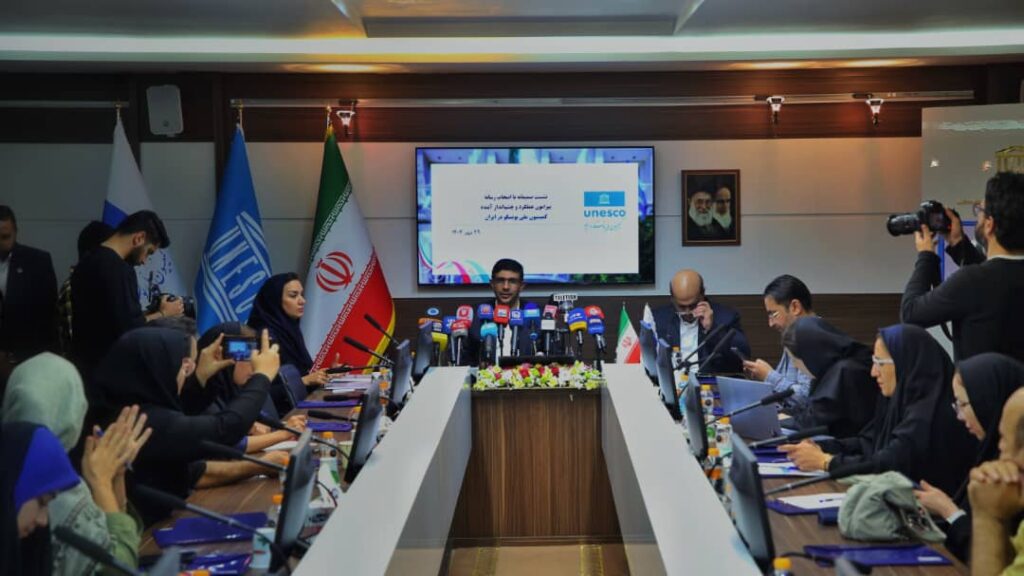
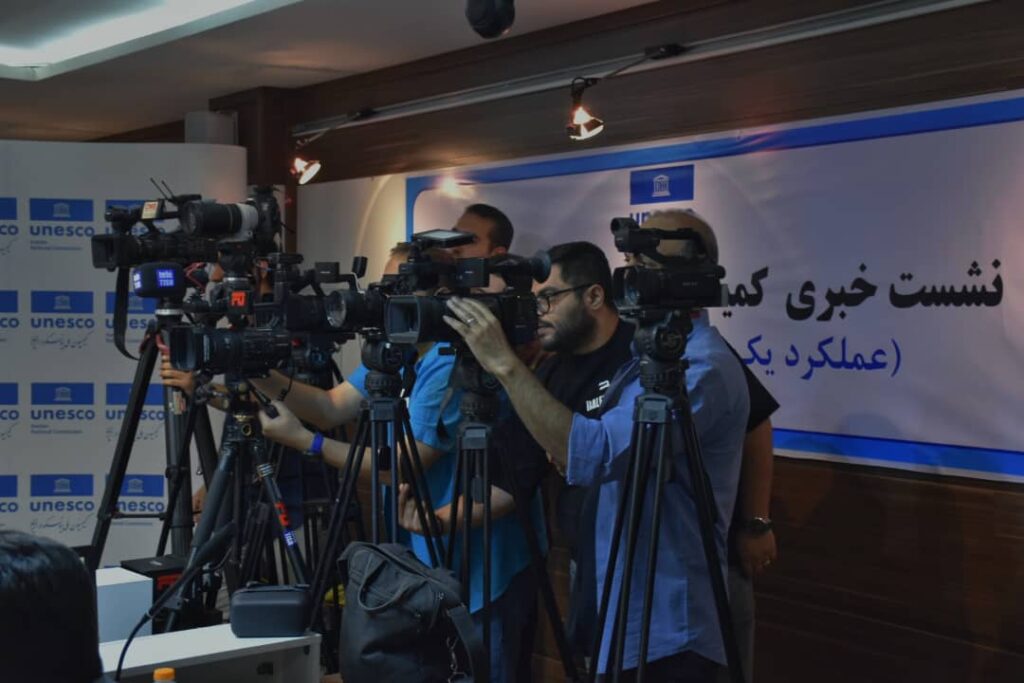
| A press conference of the Iranian National Commission for UNESCO was held on the morning of 21 October 2025 in the Commission’s conference hall, attended by Dr. Hassan Fartousi, Secretary-General of the Iranian National Commission for UNESCO, and a large number of media representatives. During the meeting, Dr. Fartousi presented a report on the Commission’s activities over the past year, outlining its achievements, upcoming programs, and Iran’s overarching priorities for cooperation with the United Nations Educational, Scientific and Cultural Organization (UNESCO). He also emphasized the need for Iran to play a more active role in the organization’s scientific, cultural, and educational networks. |
At the beginning of the meeting, Dr. Fartousi paid tribute to the late journalists Nima Rajabpour and Masoumeh Azimi, who lost their lives in June 2025 while carrying out their professional duties. He recalled UNESCO’s firm position in condemning the incident. Referring to a statement by UNESCO Director-General Audrey Azoulay, he said that she had condemned the killing of the two journalists and called for an immediate and thorough investigation. Under international humanitarian law, media infrastructure, as a civilian object, must be protected from attack. Respect for this principle is a matter of respect for human dignity. Fartousi added that, in line with this global position, the Iranian National Commission for UNESCO considers strengthening dialogue with the media and promoting the professional safety of journalists part of its ethical responsibility.
Functions, Activities and Achievements of the Iranian National Commission for UNESCO
The Secretary-General then reported on several of the Commission’s activities, including reporting on UNESCO programs to relevant institutions; pursuing international registrations related to tangible and intangible cultural heritage, events, prominent figures and the Memory of the World; and publicizing scholarships and awards.
Expanding Engagement with National Institutions and UNESCO
Referring to the expansion of domestic and international cooperation, the Secretary-General said: “Over the past year, the Commission has succeeded in expanding its network of relations with national agencies, scientific and academic institutions, and UNESCO’s regional offices.” Fartousi added: “We have moved away from focusing exclusively on the capital. The Iranian National Commission for UNESCO is now moving towards decentralization so that the country’s urban and cultural diversity can be properly reflected in UNESCO’s activities.”
Scientific and Cultural Diplomacy: New Horizons for International Cooperation
Highlighting the importance of scientific and cultural diplomacy, the Secretary-General said: “Over the past year, through our participation in global and regional meetings, including at UNESCO Headquarters in Paris, we have been actively engaged in areas related to science diplomacy, ethics in technology, and cultural cooperation.”
He identified participation in the Global Dialogue of Ministers of Science on Science Diplomacy in a Changing World, held with the participation of the Minister of Science, Research and Technology of the Islamic Republic of Iran, as one of the key initiatives. He added that this participation had provided an opportunity to showcase Iran’s scientific capabilities and expand ties with other countries.
Expanding Scientific, Cultural and Academic Cooperation
During another part of the meeting, Dr. Fartousi discussed the Commission’s extensive cooperation with the country’s universities and scientific institutions and its efforts to strengthen UNESCO Chairs. He stated that, over the past year, more than 20 universities and research centers had been active within UNESCO-affiliated networks, including the University of Tehran, Farhangian University, Payame Noor University, Sharif University of Technology, and Imam Khomeini International University.
He added that these partnerships had covered areas such as environmental education, diabetes, science communication, natural disaster management, bioethics, social health, teacher education, and environmental foresight, helping to strengthen Iran’s scientific standing within the framework of the Sustainable Development Goals.
Innovation in Education, Ethics in Science and Emerging Technologies
According to the Secretary-General, “ethics in artificial intelligence,” “neurotechnology,” “lifelong learning,” “gender equality,” and “young people’s mental health” were among the main themes of the Commission’s educational and research workshops over the past year.
He stated: “By organizing regional and international workshops online, we have sought to make current global issues in bioethics, emerging technologies, and social health accessible to Iranian audiences in their own language and cultural context.”
Showcasing Iran’s Place in Global Civilization
In another part of his remarks, Dr. Fartousi emphasized the importance of safeguarding Iran’s tangible and intangible cultural heritage. He said that, over the past year, the Iranian National Commission for UNESCO had paid particular attention to the inscription of cultural sites, prominent figures, cultural events, and documentary heritage on relevant international registers. Cooperation with the Regional Research Centre for Safeguarding Intangible Cultural Heritage in West and Central Asia had also been among the Commission’s key initiatives.
Scholarships and Awards: Creating Opportunities through Educational, Scientific and Cultural Engagement with the World
The Secretary-General went on to outline the Commission’s programs concerning scientific and cultural scholarships and awards. He said: “UNESCO scholarships and awards play an important role in supporting young talent. With the aim of creating international opportunities for the country’s outstanding individuals, the Iranian National Commission for UNESCO publicized relevant opportunities among the institutions concerned and the general public over the past year.”
Establishing National Committees as Advisory Bodies to the Commission and Executive Institutions
Addressing the importance of revitalizing the role of national committees, the Secretary-General said: “National committees serve as the Commission’s specialized arms in various fields, including natural sciences, social and human sciences, culture, communication and information, education, foreign relations, and UNESCO networks. Their role in fostering synergies among relevant agencies and institutions is crucial.”
Strengthening UNESCO Chairs to Promote Effective Participation in Global Academic Exchange Networks
Concluding this section of the meeting, Dr. Hassan Fartousi highlighted the role of UNESCO Chairs in the country’s scientific and educational system. He said: “One of the main priorities of the Iranian National Commission for UNESCO is to strengthen and activate UNESCO Chairs at the country’s universities and scientific institutions. These Chairs serve as links between Iranian universities and the global network for the exchange of knowledge, experience, and innovation, providing a platform for Iran to play an effective role in international knowledge flows.”
Noting that the Commission had taken effective steps over the past year to reactivate inactive Chairs and support the establishment of new ones, he added that, in the latest round of initiatives in the field of culture, a UNESCO Chair in Iranian Architecture and Sustainable Design had been established, while Chairs in Environmental Foresight, Cognitive Science, and Climate Change and Resilience were under development.
Innovation in Education, Ethics in Science, and Emerging Technologies
According to the Secretary-General of the Commission, topics such as “Ethics in Artificial Intelligence,” “Neurotechnology,” “Lifelong Learning,” “Gender Equality,” and “Youth Mental Health” were among the main themes of the Commission’s educational and research workshops over the past year. He stated: “By organizing regional and international workshops online, we have sought to make current global issues in bioethics, emerging technologies, and social health accessible to Iranian audiences in their own language.”
Showcasing Iran’s Place in Global Civilization
In another part of his remarks, Dr. Fartousi emphasized the importance of safeguarding Iran’s tangible and intangible cultural heritage. He said that, over the past year, the Iranian National Commission for UNESCO had paid particular attention to the inscription of cultural sites, prominent figures, cultural events, and documentary heritage on international registers. Cooperation with the Regional Research Centre for Safeguarding Intangible Cultural Heritage in West and Central Asia had also been among the Commission’s key initiatives.
Scholarships and Awards: Creating Opportunities through Educational, Scientific, and Cultural Engagement with the World
The Secretary-General of the Iranian National Commission for UNESCO went on to outline the Commission’s programs concerning scientific and cultural scholarships and awards. He said: “UNESCO scholarships and awards play an important role in supporting young talent. With the aim of creating international opportunities for the country’s outstanding individuals, the Iranian National Commission for UNESCO publicized relevant opportunities among the institutions concerned and the general public over the past year.”
Establishing National Committees as Advisory Bodies to the Commission and Executive Institutions
In another part of the meeting, the Secretary-General of the Iranian National Commission for UNESCO highlighted the importance of revitalizing the role of national committees. He said: “National committees serve as the Commission’s specialized arms in various fields, including natural sciences, social and human sciences, culture, communication and information, education, foreign relations, and UNESCO networks. Their role in fostering synergies among relevant agencies and institutions is crucial.”
Strengthening UNESCO Chairs to Promote Effective Participation in Global Academic Exchange Networks
Dr. Hassan Fartousi highlighted the role of UNESCO Chairs in the country’s scientific and educational system, stating: “One of the main priorities of the Iranian National Commission for UNESCO is to strengthen and activate UNESCO Chairs at the country’s universities and scientific institutions. These Chairs serve as links between Iranian universities and the global network for the exchange of knowledge, experience, and innovation, providing a platform for Iran to play an effective role in international knowledge flows.”
He noted that, over the past year, the Commission had taken effective steps to reactivate inactive Chairs and support the establishment of new ones. He added that, in the latest round of initiatives in the field of culture, a UNESCO Chair in Iranian Architecture and Sustainable Design had been established, while Chairs in Environmental Foresight, Cognitive Science, and Climate Change and Resilience were under development.
Empowering UNESCO Category 2 Centres: Optimizing Knowledge and Experience Sharing at the National, Regional and International Levels
Continuing the meeting, Dr. Hassan Fartousi highlighted the role and importance of UNESCO Category 2 Centres in scientific and regional cooperation. He noted that several such centres are currently operating in Iran, including the International Centre on Qanats and Historic Hydraulic Structures; the Regional Centre for Urban Water Management; the International Centre on Integrated Water Resources Management for Dry Areas; the Regional Centre for Training and Research in Oceanography for Western Asia; the Regional Centre for Basic Sciences and Human Health; and the Regional Centre for Training and Research on Earthquake and Resilience in Western Asia.
The Secretary-General of the Iranian National Commission for UNESCO emphasized that, in cooperation with relevant national institutions, including the Ministry of Energy, the Ministry of Science, Research and Technology, the Ministry of Agriculture Jihad, and the Department of Environment, these centres serve as UNESCO’s operational arms at the regional level. They also contribute to joint projects with neighboring countries, exchanges of professors and researchers, and scientific capacity-building.
Coordinating the UNESCO Creative Cities and Learning Cities Networks
Emphasizing the importance of advancing Iran’s urban diplomacy in the cultural and educational fields, the Secretary-General of the Iranian National Commission for UNESCO stated that establishing and expanding networks of Creative Cities and Learning Cities would be among the Commission’s priorities for the coming year.
He added that Shiraz had been designated a Creative City of Literature and Sanandaj a Creative City of Music. Kermanshah had also been recognized as a Creative City of Gastronomy, while Isfahan was known for its handicrafts and indigenous arts. In addition, Tehran, Hamedan, Mashhad, Isfahan, and Kashan had joined UNESCO’s Global Network of Learning Cities, and educational development programs were being implemented in these cities.
Enhancing Administrative and Media Engagement with Domestic and International Institutions
Dr. Fartousi highlighted the importance of the media and the development of communication, noting that the Iranian National Commission for UNESCO had taken significant steps over the past year to improve its media infrastructure. These included a comprehensive review and update of the Commission’s Persian- and English-language websites, the initiation of an Arabic-language version, and the regular publication of an international newsletter.
He added that expanding media content, publishing thematic brochures and the UNESCO Message magazine, and facilitating international news and media engagement were among the Commission’s future plans to strengthen its media identity.
He also referred to expanding the participation of civil society organizations by improving membership in UNESCO associations and clubs networks, with the aim of promoting the ideals of peace and UNESCO’s objectives through greater public awareness at the local level. He identified decentralization and balanced attention to different regions of Iran as important priorities pursued by the Commission over the past year.
Prioritizing Conventions and International Instruments
Referring to Iran’s active participation in the 222nd session of UNESCO’s Executive Board, the Secretary-General said that important instruments and conventions had been discussed, including the Global Convention on the Recognition of Qualifications concerning Higher Education, the Recommendation on the Ethics of Artificial Intelligence, and the recommendations concerning Open Science and Neurotechnology. He noted that Iran had submitted its official views and played an active role in the exchange of perspectives.
He also highlighted the Commission’s role in facilitating the participation of representatives from executive institutions in international programs and meetings. Examples included introducing the national focal point and the Literacy Movement Organization to UNESCO to prepare a national literacy report; following up on and facilitating the participation of representatives from Iran’s Creative Cities in the 17th UNESCO Creative Cities Conference in Enghien-les-Bains, France; and coordinating the participation of the Minister of Culture and Islamic Guidance and his accompanying delegation in UNESCO’s World Conference on Cultural Policies and Sustainable Development, Mondiacult.
Training Specialized Interns: Investing in the Future
In another part of the meeting, Dr. Fartousi highlighted the role of young people and human resource development, stating that the internship program of the Iranian National Commission for UNESCO had been one of the successful initiatives of the past year, attracting considerable interest from students and graduates in scientific, cultural, and educational fields.
Emphasizing that training specialized interns was a strategic investment for the Commission, he added that 11 language-proficient interns had been selected from among 110 applicants. By working in various units of the Commission, including science, culture, education, communication, and media, the interns gain an understanding of UNESCO’s activities while developing international and intercultural skills.
The Road Ahead: Enhancing Iran’s Standing within UNESCO
At the conclusion of the meeting, Dr. Fartousi outlined the future vision of the Iranian National Commission for UNESCO, emphasizing that advancing scientific and cultural diplomacy, strengthening university participation, safeguarding cultural heritage, and upholding human values were among its strategic principles. He stated that, through greater synergy between executive institutions and civil society organizations, Iran’s true image as a culture-oriented, scientifically engaged, and peace-loving country could be more effectively represented in international forums.
To watch the teaser for this meeting, click here.