

The National Conference on “Curriculum and Justice” Was Held
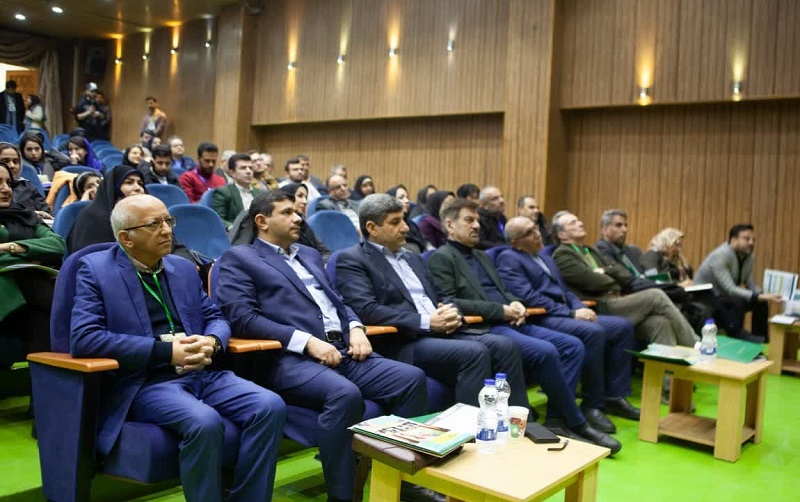
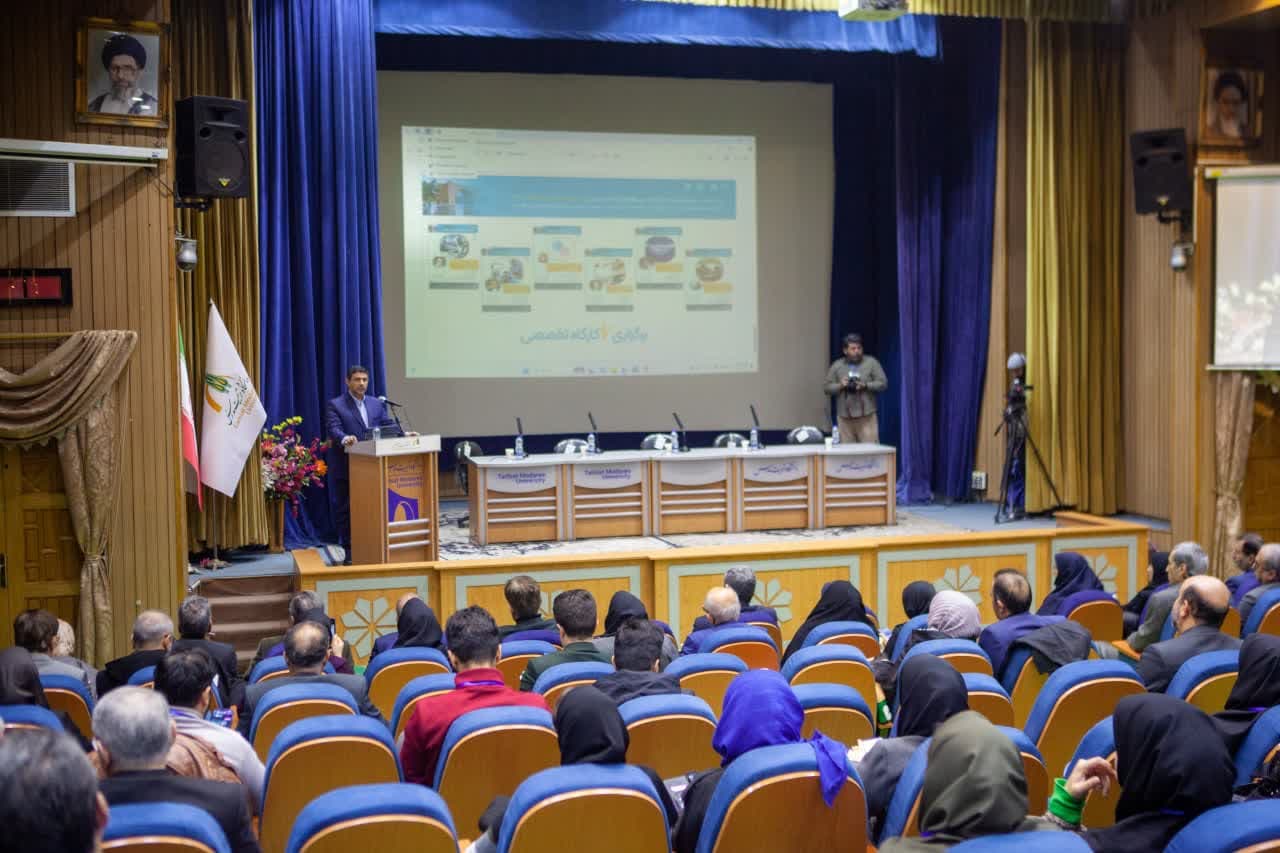
| The 20th Annual Conference of the Iranian Curriculum Studies Association, entitled “Curriculum and Justice”, was held on 11 December 2024 at Tarbiat Modares University. The event featured the reading of a message from the President of the Islamic Republic of Iran and remarks by Dr. Hassan Fartousi, Secretary-General of the Iranian National Commission for UNESCO. The program included an opening ceremony, two specialized roundtables, the General Assembly of the members of the Iranian Curriculum Studies Association, five specialized panels for the presentation of research papers, and a closing ceremony. |
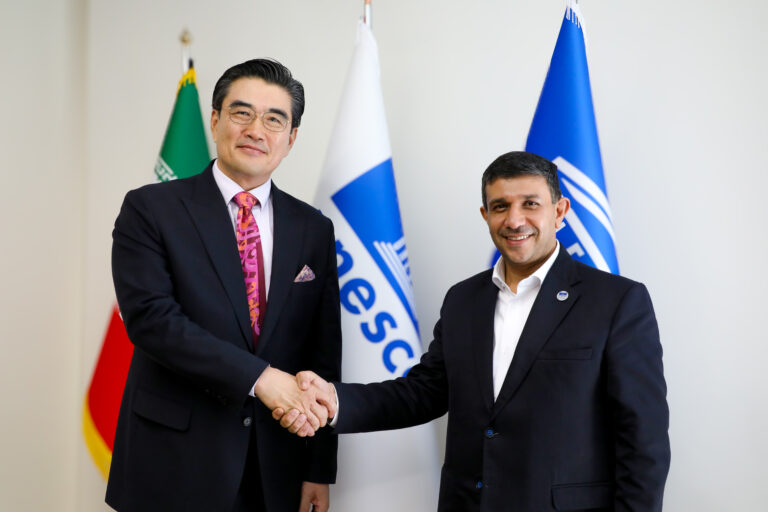
Dr. Fartousi, speaking at the opening ceremony of the event, stated that curriculum planning is undoubtedly one of the key components of education systems and that the United Nations Educational, Scientific and Cultural Organization (UNESCO) attaches particular importance to this issue. He emphasized UNESCO’s focus on aligning curricula with the Sustainable Development Goals. He further noted that UNESCO takes several key considerations into account in curriculum design: curricula should be developed in accordance with the social, economic, environmental and cultural needs of each country, promote quality lifelong learning and empower individuals, preparing them to address global challenges.
The full report of the conference is as follows:
The 20th Annual Conference of the Iranian Curriculum Studies Association, entitled “Curriculum and Justice”, was held on Wednesday, 11 December 2024, at Tarbiat Modares University, in cooperation with the Iranian National Commission for UNESCO and hosted by Tarbiat Modares University, with the participation of the Ministry of Education and the Ministry of Cooperatives, Labour and Social Welfare, and with the support of a number of universities, including the University of Tehran, Allameh Tabataba’i University and Ferdowsi University of Mashhad. The event brought together a large number of officials, policymakers, specialists, practitioners, experts, managers and professionals in the field of curriculum planning and aimed to examine and elucidate the various dimensions of justice in education. The program included an opening ceremony, two specialized roundtables, a meeting of the General Assembly of the Iranian Curriculum Studies Association, five specialized panels for the presentation of papers, and a closing ceremony.
The opening ceremony began promptly at 8:30 a.m. with the recitation of verses from the Holy Quran and the national anthem of the Islamic Republic of Iran. Speakers at the opening ceremony included Dr. Saman Hosseinkhani, Acting Deputy for Education at Tarbiat Modares University; Dr. Morteza Karami, President of the Iranian Curriculum Studies Association; Dr. Javad Hatami, Scientific Secretary of the Conference; Dr. Hassan Fartousi, Secretary-General of the Iranian National Commission for UNESCO; Dr. Ali Latifi, Head of the Organization for Educational Research and Planning of the Ministry of Education; and Dr. Rezvan Hakimzadeh, Deputy Minister of Education for Primary Education. A message from the President of the Islamic Republic of Iran, Dr. Masoud Pezeshkian, was read by Dr. Seyed Zia Hashemi, Deputy for Scientific, Cultural and Social Affairs to the First Vice President.
Dr. Saman Hosseinkhani, Acting Deputy for Education at Tarbiat Modares University, was the first speaker. He stated that changes in paradigms of thought have a significant impact on education and said: “Today’s universities and schools are the product of human-centred thinking. This approach has contributed to the expansion of democracy, scientific research and a customer-oriented economy. Today, experts believe that we have entered an era in which information and data are becoming dominant, and this change in the paradigm of thought will undoubtedly affect education.” He further noted: “Education can bring about transformation throughout the world, and at universities, education is the foundation of research and technology. If education is accompanied by justice, its impact will be even greater.”
Dr. Seyed Zia Hashemi, Deputy for Scientific, Cultural and Social Affairs to the First Vice President, then thanked those involved in organizing the conference and referred to the Government’s particular attention to the scientific outcomes of the event and to facilitating education, research and students’ academic activities. He read a special message from President Dr. Masoud Pezeshkian addressed to the 20th Annual Conference of the Iranian Curriculum Studies Association.
In his message, Dr. Pezeshkian stated that although private schools had been established within the framework of the law and out of the necessity of reducing the financial burden on the Government in meeting educational needs, care must be taken to ensure that such schools do not contribute to educational disparities and inequality in the country. At the same time, efforts should focus on a significant improvement in the quality of public schools so that the services they provide do not differ substantially or meaningfully from those offered by private schools. He described this as a clear responsibility of the National Consensus Government.
The full text of the President’s message, read by Dr. Seyed Zia Hashemi at the conference, was as follows:
In the Name of God, the Most Compassionate, the Most Merciful
“Education, as one of the most fundamental human rights, plays a key role in achieving social justice and human development. All individuals, regardless of gender, race, ethnicity, religion or economic status, should have access to quality education. The clearest definition of social and educational justice is the provision of equal opportunities for all segments of society.
Undoubtedly, educational discrimination gives rise to numerous problems, including class divisions, dissatisfaction and social disorders. To prevent such problems, particular attention must be paid by the relevant institutions to educational justice. It is through educational justice that we can identify and nurture the talents that exist throughout the country.
Justice and fairness require that students in all parts of the country have access to educational opportunities and the facilities they need. To this end, the Government is working to ensure, through planning and the mobilization of all available resources, that all students in remote and disadvantaged areas have access to appropriate and standard schools.
Alongside educational justice, one of the important issues in curriculum planning is attention to new educational and curricular technologies and the development of skills in order to provide quality educational and training services. The Fundamental Transformation Document of Education, as a reference document, places strong emphasis on skills-based education for students, particularly the acquisition of life and vocational skills, and this needs to be properly operationalized.
Moreover, we live in a country characterized by considerable linguistic and dialectal diversity. In this regard, care must be taken to ensure that non-Persian-speaking students not only do not face limitations or barriers to their growth and learning, but that their mother tongue becomes an advantage for them. Article 15 of the Constitution also provides for the use of local and ethnic languages in the press and mass media and the teaching of their literature in schools alongside Persian. This can contribute to preserving the country’s cultural and linguistic diversity and help bilingual students develop a sense of belonging and identity. One of the most effective measures in this regard is the expansion of pre-primary education in preparation for entry into primary school.
Likewise, although private schools have been established within the framework of the law and out of the necessity of reducing the financial burden on the Government in meeting educational needs, care must be taken to ensure that these schools do not contribute to educational disparities and inequality in the country. At the same time, efforts should focus on a significant improvement in the quality of public schools so that the services they provide do not differ substantially or meaningfully from those offered by private schools. This is a clear responsibility of the National Consensus Government.
I commend this valuable cultural initiative and express my appreciation to the organizers of the 20th Annual Conference of the Iranian Curriculum Studies Association and to all scholars who have responsibly contributed to reflecting on, explaining and examining the important issues of social and educational justice.”
Dr. Morteza Karami, President of the Iranian Curriculum Studies Association, then introduced the objectives and programs of the Association, including the preparation and publication of journals, development of the Association’s strategic plan, and organization of various meetings and programs. He identified the Association’s role as a scientific authority, its social responsibility and its engagement in employment creation for graduates and transformation in the Association’s financial and administrative governance as among the priorities of its strategic plan.
Dr. Javad Hatami, Scientific Secretary of the Conference, was the next speaker. He stated: “Tarbiat Modares University is proud to have organized six pre-conference sessions and six different educational workshops in recent months on educational technology, curriculum and the use of artificial intelligence in curriculum design in order to promote scientific topics through this conference.”
Stressing the need to incorporate justice into curricula, he said: “Some issues are so close to us that we do not even think about whether attention has been paid to them, and for this reason they become unfamiliar precisely because of their proximity. Justice is one such issue, which has generally been neglected in curriculum planning.”
Dr. Hatami noted that insufficient attention is paid to ethnic groups and cultural and linguistic diversity in the curriculum and said: “It is customary worldwide, under the Universal Charter of the Child, for education during childhood to be provided in the mother tongue, but this principle is not reflected in our curriculum.”
He added: “This is the first conference to address this issue. Of the 205 papers submitted to the conference, 34 were accepted for oral presentation and 82 as posters, while the remaining papers were rejected following rigorous review by the scientific committee.” He expressed hope that, thanks to the measures undertaken, the first National Educational Justice Award would be established the following year and that Tarbiat Modares University would continue its activities as a national hub for the development of educational justice.
The faculty member of Tarbiat Modares University stated: “Justice has various dimensions, and if we are not serious about justice in the curriculum and educational justice, this inequality will spread to other areas of society. If education is equitable and curricula are justice-oriented, many forms of justice can be promoted throughout society.”
Dr. Hatami noted that students study the same curricula and said: “The problem of inequality lies in the implementation of curricula, where facilities and the quality of teachers differ. Public schools need highly skilled and professional teachers as well as appropriate physical facilities and infrastructure so that they can also compete with exceptional schools.”
Referring to the university entrance examination, he said: “Despite its shortcomings, the university entrance examination draws its questions from the curriculum. A student who has received effective curriculum implementation and benefited from good teachers and adequate facilities can therefore achieve stronger academic performance.”
The Scientific Secretary of the Conference further stated: “One of the serious issues requiring particular attention is the education budget, which has a significant impact on educational justice. If this budget is reformed and distributed fairly, many of the inequalities in education can be addressed.”
Dr. Hassan Fartousi, Secretary-General of the Iranian National Commission for UNESCO, was the next speaker. After thanking the speakers present at the conference, he outlined ten areas concerning the relationship between UNESCO’s concepts and perspectives and the issues of curriculum and justice: curriculum and social, economic, environmental and cultural needs assessment for advancing justice; curriculum and quality lifelong learning; curriculum and flexibility in relation to local culture and language; curriculum and educational justice; curriculum and teaching methods; curriculum and quality of education; fostering an entrepreneurial spirit through the curriculum; curriculum and environmental protection; the relationship between curriculum and cultural diversity; and continuous planning and evaluation.
He stated: “Undoubtedly, curriculum planning is one of the key components of education systems, and the United Nations Educational, Scientific and Cultural Organization (UNESCO) attaches particular importance to this issue. UNESCO emphasizes the importance of aligning curricula with the Sustainable Development Goals.”
He continued: “UNESCO takes several key considerations into account in curriculum design. Curricula should be developed in accordance with the social, economic, environmental and cultural needs of each country and should promote quality lifelong learning and empower individuals, preparing them to address global challenges. Developing essential skills for the present century, such as critical thinking, problem-solving, collaboration and effective communication, is vital for success in today’s and tomorrow’s world and for responding appropriately to challenges.
Another important characteristic of curriculum planning is flexibility. Curricula should be flexible enough to respond appropriately to the specific needs of local communities. Accordingly, UNESCO recommends that attention be paid to local culture and language in curriculum planning and in the development of educational content, as was also highlighted in the message of the President of the Islamic Republic of Iran, Dr. Pezeshkian, and presented by Dr. Zia Hashemi.
Educational justice, inclusiveness and access to education for all members of society are also among the issues to which UNESCO attaches great importance. From UNESCO’s perspective, curricula should also be designed to address the educational needs of all children, including, and particularly, children with special needs, and to ensure lifelong learning and education for them.”
Dr. Fartousi continued: “From UNESCO’s perspective, encouraging innovation in teaching and learning methods, as well as the use of new technologies as tools to strengthen learning, are among the considerations that should be taken into account in curriculum design.”
Regarding the relationship between quality and justice, he added: “Quality education is one of UNESCO’s main priorities. The curriculum is one of the components that ensure quality. Ensuring quality in education and learning is one of the principal requirements for achieving educational justice. With regard to quality education, particular emphasis is placed on quality standards and the professional development of teachers. UNESCO stresses that curriculum planning should include criteria for assessing the quality of education. These criteria include content, teaching methods, educational resources and learning outcomes. Improving the quality of education requires continuous professional development for teachers. UNESCO emphasizes the importance of teacher education and providing opportunities for continuous learning.”
He further stated: “Promoting an entrepreneurial spirit through curriculum planning is a means of fostering economic and social growth and advancing justice. UNESCO therefore recommends and emphasizes that curricula should strengthen entrepreneurial skills among students so that they can create employment opportunities for themselves. Strengthening innovation and creativity among learners will lead to the emergence of a new generation of entrepreneurs capable of responding effectively and appropriately to economic challenges.”
Regarding the importance of curriculum in environmental protection, the Secretary-General of the Iranian National Commission for UNESCO stated: “UNESCO believes that environmental protection and environmental risks, which are among the most important challenges facing our world today, should be addressed specifically in curricula. From UNESCO’s perspective, promoting educational content that emphasizes environmental stewardship, developing ‘green curricula’, and integrating concepts related to the environment, sustainability and sustainable development into educational content and learning experiences will contribute to educating a generation capable of finding effective solutions to environmental challenges facing the country and the world.”
He continued: “UNESCO believes that education should not focus solely on the transmission of knowledge, but should also take cultural diversity into account while preserving and respecting national values and cultures. This contributes to inclusion and to a deeper understanding of justice. UNESCO emphasizes the importance of continuously evaluating curricula and revising them on the basis of the results obtained. Such evaluation includes gathering feedback from teachers, students and other stakeholders.
In summary, curriculum planning should be a dynamic and multidimensional process that responds to social, cultural, environmental and technological changes. The participation of education stakeholders, including teachers, students, parents and the wider community, in the curriculum planning process is essential. UNESCO stresses the need to consult all stakeholders to ensure that curricula are not only practical but also responsive to the real needs of society. By following national principles and capacities alongside international standards, it is possible to establish an effective and equitable education system capable of responding to the needs of today and tomorrow.”
The Secretary-General of the Iranian National Commission for UNESCO concluded: “The Iranian National Commission for UNESCO considers it its mission to work towards the further transformation and development of curricula through a justice-oriented approach grounded in religious and Islamic values. I would like to express my special appreciation to all professors, experts and specialists in the field of education, particularly the organizers of this conference and the Iranian Curriculum Studies Association, and I hope that this conference will achieve great success.”
Dr. Latifi, Head of the Organization for Educational Research and Planning of the Ministry of Education, was the next speaker. He referred to the challenging dualities of justice and quality in the curriculum and stated: “Justice in the curriculum means that curricula and educational materials should be designed in a way that provides all students with equal access to appropriate educational content.” He then referred to challenges in this area, including curricula based on active approaches and dependent on capable teachers versus self-directed curricula; curricula supported by adequate and appropriate equipment and facilities versus minimal facilities; and educational content oriented towards the university entrance examination.
He emphasized the need to move beyond established patterns of thought and raise public awareness of neglected dimensions of educational justice and quality.
Dr. Rezvan Hakimzadeh, Deputy Minister of Education for Primary Education, then presented statistics on primary-school students in the country. She stated: “There are approximately 9.22 million primary-school students in the country, around 600,000 of whom are foreign nationals, while approximately 26 per cent are rural students. There are 387,000 primary-school classrooms across the country, with 360,000 teaching staff working at the primary level.”
She then discussed the conceptual relationship between educational justice and curricular justice and stated: “Educational justice means ensuring equal access to quality education for all, whereas curricular justice refers to the design and implementation of curricula that take into account the diverse needs of learners.”
The Deputy Minister for Primary Education further explained the concept of justice in the curriculum and an inclusive perspective, adding: “The family structure of students, their migrant status, ethnicity, race, religion, language and geographical location can create differences in their learning conditions.”
She noted that curricula can play an effective role in narrowing gaps created by certain existing policies. Dr. Hakimzadeh concluded by emphasizing the importance of three key principles in an inclusive approach to curriculum design: why learning takes place (motivation), what is learned (content), and how learning takes place (the definition of objectives, strategies and skills).
As part of the program, a specialized roundtable entitled “Pathology of Justice in the Curriculum” was held, moderated by Dr. Mahmoud Mehrmohammadi, retired professor of Tarbiat Modares University and member of the Iranian Curriculum Studies Association. Participants included Dr. Zahra Goya, professor at Shahid Beheshti University; Dr. Mahmoud Amani Tehrani, Secretary-General of the Supreme Council of Education; Dr. Alireza Sadeghi, professor at Tarbiat Modares University; and Dr. Rahmatollah Khosravi, faculty member of Farhangian University.
During the roundtable, Dr. Goya referred to the inclusion of school grades in the university entrance examination and described this as an inappropriate influence on student admission to universities and as a form of inequality. Dr. Amani Tehrani discussed the “challenge of quality, justice and legitimacy”. In examining the curriculum from the perspective of justice, he stated: “Justice in the curriculum is a relatively new concept and does not mean an equal share of education. In the curriculum, justice means recognizing diversity and differences among students and taking action on the basis of those differences.” He added that the use of new educational technologies could help reduce inequality in education.
Dr. Rahmatollah Khosravi stated: “The role of teachers in educational justice involves two areas: identifying talents and responding to those talents. Teachers themselves should have equal access to educational justice.” He continued: “Teachers should first identify students’ talents and then nurture them.”
Dr. Khosravi referred to teacher education programs and added: “The programs we currently experience in teacher education are prescriptive and uniform, and differences are not taken into account, nor are the interests of student teachers. We need to move towards semi-prescriptive and non-prescriptive programs.”
The faculty member of Farhangian University emphasized: “Student teachers should experience all programs and courses while taking their differences into account, and they should have the right to choose.”
Khosravi added that the education of teachers and student teachers is not based on educational justice, stating: “The quality of the content provided in the preparation of human resources for the education system and teachers, the learning opportunities created, and the organization of workshops and training courses cannot establish educational and training justice. The quality of these programs is inadequate and access to them is unequal.”
Dr. Mehrmohammadi highlighted the importance of narrative thinking in defining teacher education curricula and stated that every teacher has a unique story and that these differences need to be reflected in teacher education curricula.
In this section of the conference, Dr. Sadeghi addressed the importance of multiculturalism in curriculum development and stated that educational justice cannot be achieved as long as ethnic groups, languages, gender and differences are not reflected in curricula.
The conference continued with a meeting of the General Assembly of the Iranian Curriculum Studies Association, during which amendments to the Association’s statutes were proposed and approved.
Five specialized panels for the presentation of papers were then held simultaneously, entitled “Justice in School Curricula”; “Educational Justice: Theoretical Foundations and Curriculum Policy”; “Educational Technologies and Justice in the Curriculum”; “Justice in Higher and Technical and Vocational Education Curricula”; and “Teachers and the Realization of Justice in the Curriculum”.
Another part of the program was devoted to the closing ceremony. Dr. Ahmad Meydari, Minister of Cooperatives, Labour and Social Welfare, delivered remarks at the ceremony. He emphasized the need to establish social consensus to address social issues, particularly educational justice. Referring to the slogan of national consensus adopted by the 14th Administration, Dr. Meydari stated that educational justice is an important example of the realization of such consensus.
The Minister of Cooperatives referred to serious challenges, including children who are out of school, and stressed that addressing these challenges could provide a basis for social consensus. According to Dr. Meydari, resolving issues such as the mismatch between technical and vocational textbooks and the country’s needs, as well as insufficient access to schools in disadvantaged areas, could contribute to social consensus.
He further stated that this social consensus should be directed towards sustainable changes in culture, the economy and society in order to ensure the success of the Government’s efforts towards national consensus. In Dr. Meydari’s view, the Government should develop and articulate a clear definition of consensus in various areas, including the economy and culture, and instead of pursuing idealistic approaches, focus on issues such as educational justice on which all segments of society can reach agreement.
He also referred to specific problems preventing children from attending school, including disabilities, social issues and poverty, and stressed the need to reform information systems and strengthen coordination among institutions to address these challenges.
A ceremony honoring Dr. Zahra Goya, retired professor of Shahid Beheshti University, was subsequently held, during which the presidents of the Association’s eight previous terms were also recognized.
The conference then continued with a specialized roundtable entitled “The Prospects for Justice in the Curriculum and Solutions”, moderated by Dr. Javad Hatami. Participants included Dr. Ali Mohebi, Deputy Minister and Head of the Institute for Educational Studies; Dr. Ali-Bagher Taheri-Nia, President of the Institute for Research and Planning in Higher Education; Dr. Kamran Soltani, professor at Iran University of Medical Sciences; and Dr. Alireza Sadeghi, professor at Tarbiat Modares University.
During the roundtable, Dr. Soltani stated that educational justice in medical sciences means training committed and specialized human resources, and that justice can only be achieved when infrastructure is improved and standards are aligned with approved regulations. He further described the outcome of implementing educational justice in medical universities as the realization of justice for society as a whole.
Dr. Taheri-Nia, in his presentation entitled “The Conflict of Desirability in Higher Education”, first referred to the current state of higher education in terms of the distribution of educational institutions, the number of students, the number of faculty members and the student-to-faculty ratio across different provinces. He stated that, in responding to demand for higher education, it is not permissible to establish higher education institutions indiscriminately and reduce quality. He noted that certain desirable objectives, such as the right of access to education and Article 30 of the Constitution, which recognizes access to higher education to the extent required for self-sufficiency, may raise questions about educational justice when admission is limited to high-performing individuals. He emphasized that such dualities need to be taken into account in legislation and policy objectives.
Dr. Mohebi referred to the challenge of quality in education and added that, in terms of access to education, there is no major quantitative problem in the education system, but differences in the quality of educational provision and inadequate quality have placed educational justice at risk. He further identified the lack of cooperation among stakeholders with the Ministry of Education and regulations that undermine justice in education; such as the recruitment of teachers without adequate professional qualifications and excessive diversification of schools as other challenges to achieving justice.
Dr. Sadeghi then addressed justice from the perspective of theorists and discussed nine components of justice: 1. justice from birth; 2. basic natural rights, including the right to education; 3. distribution of primary natural resources, such as regions with favorable climates for the provision of education; 4. institutions, including the family and institutions supporting the education and higher education systems; 5. justice in the production and delivery of services; 6. functional distribution, including the lower share of wages in national income, such as low teacher salaries; 7. statistical distribution, including analysis of income deciles and the existence of an adequate middle class; 8. justice in consumption, including children’s nutrition; and 9. welfare and happiness.
The conference concluded at 8:30 p.m. with the recognition of outstanding papers.