

Commemoration of Two Intangible Cultural Heritage Elements: Iftar and Nowruz Held
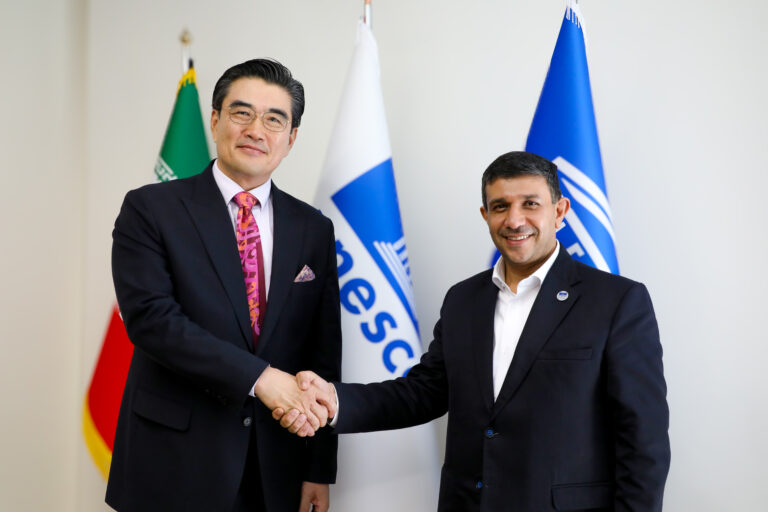
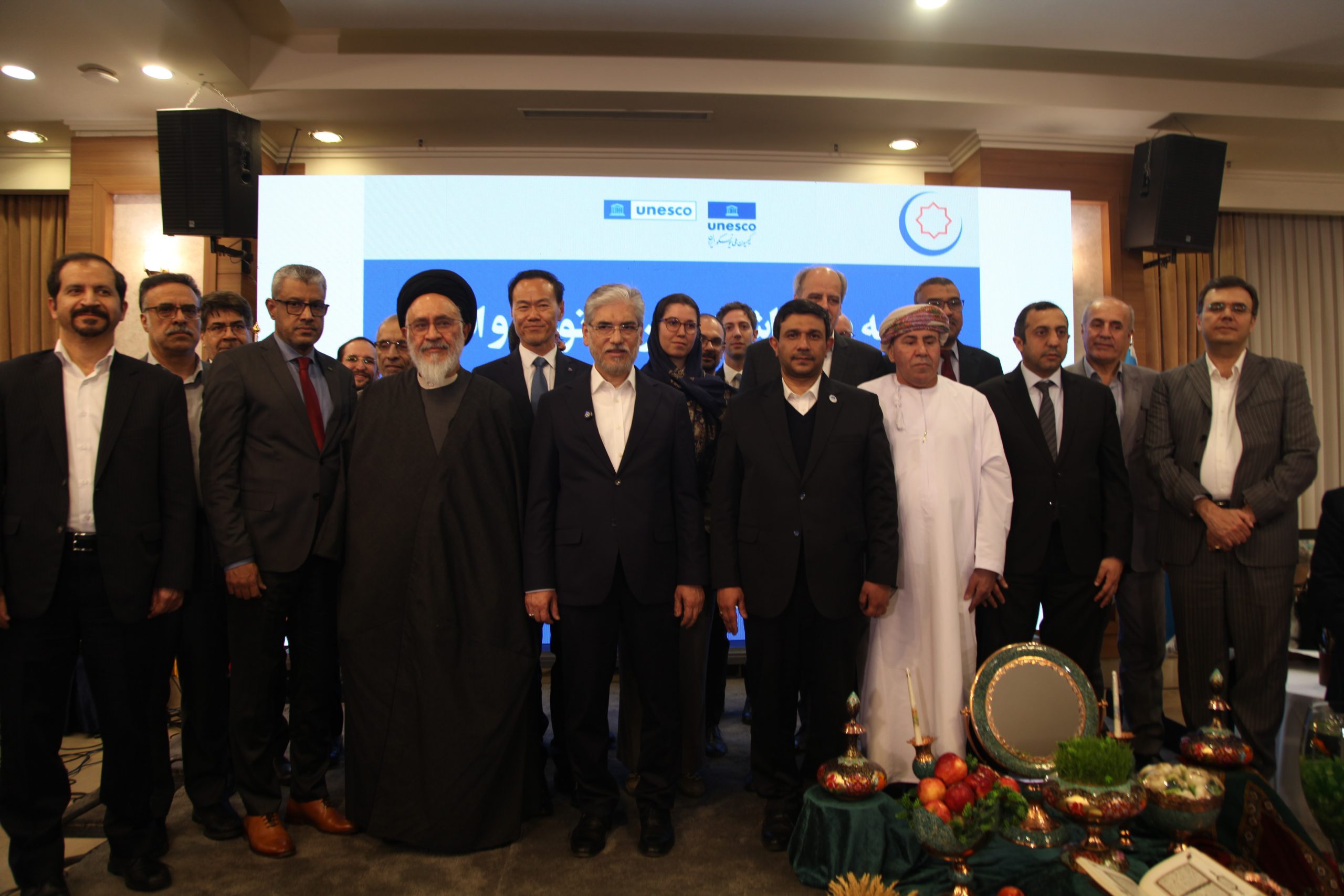
| The commemoration of the intangible cultural heritage of Iftar and Nowruz was held through the initiative of the Iranian National Commission for UNESCO, in cooperation with the UNESCO Tehran Office. The event, dedicated to the two elements of intangible cultural heritage inscribed on UNESCO’s Representative List of the Intangible Cultural Heritage of Humanity, Nowruz and Iftar, was held on 16 March 2025 at Kuh-e Noor Hall, Parsian Evin Hotel, in the presence of Dr Hossein Simaei Sarraf, Minister of Science, Research and Technology; Dr Hassan Fartousi, Secretary-General of the Iranian National Commission for UNESCO; and Ieng Srong, Head of the UNESCO Tehran Office.The commemoration was also attended by prominent Iranian scientific and cultural figures, as well as ambassadors and deputy heads of mission from the embassies of Cuba, Russia, Switzerland, Austria, Sri Lanka, Australia, South Africa, Denmark, Mexico, Norway, the Republic of Korea, Spain, Italy, Sweden, the Netherlands, Romania, Yemen, New Zealand, Mauritania, Venezuela, Kyrgyzstan and Pakistan, along with several heads of United Nations agencies, including UNAMI, WFP, UNOCHA, IOM, RCO and UNODC. |

At the opening of the ceremony, Dr. Hasan Fartousi, Secretary-General of the Iranian National Commission for UNESCO, welcomed the Minister of Science, Research and Technology, ambassadors, heads of international organizations and distinguished scholars attending the event. Referring to the importance of intangible cultural heritage, he said: “Nowruz and Iftar are celebrated by diverse communities for their role, across borders and generations, in strengthening identity, unity and shared values. These traditions embody renewal, harmony between people and nature, and human solidarity.
Dr. Fartousi added: “Both Nowruz and Iftar demonstrate the power of cultural traditions to enrich lives, strengthen social bonds and foster a sense of belonging. In this way, they continue to stand as enduring symbols of unity and humanity.”
Iran: Advancing the Safeguarding of Cultural Heritage and the Promotion of Shared Traditions
The Secretary-General of the Iranian National Commission for UNESCO also highlighted the efforts of the Islamic Republic of Iran to safeguard and promote its tangible and intangible cultural heritage. He emphasized: “The Islamic Republic of Iran is firmly committed to safeguarding and promoting its rich and diverse cultural heritage and to passing these treasures on to future generations.”
The Importance of the 2003 UNESCO Convention
Mr. Ieng Srong, Head of the UNESCO Tehran Office, then highlighted the vital role of the 2003 UNESCO Convention for the Safeguarding of the Intangible Cultural Heritage. He said: “Adopted more than two decades ago, the Convention provides a strong framework for safeguarding and promoting intangible cultural heritage around the world. It underscores the importance of preserving traditions, rituals, knowledge and cultural expressions that are fundamental to human identity.”
He added: “The 2003 Convention calls on countries to actively safeguard their intangible cultural heritage and share it with others, helping to ensure that it remains alive and is transmitted to future generations. This participatory approach, grounded in respect for cultural diversity and cultural exchange, is essential to keeping our living heritage alive.”

Nowruz and Iftar: Symbols of Unity and Humanity
Dr. Hossein Simaei Sarraf, Minister of Science, Research and Technology and President of the Iranian National Commission for UNESCO, also highlighted in his speech the connection between Nowruz, Iftar, the spring of the Qur’an and the spring of nature. He stated: “Throughout history, Iranians have consistently contributed to the development of human culture and civilization, shaping and enriching cultural life. As we approach the new year 2025, the spring of the Qur’an coincides with the spring of nature, symbolizing the harmony between spirituality and nature.
He added: “Nowruz and Iftar are symbols of unity and solidarity not only for Iranians, but also for many nations and cultures. Through solidarity and cooperation with other countries, including Azerbaijan, Turkey and Uzbekistan, the Islamic Republic of Iran has succeeded in bringing the traditions of this land, including Nowruz and Iftar, to the global stage.”
.

Dr Simaei Sarraf also stated: “One of UNESCO’s largest multinational nominations, Nowruz, was inscribed on the Representative List of the Intangible Cultural Heritage of Humanity in 2010 through the solidarity and cooperation of 13 countries: Iran, Azerbaijan, India, Kyrgyzstan, Pakistan, Turkey, Uzbekistan, Afghanistan, Tajikistan, Iraq, Kazakhstan, Turkmenistan and Mongolia. In 2023, the Islamic Republic of Iran took another significant step towards bringing the traditions and celebrations of this land to the global stage by jointly preparing the nomination of the Iftar tradition with Azerbaijan, Turkey and Uzbekistan.
Dr. Hossein Simaei Sarraf, Minister of Science, Research and Technology and President of the Iranian National Commission for UNESCO, emphasized the importance of such initiatives in promoting international unity and solidarity. He described the presence of ambassadors from various countries and representatives of international organizations at the ceremony as a reflection of global interest in celebrating and safeguarding this valuable heritage.”

UNESCO and Iran: More Than 75 Years of Shared History
A special video message from Mr. Xing Qu, Deputy Director-General of UNESCO, was then screened at the ceremony. In his message, he highlighted the longstanding ties between UNESCO and Iran and the role of cultural heritage in strengthening global cultural solidarity. He said: “Above all, this event is a celebration of the ties that have connected UNESCO and Iran for more than 75 years.” UNESCO has recognized Iran as a Member State since 1948.
He also referred to Iran’s rich natural and cultural heritage, adding: “These ties are reflected in Iran’s diverse natural heritage, from the Lut Desert to the Hyrcanian Forests, as well as in the country’s cultural heritage, including Persepolis and Iran’s historic bazaars.”
Iran’s Cultural Heritage: From Persepolis to Ta’ziyeh and Nowruz
The Deputy Director-General of UNESCO then referred to Iran’s intangible cultural heritage, stating: “Persepolis, built by Darius the Great in the sixth century BCE and inscribed on the UNESCO World Heritage List in 1979, is one of the most remarkable manifestations of this heritage.”
He continued: “This living heritage continues to flourish through artistic traditions such as the oud, miniature and Ta’ziyeh. These art forms and traditions are recognized not only in Iran but also internationally. The art of crafting and playing the oud was inscribed on UNESCO’s Representative List of the Intangible Cultural Heritage of Humanity in 2022, the art of miniature in 2020, and Ta’ziyeh in 2010.”

Nowruz: A Global Celebration that Transcends Borders
Continuing his message, the Deputy Director-General of UNESCO highlighted the significance of Nowruz, stating: “Nowruz, meaning ‘new day’, is a celebration of renewal. Observed across many countries beyond Central and Eastern Asia, Nowruz has continued to bring nations closer together since its inscription in 2009.”
He also referred to the addition of more countries to the Nowruz heritage element, adding: “In 2024, with the inclusion of Mongolia, the number of countries sharing this heritage reached 13.”
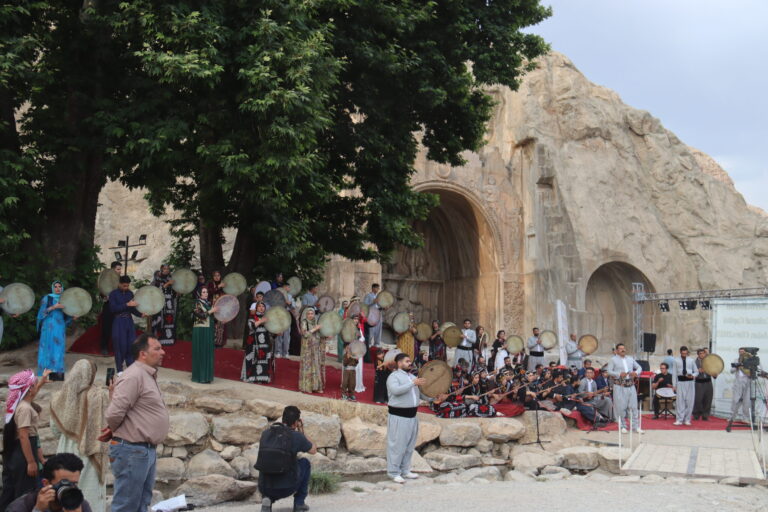
The event was organized to inspire people around the world to promote unity and cultural understanding, particularly through the safeguarding of shared cultural heritage. The program also featured a number of activities, including tar music and singing, ritual tanbur music, and a commemorative group photograph. Two video clips showcasing the traditions of Nowruz and Iftar were also screened for the guests. At the end of the ceremony, participants and officials were thanked for their support for the safeguarding of cultural heritage.
A report on the ceremony was published on the official UNESCO website on 31 March 2025, describing the event as a lasting symbol of cultural solidarity and intercultural dialogue. The full report is available on the UNESCO website.
The program’s video clip is also available on the Iranian National Commission for UNESCO’s Aparat channel here.